JSTOR Global Plants Home
  • Home
  • Browse
  • About
  • Access
  • Account
    • Saved Items
    • Profile
  • Log in

Global Plants

Skip to Main Content
  • JSTOR Global Plants Home
  • Global Plants

    • Browse
    • About
    • Access
    • Account
      • Saved Items
      • Profile
Log in
  • Browse
  • About
  • Access
  • Account
    • Saved Items
    • Profile
Advanced Search

Compilation
Commelina arenicola

2 Images see all

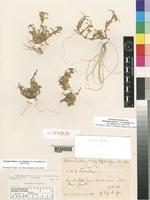
Holotype of Commelina arenicola Faden f. pilosa Chiov. [family COMMELINACEAE]
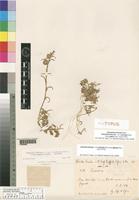
Holotype of Commelina arenicola Faden f. glabrata Chiov. [family COMMELINACEAE]
Previous
Next

Name

Identification
Commelina arenicola Faden [family COMMELINACEAE ] (stored under name); Verified by Data not digitized, Commelina africana L. [family COMMELINACEAE ] Verified by Data not digitized,
Related name
  • Commelina arenicola
  • Commelina africana

Flora

Entry for COMMELINA arenicola Faden [family COMMELINACEAE]
Herbarium
Royal Botanic Gardens, Kew (K)
Collection
Flora Somalia
Resource Type
Reference Sources
Entry From
Flora Somalia, Vol 4, (1995) Author: by R. B. Faden [updated by M. Thulin 2008]
Names
COMMELINA arenicola Faden [family COMMELINACEAE], (1995);. type: S2, 63 km from Afgooye roundabout on Marka road, Faden & Kuchar 88/111 (US holo.).
COMMELINA africana Chiov. var. circinata [family COMMELINACEAE], as “ circinnata ”, in Atti Ist. Bot. Univ. Pavia, ser. 4, 7: 153 (1936);. type: S2, S of “Merca”, Ciferri 88 (FT holo., K iso.).
Information
Annual with tufted, much-branched, ascending to prostrate, rarely decumbent shoots to 30(–46) cm long, rooting only near the base; roots thin, fibrous. Leaves spiral or distichous, sheaths 0.5–1 cm long, glabrous or with a line of pubescence along the fused edge, ciliate at the apex, blade sessile, linear to linear-lanceolate or elliptic, usually conduplicate, sometimes strongly recurved, (0.5–)1–5 x 0.4–0.6 cm, apex acute to acuminate, base ± cuneate, surfaces glabrous or pubescent. Spathes with peduncles 0.4–1.4 cm long, solitary, semilunate, not to slightly falcate, 0.9–2 x 0.45–1 cm, apex acute to rounded, base ± hastate, surfaces puberulous to glabrous, margins free, glabrous or ciliate; upper cincinnus present, 1-flowered or abortive, peduncle included (rarely shortly exserted), lower cincinnus 1–4-flowered. Flowers bisexual and male, c. 1 cm wide, petals pale buff, buff-orange or apricot pink, paired petals 5-­5.5 x 5–6 mm, staminodes 3, equal. Capsules 5.5–7 x 3–4 mm, dorsal cell indehiscent, 0–1-seeded, ventral cells 1–2-seeded. Seeds of ventral cells transversely oblong-elliptic to broadly ovate, dorsiventrally compressed, 2.7–4.2 x 1.5–2 mm, testa medium to dark brown, foveate to foveate-reticulate with transversely elongate and ± round pits, each pit filled and bordered with paler farinaceous material, this material often also forming a fine reticulum or partial reticulum on the ridges.
Range
S2 not known elsewhere.
Altitude range
c. 0–80 m.
Distribution
SOMALIA Lavranos & Carter 23182; Raimondo 13/82, 10/86.
Notes
The colour of the flowers, testa pattern, and annual habit demonstrate that this species is not related to C. africana. The small curled leaves on Ciferri 88 and 88bis and their very compact growth are probably the result of exposure to salt-laden sea breezes.

Related Materials

  • Terms and Conditions
  • Privacy Policy
  • Cookie Policy
  • Cookie Settings
  • Accessibility
  • Help
  • Contact Us
  • Facebook
  • Twitter
ITHAKA

JSTOR is part of ITHAKA, a not-for-profit organization helping the academic community use digital technologies to preserve the scholarly record and to advance research and teaching in sustainable ways.

©2000-2026 ITHAKA. All Rights Reserved. JSTOR®, the JSTOR logo, JPASS®, Aluka®, and ITHAKA® are registered trademarks of ITHAKA.

╳