JSTOR Global Plants Home
  • Home
  • Browse
  • About
  • Access
  • Account
    • Saved Items
    • Profile
  • Log in

Global Plants

Skip to Main Content
  • JSTOR Global Plants Home
  • Global Plants

    • Browse
    • About
    • Access
    • Account
      • Saved Items
      • Profile
Log in
  • Browse
  • About
  • Access
  • Account
    • Saved Items
    • Profile
Advanced Search

Compilation
Combretum homblei

3 Images see all

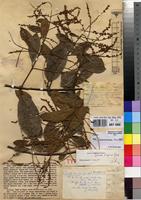
Type of Combretum homblei De Wild. [family COMBRETACEAE]
Type of Combretum homblei DeWild. [family COMBRETACEAE]
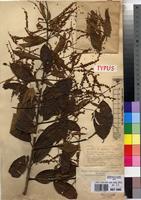
Type of Combretum homblei De Wild. [family COMBRETACEAE]
Previous
Next

Name

Identification
Combretum homblei DeWild. [family COMBRETACEAE ] (stored under name);
Related name
  • Combretum padoides
  • Combretum homblei

Flora

Entry for COMBRETUM padoides Engl. & Diels [family COMBRETACEAE]
Herbarium
Royal Botanic Gardens, Kew (K)
Collection
Flora of Tropical East Africa
Resource Type
Reference Sources
Entry From
Flora of Tropical East Africa, page 1, (1973) Author: G. E. WICKENS
Names
COMBRETUM padoides Engl. & Diels [family COMBRETACEAE], in E.M. 3: 13, t. 2/B (1899); T.T.C.L.: 138 (1949); K.T.S.: 146 (1961); F.F.N.R.: 284 (1962); Liben in F.C.B., Combr.: 40 (1968); Exell in Kirkia 7: 170 (1970). Type: Mozambique, Tete, near Boroma, Menyharth (Z, lecto., fide Exell, loc. cit., K, isolecto. !)
COMBRETUM tenuipes Engl. & Diels [family COMBRETACEAE], in E.M. 3: 13, t. 3/B (1899). Type: South Africa, Transvaal, Barberton, Lowes Creek, Galpin 885 (Z, holo., K, iso. !)
COMBRETUM homblei De Wild. [family COMBRETACEAE], in F.R. 13: 196 (1914). Type: Zaire, Katanga, Kapiri valley, Homblé 113 (BR, holo., BM, fragment of holo. !)
COMBRETUM giorgii De Wild. & Exell [family COMBRETACEAE], in J.B. 67: 100 (1929). Type: Zaire, Bas-Katanga, Kisengwa, De Giorgi 167 (BR, holo., BM, fragment of holo. !)
COMBRETUM minutiflorum Exell [family COMBRETACEAE], in J.B. 68: 245 (1930). Type: Tanganyika, Kilosa District, Kipera [Kipela], Swynnerton (BM, holo.)
Information
Tree or many-stemmed scandent shrub up to 12 m. tall. Leaves opposite or subopposite; lamina subcoriaceous to papyraceous, elliptic to oblong-elliptic, (1.5–)5–11.5 cm. long, (1.1–)1.5–5.5 cm. wide, apex usually ± acuminate, base acute or obtuse, glabrous or very sparsely pubescent, tufts of hairs in the axils of the lateral nerves beneath absent or inconspicuous, sparsely golden lepidote beneath; lateral nerves 4–8 pairs; petiole 6–25 mm. long. Inflorescences 3–10.5 cm. long, solitary or rarely 2–3 in the axils of the upper leaves (the leaves may fall to give the appearance of a branched terminal panicle). Flowers yellowish or white, scented. Lower and upper receptacles rufous lepidote, otherwise glabrous. Sepals broadly triangular. Petals narrowly elliptic, 1.5 mm. long, 0.25 mm. wide, glabrous. Stamen-filaments 3 mm. long; anthers 0.4 mm. long. Disk 1.5–2 mm. in diameter, pilose, indented where the filaments are inserted, without a distinct free margin. Style 2 mm. long. Fruit (fig. 4/2, p. 15) subcircular to transversely elliptic in outline, 1.5–2 cm. in diameter, rufous or golden lepidote, otherwiseglabrous; apical peg absent; wings 7–9 mm. broad, sometimes flushed red; stipe 2–3 mm. long. Cotyledons 2, broadly reniform, petiolate, borne above soil-level. Scales (fig. 1/2, p. 12) similar to C. celastroides but mature leaves with scales as small as 50 μ in diameter.
Range
DISTR. K6, 7; T2, 3, 5–8
Altitude range
0–1500 m.
Distribution
KENYA Masai District Loitokitok, 20 July 1962, Ibrahim 709!;KENYA Kwale District Marenge Forest, Lungalunga–Msambweni road, 18 Aug. 1953, Drummond & Hemsley 3880 !;KENYA Lamu District Witu, June 1957, Rawlins in E.A.H. 11266 !TANGANYIKA Pare District Gonjamaore, July 1955, Semsei 2113 !;TANGANYIKA Lushoto District Makuyuni area, June 1935, Koritschoner 1044 !;TANGANYIKA Morogoro District Uluguru Mts., 1 Feb. 1933, Schlieben 3371!
Distribution (external)
; Zaire
Zambia
Rhodesia
Malawi
Mozambique
South Africa (Transvaal)

Related Materials

  • Terms and Conditions
  • Privacy Policy
  • Cookie Policy
  • Cookie Settings
  • Accessibility
  • Help
  • Contact Us
  • Facebook
  • Twitter
ITHAKA

JSTOR is part of ITHAKA, a not-for-profit organization helping the academic community use digital technologies to preserve the scholarly record and to advance research and teaching in sustainable ways.

©2000-2026 ITHAKA. All Rights Reserved. JSTOR®, the JSTOR logo, JPASS®, Aluka®, and ITHAKA® are registered trademarks of ITHAKA.

╳