JSTOR Global Plants Home
  • Home
  • Browse
  • About
  • Access
  • Account
    • Saved Items
    • Profile
  • Log in

Global Plants

Skip to Main Content
  • JSTOR Global Plants Home
  • Global Plants

    • Browse
    • About
    • Access
    • Account
      • Saved Items
      • Profile
Log in
  • Browse
  • About
  • Access
  • Account
    • Saved Items
    • Profile
Advanced Search

Compilation
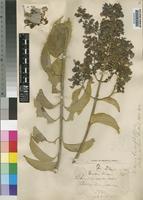
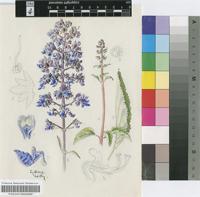
Coleus mirabilis

2 Images see all

Type of Coleus leucophyllus Baker [family LABIATAE]
Coleus mirabilis Briq.
Previous
Next

Name

Identification
Coleus mirabilis Briq. [family LAMIACEAE ]
Related name
  • Coleus mirabilis

Flora

Entry for Coleus mirabilis Briquet [family LABIATAE]
Herbarium
Royal Botanic Gardens, Kew (K)
Collection
Flora of Tropical Africa
Resource Type
Reference Sources
Entry From
Flora of Tropical Africa, Vol 5, page 332, (1900) Author: (by J. G. Baker)
Names
Coleus mirabilis Briquet [family LABIATAE], in Engl. Jahrb. xix. 183.
Information
A tall shrub, with robust branches clothed with grey down. Leaves petioled, lanceolate, 2–3 in. long, acute, narrowed to the base, regularly crenate, green and pubescent above, clothed with white tomentum beneath. Inflorescence racemose, long; whorls close, peduncled; bracts chartaceous, ovate, acuminate, imbricate in bud. Calyx violet, 1/4 in. long in the flowering stage; tube campanulate; upper tooth lanceolate, the others short, ovate-lanceolate. Corolla dark blue, protruding above 1/2 in. from the throat of the calyx; lower lip 1/3 in. long. Stamens included or shortly exserted.
Distribution
Angola Lower Guinea at Lumsuneya Brook, between Malange and the River Kuango, Mechow; in a swamp at Malange, Mechow, 489; in a moorland waste below Moma, near Malange, Buchner, 81, 82, 83, 84, 85.Congo South Central Lunda; by the Lulua River, Pogge, 350.
Notes
Briquet, l. c. 184, describes 4 varieties—viz., mechowianus (Mechow, no number); poggeanus (Pogge, 350); hypisodontus (Mechow, 489); and buchnerianus (Buchner, 81 to 85).

Related Materials

  • Terms and Conditions
  • Privacy Policy
  • Cookie Policy
  • Cookie Settings
  • Accessibility
  • Help
  • Contact Us
  • Facebook
  • Twitter
ITHAKA

JSTOR is part of ITHAKA, a not-for-profit organization helping the academic community use digital technologies to preserve the scholarly record and to advance research and teaching in sustainable ways.

©2000-2026 ITHAKA. All Rights Reserved. JSTOR®, the JSTOR logo, JPASS®, Aluka®, and ITHAKA® are registered trademarks of ITHAKA.

╳