JSTOR Global Plants Home
  • Home
  • Browse
  • About
  • Access
  • Account
    • Saved Items
    • Profile
  • Log in

Global Plants

Skip to Main Content
  • JSTOR Global Plants Home
  • Global Plants

    • Browse
    • About
    • Access
    • Account
      • Saved Items
      • Profile
Log in
  • Browse
  • About
  • Access
  • Account
    • Saved Items
    • Profile
Advanced Search

Compilation
Cola uloloma

5 Images see all

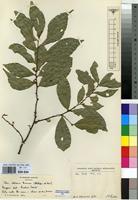
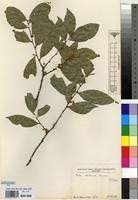
Isotype of Cola uloloma Brenan [family STERCULIACEAE]
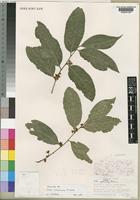
Cola chlorantha F.White [family STERCULIACEAE]
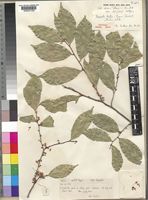
Holotype of Cola uloloma Brenan [family STERCULIACEAE]
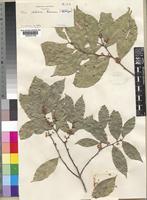
Isotype of Cola uloloma Brenan [family STERCULIACEAE]
Previous
Next

Name

Identification
Isotype of Cola uloloma Brenan [family STERCULIACEAE ] (stored under name); Verified by Not on sheet,
Related name
  • Cola uloloma
  • Cola greenwayi
  • Cola chlorantha

Flora

Entry for Cola uloloma Brenan [family STERCULIACEAE]
Herbarium
Royal Botanic Gardens, Kew (K)
Collection
Flora of Tropical East Africa
Resource Type
Reference Sources
Entry From
Flora of Tropical East Africa, page 1, Author: MARTIN CHEEK AND LAURENCE DORR
Names
Cola uloloma Brenan [family STERCULIACEAE], in K.B. 11: 150 (1956); K.T.S.L.: 163 (1994). Type: Tanzania, Pangani District: Bushiri Estate, Faulkner 654 (K!, holo.)
Information
Evergreen small tree, rarely a shrub, (1.5–)3–10(–25) m tall, with a clean trunk and dense, rounded crown; bark pale grey, rough or smooth with longitudinal striations; ultimate branchlets 1 mm thick, dark brown, with numerous smooth raised lenticels of the same colour; bud-scales caducous. Leaf-blade narrowly elliptic to oblanceolate, sometimes slightly asymmetrical, 4–12 cm long, 1.7–4.7 cm wide, acumen 0.5–1.8 cm long, ± 0.3 cm wide, leathery, 5–7 pairs veins, glabrous above and beneath; petiole terete, 2–5 mm long, 1 mm wide, glabrescent; stipules caducous. Inflorescence in leaf-axils, with fascicles of 1–5 single flowers; bracts 3–4, ± orbicular, the lowest largest, 1.7–2.5 mm long, 2–3 mm across, deeply bilobed, drying with longitudinal ridges, glabrous; pedicel 5–11 mm long, articulated ± midway, puberulous. Flowers whitish, yellowish or pinkish brown, aromatic, 6–9.5 mm across, divided to within 1.5–2 mm of the base, lobes narrowly triangular, (2.5–)3–4 mm long, 1.2–1.5 mm wide, the upper margins reflexed, white, outer surface sparsely brown stellate-hairy, the hairs 0.1–0.2 mm diameter, inner surface minutely papillate. Male flowers with androphore 1.5–2 mm long, 0.2 mm wide, glabrous, anthers 5, uniseriate, forming a ring 1.5–1.8 mm long, 0.4–1.3 mm wide, glabrous. Female flowers as the male, but androphore absent, anthers forming a ring at the base of the ovary; ovary of 3–5 carpels, ± spherical, 1.2–2 mm long, 1.8–2.5 mm wide, stigmas ± 0.5 mm long, reflexed. Fruits with a single carpel developed, obliquely obovoid, ± 25 mm long, 17 mm wide, stipe indistinct, rostrum absent, orange, subglabrous.
Range
DISTR. K 7; T 3, ?6 not known elsewhere
Altitude range
30–500 m
Distribution
KENYA Kilifi District Kaya Kambe, fr. 9 July 1987, Robertson & Luke 4787!KENYA Kwale District Shimba Hills, Mwele Mdogo Forest, y.fr. 23 Aug. 1953, Drummond & Hemsley 3972! & Pangani Rocks, fl. 10 July 1987, Luke & Robertson 494!TANZANIA Pangani District Mwera, Kwa Besa, Mwanamgaru, fl. 28 March 1957, Tanner 3462! & Bushiri estate, Faulkner 654!
Notes
LOCAL USES. None are recorded.  Of the 13 specimens seen, only five fertile gatherings, listed above, have been seen for Cola uloloma : this species seems rare, poorly known and restricted to a few small coastal forest fragments, mostly the Kaya forests of Kenya. Its extent of occurrence is estimated as less than 20,000 km2. Given that forest quality is declining in several of these patches, and that less than 10 locations are known, Cola uloloma is here assessed asVU B2a,b(iii), i.e vulnerable to extinction.  The uniformly short petiole (less than 7 mm) seen in Cola uloloma and C. chlorantha (q.v. for diagnostic characteristics) is unique in East African members of the genus and make these two species easily recognized in the sterile state, assuming that they are recognized as Cola in the first place. Most other species of Cola have a mixture of very long-stalked (to 19 cm) and very short-stalked leaves. Hawthorne 1645 from the Pugu Hills (T 6), though sterile, probably represents this species, but without flowers or altitudinal data it is difficult to be certain. Luke (pers. comm.) reported sight records in Kenya for the lower (Kaya Muhaka) and upper (Mangea Hill) altitudinal ranges cited above. Luke (pers. comm.) also reported seeing what was possibly this species, but might also be C. chlorantha (especially the more southern and higher altitudinal specimens) in T 6 (Kimboza, Luke 8814 EA n.v.) and also in T7 (Luke 8747 EA n.v., 900m alt. and Luke 11311 EA n.v., 1330m alt.).

Related Materials

  • Terms and Conditions
  • Privacy Policy
  • Cookie Policy
  • Cookie Settings
  • Accessibility
  • Help
  • Contact Us
  • Facebook
  • Twitter
ITHAKA

JSTOR is part of ITHAKA, a not-for-profit organization helping the academic community use digital technologies to preserve the scholarly record and to advance research and teaching in sustainable ways.

©2000-2026 ITHAKA. All Rights Reserved. JSTOR®, the JSTOR logo, JPASS®, Aluka®, and ITHAKA® are registered trademarks of ITHAKA.

╳