JSTOR Global Plants Home
  • Home
  • Browse
  • About
  • Access
  • Account
    • Saved Items
    • Profile
  • Log in

Global Plants

Skip to Main Content
  • JSTOR Global Plants Home
  • Global Plants

    • Browse
    • About
    • Access
    • Account
      • Saved Items
      • Profile
Log in
  • Browse
  • About
  • Access
  • Account
    • Saved Items
    • Profile
Advanced Search

Compilation
Cola scheffleri

3 Images see all

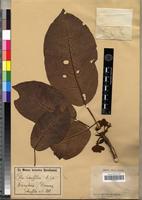
Type of Cola scheffleri K.Schum. [family STERCULIACEAE]
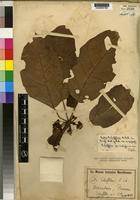
Isotype of Cola scheffleri K.Schum. [family STERCULIACEAE]
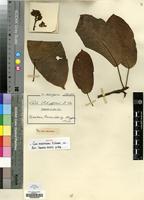
Isotype of Cola scheffleri K.Schum. [family MALVACEAE]
Previous
Next

Name

Identification
Isotype of Cola scheffleri K.Schum. [family MALVACEAE ] (stored under name); Verified by Not on sheet,
Related name
  • Cola scheffleri

Flora

Entry for Cola scheffleri K.Schum. [family STERCULIACEAE]
Herbarium
Royal Botanic Gardens, Kew (K)
Collection
Flora of Tropical East Africa
Resource Type
Reference Sources
Entry From
Flora of Tropical East Africa, page 1, Author: MARTIN CHEEK AND LAURENCE DORR
Names
Cola scheffleri K.Schum. [family STERCULIACEAE], in E.J. 33: 314 (1903); T.T.C.L.: 593 (1949); Brenan in K.B. 11: 163 (1956). Type: Tanzania, Lushoto District: Usambara Mts, Derema, Scheffler 150 (B†, holo.; BM, EA, iso., K photo.!)
Information
Evergreen tree 25–30 m tall; trunk 30–60 cm diameter with smooth grey or brown bark and longitudinal fissures, crown pyramidal or oblong; ultimate branchlets 5–7 mm, reddish brown, with brown stellate hairs when young; bud-scales caducous, subulate, ± 9 mm long, 1 mm wide, apical bud thickly golden brown felty-tomentose. Leaf-blade entire, oblong 7.5–25 cm long, 4–13 cm wide or ± orbicular in outline and digitately 3(–5)-lobed, 12–32 cm long, 13–30(–40) cm wide, divided for 2/3, the lateral lobes shorter, apex acuminate, acumen up to 1.7 cm, base rounded (subcordate in juvenile leaves), papery, glabrous above and below; petiole red, terete, 4–9 cm long, 1.5 mm wide, with brown tomentum when young; stipules caducous. Inflorescences 4–5 per stem, borne amongst the leaves, paniculate, 3.5–6 cm long, 2.5–10 cm wide, thickly covered in felty reddish brown hairs, lowest branch 0.7–1.6 cm from the base, 0.7–1 cm long, bearing 2–3 partial peduncle, each 1–2 mm long, bearing a single flower; bracts caducous, not seen; pedicels 1–2 mm long. Flowers pinkish brown outside, red with whitish pimples inside, perianth campanulate to widely obconical, 12–20 mm long, 14–20 mm wide, divided for ± half its length into 5–6 strap-shaped, reflexed lobes, outside with brown-black, felty tomentum of 5–9-armed stellate hairs, densest at the base of the perianth, inner surface glabrous apart from the involute margins of the lobes. Male flowers with androphore tapering slightly towards the apex, 5–7(–10) mm long, 1 mm wide, puberulous, with inconspicuous, mostly simple white hairs; anthers 8–10, uniseriate, forming a short cylinder 1.2–2 mm long, 3.5–4 mm wide, affixed to the head of the androphore by a glabrous disc; vestigial carpels ± 0.5 mm long, glabrous, largely concealed in a flask-like cavity in the head of the androphore. Female flowers known only from the type, slightly larger than the male, carpels 5 mm long, tomentose. Fruit with five bright red or brown patent follicles, each subglobose and laterally flattened, ± 6≈5≈3 cm, apex subrostrate, stipe 0.3–0.5 cm long, 1 cm wide, glabrous, 3–5-seeded, the seeds embedded in jelly-like pulp; seeds oblong-ellipsoid, ± 2.5 cm long, 1.2 cm wide.
Range
DISTR. T 3, 6, 7 endemic to Tanzania
Altitude range
650–1500 m
Distribution
TANZANIA Lushoto/Tanga District below Longuza Hill, Sigi R., fl. 19 Nov. 1947, Brenan & Greenway 8347!TANZANIA Tanga District Mlinga, sterile 18 Feb. 1937, Greenway 4910!TANZANIA Morogoro District Kanga, fr. Mar. 1989, Manktelow et al. 89/232!
Notes
LOCAL USES. Seed pulp edible (Pocs 6136B). CONSERVATION This species, although known from 16 specimens, distributed among seven sites, several of which are at least nominally protected, seems relatively common. Luke (in litt.) reports this as a locally common pioneer of medium sized semi-deciduous forest gaps (16–100 sq. m). In the absence of information that its forest habitat at these sites is in danger, this species is here treated as “near threatened”. IUCN (Red List 2002, www.redlist.org) list this species as vulnerable (VU B1+2b), however, this is on the basis of “Occurring only in the Nguru Mts and in the south of the Udzungwa Mountains at Kihanzi”. This seems unjustified in view of its actual, much larger, range. Apart from the type, only one other flowering collection has been made. Most of the 16 specimens known are sterile. Identification then depends on the characteristically 3–5-lobed leaf and the golden brown, densely felty-tomentose apical bud. Confusion with e.g. Sterculia appendiculata, also with lobed leaves, is possible. While two of the fertile specimens have only entire leaves, those of the other specimens are mostly or always ± lobed. It seems likely that juvenile trees and suckers of this species develop deeply lobed leaves, whilst smaller, entire leaves are present in flowering branches of mature trees (more difficult to collect), much as in Cola gigantea (q.v.). This heterophylly has caused confusion (Brenan, K. B. 1: 143 (1956)). Although known from two disjunct areas (eastern Usambaras and Kanga Mt, near Lushoto), no morphological differences have been detected between the two. However, flowers are unknown from the Kanga Mt area. Brenan (loc.cit.) ascribed Sterculia lindensis to Cola scheffleri with some doubt. However Dorr has shown that this is not a Cola, but a Sterculia. A 17th specimen was reported while this account was in press: Luke et al. 8187, Udzungwa Mountains NP (Luke pers. comm.), extending the range toT7.

Related Materials

  • Terms and Conditions
  • Privacy Policy
  • Cookie Policy
  • Cookie Settings
  • Accessibility
  • Help
  • Contact Us
  • Facebook
  • Twitter
ITHAKA

JSTOR is part of ITHAKA, a not-for-profit organization helping the academic community use digital technologies to preserve the scholarly record and to advance research and teaching in sustainable ways.

©2000-2026 ITHAKA. All Rights Reserved. JSTOR®, the JSTOR logo, JPASS®, Aluka®, and ITHAKA® are registered trademarks of ITHAKA.

╳