JSTOR Global Plants Home
  • Home
  • Browse
  • About
  • Access
  • Account
    • Saved Items
    • Profile
  • Log in

Global Plants

Skip to Main Content
  • JSTOR Global Plants Home
  • Global Plants

    • Browse
    • About
    • Access
    • Account
      • Saved Items
      • Profile
Log in
  • Browse
  • About
  • Access
  • Account
    • Saved Items
    • Profile
Advanced Search

Compilation
Cola octoloboides

4 Images see all

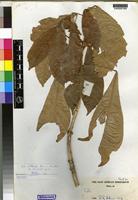
Isotype of Cola octoloboides Brenan [family STERCULIACEAE]
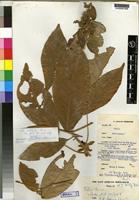
Holotype of Cola octoloboides Brenan [family STERCULIACEAE]
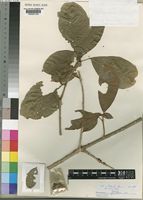
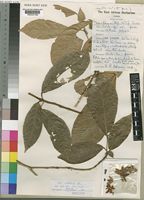
Cola octoloboides Brenan [family STERCULIACEAE]
Previous
Next

Name

Identification
Isotype of Cola octoloboides Brenan [family STERCULIACEAE ] (stored under name); Verified by Brenan JPM, 1978
Related name
  • Cola unrecorded
  • Cola octoloboides

Flora

Entry for Cola octoloboides Brenan [family STERCULIACEAE]
Herbarium
Royal Botanic Gardens, Kew (K)
Collection
Flora of Tropical East Africa
Resource Type
Reference Sources
Entry From
Flora of Tropical East Africa, page 1, Author: MARTIN CHEEK AND LAURENCE DORR
Names
Cola octoloboides Brenan [family STERCULIACEAE], in K.B. 33: 283 (1978); K.T.S.L.: 163 (1994). Type: Kenya, Kilifi District: Chasimba, Adams 124 (K!, holo.; EA iso.)
Information
Evergreen shrub or tree 3–6 m tall; trunk pale, stems 4–5 mm thick, whitish; current year’s growth pale brown, velvety tomentose, glabrous at length; bud-scales ovate, 4–5.5 mm long, 1.5–3 mm wide, acuminate, often persistent. Leaf-blade ovate (smallest leaves) to obovate-elliptic (larger), 3–18(–34) cm long, 1.8–7.5(–15) cm wide, acumen 0.5–0.7 mm long, 0.3–0.4 mm wide, base cordate (smallest leaves) cuneate to rounded, veins prominent below, 6–10 pairs, glabrous above and beneath; petiole terete, 0–4(–6.3) cm long, 1.5 mm wide, the base and apex distinctly swollen and 2.5–3.5 mm wide, thickly covered in a pale brown, velvety tomentum, becoming glabrous; stipules linear, rarely narrowly rhombic, 6–8 mm long, 0.2–0.5 mm wide, tomentose, ± persistent. Inflorescence with flowers borne with the leaves, axillary, single or rarely in fascicles, sessile; bracts ± 4, ± orbicular, the lowest ± 3 mm long, 4 mm wide, increasing to 6 mm long and wide, outer surface tomentose, inner glossy, glabrous, dark brown; pedicel absent. Flowers opening yellowish, fading chocolate brown, widely campanulate, 15–19 mm long, ± 28 mm across, perianth fleshy-leathery, divided within 2–5 mm of the base into 6 lobes, lobes narrowly triangular, 10–14 mm long, 4–9 mm wide, the margin folded inwards, outer surface densely stellate-hairy, with a mixture of long, lanate, colourless hairs up to 2 mm long, and smaller stellate hairs, folded margin lacking longer hairs, innner surface with minute papillae. Male flowers with androphore abruptly contracted from the base, 2–4 mm long, 3–3.5 mm across (4 mm across at the base), thickly long stellately hairy; anthers 14, uniseriate, forming a ring 2 mm long, 5.5–6 mm wide, inner surface tomentose. Female flowers without androphore; anthers at the base of the ovary; ovary subspherical, 3–4 mm long, 5–6 mm wide, densely stellate tomentose; style up to 0.5 mm long; stigmas 6, 0.5 mm long, partly reflexed, black. Fruit (probably immmature) with carpels felty green-white, 2.5 cm long, 1.3–1.8 cm wide, rostrum 0.5 cm long, stipe 0.8 mm long.
Range
DISTR. K 7 not known elsewhere
Altitude range
200–400 m
Distribution
KENYA Kilifi District Kaloleni–Kilifi, 14 km, Chasimba, fl. 30 Dec. 1970, Faden et al. 70/943! & idem, 22 km, fl. 12 Dec. 1974, Adams 125!KENYA Kwale District Dzombo Hill, y.fr. 9 Feb. 1989, Robertson et al. MDE 301!
Notes
LOCAL USES. None are known.  Apart from the specimen from Kwale District, this species appears restricted to the forest remnants on the limestone at Chasimba. Its total area of occupancy is believed to be below the 500 km2 threshold. Only five collections are known. The main threat at Chasimba is the removal of trees for firewood and a plan to use the rock to upgrade the Kilifi to Mariakani road (Luke, pers. comm.). Cola octoloboides is here assessed as EN B2a,b(iii), i.e. Endangered. IUCN (Red List 2002) also list this species as endangered (EN B1+2c).   Cola octoloboides is still imperfectly known: fruiting material has not been seen. The persistent bud-scales and stipules together with the persistent stem indumentum make this one of the few East African Cola species easily recognized in the sterile state. It is most closely related to C. ruawaensis (see diagnosis of that species for distinguishing characters).

Related Materials

  • Terms and Conditions
  • Privacy Policy
  • Cookie Policy
  • Cookie Settings
  • Accessibility
  • Help
  • Contact Us
  • Facebook
  • Twitter
ITHAKA

JSTOR is part of ITHAKA, a not-for-profit organization helping the academic community use digital technologies to preserve the scholarly record and to advance research and teaching in sustainable ways.

©2000-2026 ITHAKA. All Rights Reserved. JSTOR®, the JSTOR logo, JPASS®, Aluka®, and ITHAKA® are registered trademarks of ITHAKA.

╳