JSTOR Global Plants Home
  • Home
  • Browse
  • About
  • Access
  • Account
    • Saved Items
    • Profile
  • Log in

Global Plants

Skip to Main Content
  • JSTOR Global Plants Home
  • Global Plants

    • Browse
    • About
    • Access
    • Account
      • Saved Items
      • Profile
Log in
  • Browse
  • About
  • Access
  • Account
    • Saved Items
    • Profile
Advanced Search

Compilation
Cola greenwayi

15 Images see all

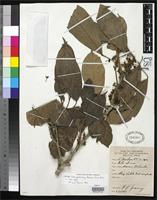
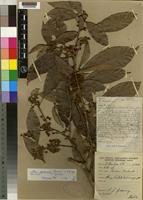
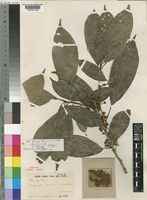
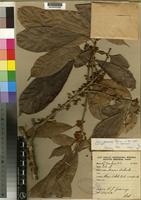
Isotype of Cola greenwayi Brenan, J.P.M. 1956 [family STERCULIACEAE]
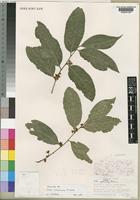
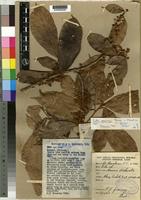
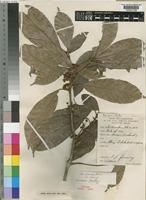
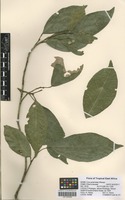
Cola chlorantha F.White [family STERCULIACEAE]
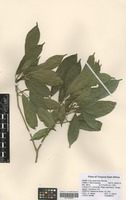
Filed as Cola greenwayi Brenan [family STERCULIACEAE]
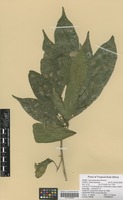
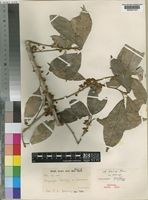
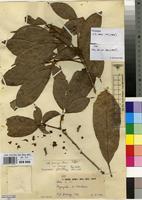
Cola greenwayi Brenan var. keniensis Brenan [family STERCULIACEAE]
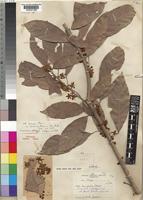
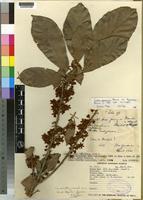
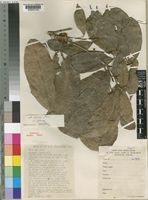
Isotype of Cola greenwayi Brenan ssp. greenwayi [family STERCULIACEAE]
Isotype of Cola greenwayi Brenan [family STERCULIACEAE]
Cola greenwayi Brenan var. greenwayi [family STERCULIACEAE]
Holotype of Cola greenwayi Brenan var. greenwayi [family STERCULIACEAE]
Filed as Cola greenwayi Brenan [family STERCULIACEAE]
Isotype of Cola greenwayi Brenan [family STERCULIACEAE]
Isotype of Cola greenwayi Brenan ssp. greenwayi [family STERCULIACEAE]
Cola greenwayi Brenan var. greenwayi [family STERCULIACEAE]
Filed as Cola greenwayi Brenan [family STERCULIACEAE]
Previous
Next

Name

Identification
Isotype of Cola greenwayi Brenan [family STERCULIACEAE ] (stored under name); Verified by Not on sheet,
Related name
  • Cola uloloma
  • Cola unrecorded
  • Cola greenwayi
  • Cola laurifolia
  • Cola chlorantha

Flora

Entry for Cola greenwayi Brenan [family STERCULIACEAE]
Herbarium
Royal Botanic Gardens, Kew (K)
Collection
Flora of Tropical East Africa
Resource Type
Reference Sources
Entry From
Flora of Tropical East Africa, page 1, Author: MARTIN CHEEK AND LAURENCE DORR
Names
Cola greenwayi Brenan [family STERCULIACEAE], in K.B. 11: 144 (1956); Wild in F.Z. 1: 560 (1961); Germain in F.C.B. 10: 290 (1963); K.T.S.L.: 162, fig., map (1994). Type: Tanzania, Lushoto District: Mkusi [Mkuzi], Greenway 7891 (K!, holo.; EA, iso.)
Information
Evergreen, much-branched tree with columnar or conical crown, 8–25 m tall; bark greyish-white or greyish-brown, reticulate and rough or smooth; ultimate branches terete, 2–2.5 mm wide, greyish brown, subscabrid with blackish hairs or glabrous; bud-scales caducous. Leaf-blade narrowly elliptic or oblanceolate, 3–16(–18) cm long, 1–6(–7) cm wide, apex long-acute, but sometimes shortly and bluntly acuminate, base acute to cuneate, 7–10 pairs of main veins, leathery, glabrous, dark green, drying brownish green; petiole terete, 0.3–4(–5.6) cm long, 0.1–0.15 mm wide, densely covered with short reddish or blackish subscabrid stellate hairs, at length glabrous; stipules caducous, narrowly triangular, 3–6 mm long, with brown, scurfy hairs. Inflorescences axillary, amongst the leaves, with fascicles of numerous single flowers, but with 1–6 flowers open at a time; bracts 1–3, basal, ± elliptic to triangular 1–1.5 mm long, 1.5–2 mm wide, sometimes inserted on the lower part of the pedicel and narrowly elliptic to deeply bifid, to 5 mm long, puberulous; pedicel 5–12(–15) mm long, 0.6–0.9 mm diameter, articulated 1/3–1/2 the way from the base, with short felty rusty reddish hairs. Flowers yellowish brown or green, perianth divided almost to the base into 5 lobes, each (3.5–)5–7(–10.5) mm long, 2.2–3.5 mm wide, outer surface as pedicel, inner sparsely hairy and densely and minutely papillate. Male flowers with androphore terete (2.5–)3.5 mm long, ± 0.5 mm wide, glabrous or hairy; anthers uniseriate, 4–6, glabrous, in a disc ± 1 mm long, 1.5–2 mm diameter, ovary vestigial, concealed. Female flowers with androphore absent; anthers barely reduced at base of ovary; ovary subglobose (1.2–)2–3 mm long, 2–3.5 mm diameter, densely tomentose; style 1–1.5 mm long; stigmas (3–)4(–5), recurved, 0.5 mm long, with stout hairs. Fruits subglobose to clavate, 12–16(–25) mm long, 15–20 mm diameter, apiculus ± 1 mm long, stipe 1–2 mm long, reddish crimson or brownish orange, with reddish tomentum.

Related Materials

  • Terms and Conditions
  • Privacy Policy
  • Cookie Policy
  • Cookie Settings
  • Accessibility
  • Help
  • Contact Us
  • Facebook
  • Twitter
ITHAKA

JSTOR is part of ITHAKA, a not-for-profit organization helping the academic community use digital technologies to preserve the scholarly record and to advance research and teaching in sustainable ways.

©2000-2026 ITHAKA. All Rights Reserved. JSTOR®, the JSTOR logo, JPASS®, Aluka®, and ITHAKA® are registered trademarks of ITHAKA.

╳