JSTOR Global Plants Home
  • Home
  • Browse
  • About
  • Access
  • Account
    • Saved Items
    • Profile
  • Log in

Global Plants

Skip to Main Content
  • JSTOR Global Plants Home
  • Global Plants

    • Browse
    • About
    • Access
    • Account
      • Saved Items
      • Profile
Log in
  • Browse
  • About
  • Access
  • Account
    • Saved Items
    • Profile
Advanced Search

Compilation
Cola discoglypremnophylla

7 Images see all

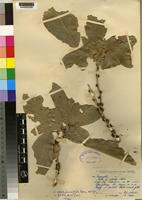
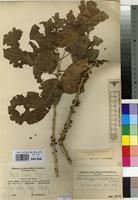
Isotype of Cola discoglypremnophylla Brenan&A.P.D.Jones [family STERCULIACEAE]
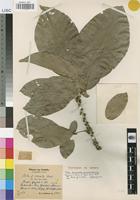
Isotype of Cola discoglypremnophylla A.P.D.Jones [family STERCULIACEAE]
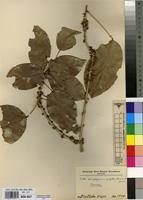
Isotype of Cola discoglypremnophylla Brenan & A.P.D.Jones [family STERCULIACEAE]
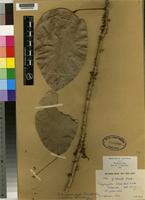
Isotype of Cola discoglypremnophylla Brenan&A.P.D.Jones [family STERCULIACEAE]
Type of Cola discoglypremnophylla Brenan & A.P.D.Jones [family STERCULIACEAE]
Isotype of Cola discoglypremnophylla Brenan & A.P.D.Jones [family STERCULIACEAE]
Cola discoglypremnophylla Brenan & A.P.D.Jones [family STERCULIACEAE]
Previous
Next

Name

Identification
Cola discoglypremnophylla Brenan & A.P.D.Jones [family STERCULIACEAE ] (stored under name); Cola discoglypremnophylla Brenan & A.P.D.Jones [family STERCULIACEAE ] Verified by Brenan,J.P.M. & Jones,A.P.D., 1945 Cola clavata Mast. [family STERCULIACEAE ]
Related name
  • Cola clavata
  • Cola discoglypremnophylla

Flora

Entry for Cola discoglypremnophylla Brenan & A.P.D.Jones [family STERCULIACEAE]
Herbarium
Royal Botanic Gardens, Kew (K)
Collection
Flora of Tropical East Africa
Resource Type
Reference Sources
Entry From
Flora of Tropical East Africa, page 1, Author: MARTIN CHEEK AND LAURENCE DORR
Names
Cola discoglypremnophylla Brenan & A.P.D.Jones [family STERCULIACEAE], in B.J.B.B. 18: 2 (1946); T.T.C.L.: 593 (1949); Brenan in K.B. 11: 150 (1956); Wild in F.Z. 1: 561 (1961). Type: Tanzania, Lindi District: Lake Lutamba, Schlieben 5433 (BM, holo.; BR, K!, iso.)
Information
Evergreen shrub or tree 3–10 m tall; bark smooth with dark and pale grey patches; ultimate branchlets terete, 2–4 mm wide, whitish, glabrous, becoming longitudinally ridged; bud-scales caducous. Leaf-blade ovate to obovate, 2–17 cm long, 0.8–10 cm wide, apex obtuse to slightly acuminate, base subacute to rounded, rounded, rarely subcordate, 4–5(–6) pairs of main veins, veinlets highly reticulate, leathery, glabrous, dark green, drying grey green; petiole terete, 0.2–5.5(–10.5) cm long, 1–1.4 mm wide, glabrous; stipules caducous, narrowly triangular, ± 3 mm long, soon falling. Inflorescences axillary, amongst the leaves or more usually below them on older wood, fasciculate with numerous single flowers in bud, but only 1–3 flowers open at one time; bracts 3–6, ± elliptic, 1–2 mm long, entire or bilobed, sometimes amplexicaul, pubescent; pedicel 4–6 mm long, 0.3–0.7 mm wide, with short greyish stellate hairs; articulation basal, inconspicuous. Flowers cream or yellow, fragrant, perianth divided for 4/5 into 5(–6) ± ascending lobes, each (3–)3.5–4.5 mm long, 1.5–2(–2.5) mm wide, outer surface as flower stalk, inner minutely papillate. Male flowers with androphore terete, 1.8–2.5 mm, glabrous; anthers uniseriate, 8–10, glabrous, in a disc 0.5–1 mm long, 1–1.8 mm diameter, ovary vestigial, concealed. Female flowers with anthers barely reduced at the base of the ovary; ovary ± sessile, subglobose, ± 1 mm long, 1.5 mm diameter, densely tomentose; style ± 0.5 mm long; stigmas 4, recurved. Fruits red brown, borne in dense clusters, carpels one per fruit, ascending, longitudinally ellipsoid, 2–2.3 cm long, ± 1 cm wide, apex rounded, stipe 5 mm long, 3 mm wide; fruiting pedicel ± 4 mm long, glabrous.
Range
DISTR. T ?6, 6/8, 8
Altitude range
100–500 m
Distribution
TANZANIA Rufiji District Lake Utanga, fl. 15 Dec. 1971, Ludanga 1357!TANZANIA Masasi District forest above Ndanda mission, fl. 17 March 1991, Bidgood, Abdallah & Vollesen 2037!TANZANIA Kilwa District Kingupira, fl. 12 Dec. 1976, Vollesen in MRC 4216!
Distribution (external)
Mozambique ?
Notes
LOCAL USES. None recorded.  Known to me from only seven fertile specimens. Threats to forest at some of its sites are documented in Clarke, Status Reports for 6 Coastal Forests in Lindi Region, Tanzania (1995). In view of these, an estimated area of occupancy of less than 2,000 km2, the species this is here assessed as VU 2Ba, b(iii), i.e.“vulnerable”, in view of its scarcity and restricted distribution.  The original authors of Cola discoglypremnophylla drew attention to the close relationship with “ C. clavata” (i.e. C. pseudoclavata). They distinguished Cola discoglypremnophylla principally on the leaves being widely rounded and cordate or subcordate at the base, as seen in the holotype (see Brenan & Jones 1946, Fig. 1). However, the type specimen is aberrant, based on the fertile specimens that I have seen (Luke however disagrees) and this leaf shape is not typical of the species. Brenan was unaware of this aberration, rejecting a later collection by Eggeling of what appears to be this species, on the basis of leaf-shape. In fact, a normal specimen of C. discoglypremnophylla has leaves indistinguishable from C. pseudoclavata and the two can only reliably be distinguished in flower. The four principal discriminating characters are: Pedicel 0.4–0.6 mm diameter, perianth lobes 5, ascending, androphore (2.5–)3–4 mm long C. discoglypremnophylla. Pedicel 0.2–0.3 mm diameter, perianth lobes 6–8(–10), ± reflexed, androphore 0.2 mm long C. pseudoclavata. Although no fertile collection has been seen by me from Mozambique (though Wild, loc. cit. refers to a specimen in bud and Luke (pers. comm. 2006) cites Luke & Kibure 10107 from the Mueda Plateau), it is very likely that a plant so widespread in the Lindi area should also occur over the border. Luke (pers. comm.) cites Luke, Luke et al. 7621 (EA n.v.), from Selous GR as firm evidence of the occurrence in T 6.

Related Materials

  • Terms and Conditions
  • Privacy Policy
  • Cookie Policy
  • Cookie Settings
  • Accessibility
  • Help
  • Contact Us
  • Facebook
  • Twitter
ITHAKA

JSTOR is part of ITHAKA, a not-for-profit organization helping the academic community use digital technologies to preserve the scholarly record and to advance research and teaching in sustainable ways.

©2000-2026 ITHAKA. All Rights Reserved. JSTOR®, the JSTOR logo, JPASS®, Aluka®, and ITHAKA® are registered trademarks of ITHAKA.

╳