JSTOR Global Plants Home
  • Home
  • Browse
  • About
  • Access
  • Account
    • Saved Items
    • Profile
  • Log in

Global Plants

Skip to Main Content
  • JSTOR Global Plants Home
  • Global Plants

    • Browse
    • About
    • Access
    • Account
      • Saved Items
      • Profile
Log in
  • Browse
  • About
  • Access
  • Account
    • Saved Items
    • Profile
Advanced Search

Compilation
Coelachne friesiorum

4 Images see all

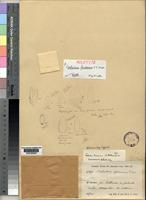
Holotype of Coelachne friesiorum C.E.Hubbard [family POACEAE]
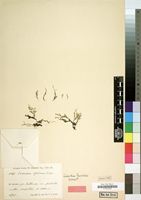
Type of Coelachne friesiorum C.E.Hubb. [family GRAMINEAE]
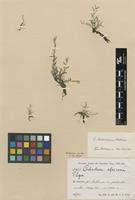
Type of Coelachne friesiorum C.E.Hubb. [family POACEAE]
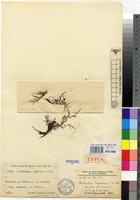
Type of Coelachne friesiorum C.E.Hubb. [family GRAMINEAE]
Previous
Next

Name

Identification
Coelachne friesiorum C.E.Hubb. [family GRAMINEAE ] (stored under name); Verified by Not on sheet.,
Related name
  • Coelachne africana
  • Coelachne friesiorum

Flora

Entry for COELACHNE friesiorum C. E. Hubbard [family POACEAE]
Herbarium
Royal Botanic Gardens, Kew (K)
Collection
Flora of Tropical East Africa
Resource Type
Reference Sources
Entry From
Flora of Tropical East Africa, Part (Part 2), page 177, (1974) Author: W. D. CLAYTON, S. M. PHILLIPS AND S. A. RENVOIZE
Names
COELACHNE friesiorum C. E. Hubbard [family POACEAE], in K.B. 1935: 307 (1935) & in F.T.A. 10: 85 (1937); R.K.G.: 31 (1958). Type: Kenya, Aberdare Range, Sattimma [Satimma], Fries 2407 (K, holo. !)
Information
Perennial. Culms 2.5–5 cm. high, ascending from a creeping base. Leaf-blades lanceolate, 0.4–1 cm. long, up to 3.5 mm. wide, flat. Panicles contracted, 0.6–3 cm. long, few-spiculate. Spikelets oblong, 3 mm. long, purplish; glumes broadly ovate-oblong to broadly elliptic-oblong, glabrous; lower lemma broadly elliptic, 2.2–2.5 mm. long, glabrous except for a few hairs at the base; upper lemma ovate-elliptic to elliptic, 2–2.2 mm. long, pubescent; anthers 2, 1 mm. long.
Range
DISTR. K3 endemic on the Aberdares
Altitude range
3000 m.
Distribution
KENYA Aberdare Range, Sattimma, 14 Mar. 1922, Fries 2407 !
Notes
The distinctions between the two species are very slight and it is possible that C. friesiorum represents a high mountain variant of C. africana. On the other hand it may be the product of polyploidy as is the case in other mountain grasses in which the main difference lies in the sizes of their spikelets.£

Related Materials

  • Terms and Conditions
  • Privacy Policy
  • Cookie Policy
  • Cookie Settings
  • Accessibility
  • Help
  • Contact Us
  • Facebook
  • Twitter
ITHAKA

JSTOR is part of ITHAKA, a not-for-profit organization helping the academic community use digital technologies to preserve the scholarly record and to advance research and teaching in sustainable ways.

©2000-2026 ITHAKA. All Rights Reserved. JSTOR®, the JSTOR logo, JPASS®, Aluka®, and ITHAKA® are registered trademarks of ITHAKA.

╳