JSTOR Global Plants Home
  • Home
  • Browse
  • About
  • Access
  • Account
    • Saved Items
    • Profile
  • Log in

Global Plants

Skip to Main Content
  • JSTOR Global Plants Home
  • Global Plants

    • Browse
    • About
    • Access
    • Account
      • Saved Items
      • Profile
Log in
  • Browse
  • About
  • Access
  • Account
    • Saved Items
    • Profile
Advanced Search

Compilation
Clutia galpinii

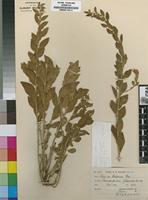
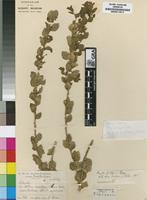
3 Images see all

Type of Clutia galpinii Pax [family EUPHORBIACEAE]
Previous
Next

Name

Identification
Clutia galpinii Pax [family EUPHORBIACEAE ] Verified by Not on sheet, Clutia pulchella L. [family EUPHORBIACEAE ] (stored under name); Verified by Not on sheet,
Related name
  • Clutia galpinii
  • Clutia pulchella

Flora

Entry for Clutia galpinii Pax [family EUPHORBIACEAE]
Herbarium
Royal Botanic Gardens, Kew (K)
Collection
Flora Zambesiaca
Resource Type
Reference Sources
Entry From
FZ, Vol 9, Part 4, (1996) Author: A. Radcliffe-Smith
Names
Clutia galpinii Pax [family EUPHORBIACEAE], in Bull. Herb. Boissier 6: 736 (1898) as “Cluytia”, pro parte excl. Galpin 961. —Prain in Bull. Misc. Inform., Kew 1913, 10: 403 (1913); in F.C. 5, 2: 443 (1920). —Burtt Davy, Fl. Pl. Ferns Transvaal 2: 304 (1932). —Hutchinson, Botanist in Southern Africa: 667 (1946). Type from South Africa (Transvaal).
Clutia pulchella forma genuina Müll. Arg. Pax [family EUPHORBIACEAE], in Engler, Pflanzenr. [IV, fam. 147, iii] 47: 54 (1911), pro parte, nequaquam C. pulchella L.
Information
Similar to C. pulchella but plants are smaller (c. 15 cm high) and less branched, with petioles not more than 3 mm long, and leaf blades more markedly glaucous, turning pink; and the fruiting pedicels not more than 4 mm long.
Altitude range
1280–1400 m.
1400
1280
Distribution
Botswana SE Ootse Hill, 48 km SE of Gaborone, male fl. & fr. 6.iv.1974, Mott 220b (SRGH; UBLS).
Distribution (external)
South Africa (Transvaal)

Related Materials

  • Terms and Conditions
  • Privacy Policy
  • Cookie Policy
  • Cookie Settings
  • Accessibility
  • Help
  • Contact Us
  • Facebook
  • Twitter
ITHAKA

JSTOR is part of ITHAKA, a not-for-profit organization helping the academic community use digital technologies to preserve the scholarly record and to advance research and teaching in sustainable ways.

©2000-2026 ITHAKA. All Rights Reserved. JSTOR®, the JSTOR logo, JPASS®, Aluka®, and ITHAKA® are registered trademarks of ITHAKA.

╳