JSTOR Global Plants Home
  • Home
  • Browse
  • About
  • Access
  • Account
    • Saved Items
    • Profile
  • Log in

Global Plants

Skip to Main Content
  • JSTOR Global Plants Home
  • Global Plants

    • Browse
    • About
    • Access
    • Account
      • Saved Items
      • Profile
Log in
  • Browse
  • About
  • Access
  • Account
    • Saved Items
    • Profile
Advanced Search

Compilation
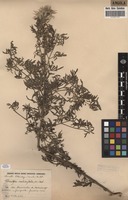
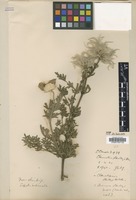
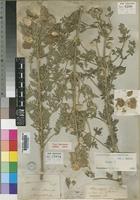
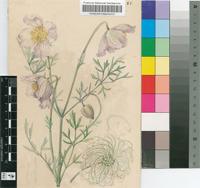
Clematopsis stanleyi

4 Images see all

Filed as Clematopsis scabiosifolia (DC) Hutch. [family RANUNCULACEAE]
Filed as Clematis stanleyi Hook. [family RANUNCULACEAE]
Clematopsis stanleyi (Hook.) Hutch. [family RANUNCULACEAE]
Clematopsis stanleyi (Hook.) Hutch.
Previous
Next

Name

Identification
Clematopsis stanleyi (Hook.) Hutch. [family RANUNCULACEAE ]
Related name
  • Clematopsis stanleyi

Flora

Entry for Clematopsis scabiosifolia group a DC. Hutch. [family RANUNCULACEAE]
Herbarium
Royal Botanic Gardens, Kew (K)
Collection
Flora Zambesiaca
Resource Type
Reference Sources
Entry From
FZ, Vol 1, Part 1, page 89, (1960) Author: A. W. Exell and E. Milne-Redhead
Names
Clematopsis stanleyi Hook. Hutch. [family RANUNCULACEAE], in Kew Bull. 1920: 21 (1920). — Pole Evans, Fl. Pl. S. Afr.: t. 81 (1923). Type as above.
Clematis stanleyi Hook. [family RANUNCULACEAE], Ic. Pl. 6: t. 589 (1843). Type: from the Transvaal (Magalisberg).
Clematopsis scabiosifolia group a DC. Hutch. [family RANUNCULACEAE]
Range
Abundant in the Transvaal but apparently rare elsewhere.
Distribution
Zimbabwe W Wankie, fl. 19.ii.1956, Wild 4744 (BM; LISC; SRGH).Botswana N Leshumo R., fl. i.1876, Holub (K).Zambia B Sesheke, on Kalahari Sand in open Baphia-Terminalia scrub, fl. 20.xii.1952, Angus 981 (FHO; K).
Distribution (external)
Southern Angola
Transvaal
Notes
On the hypothesis that Clematopsis has evolved from Clematis and that various species of the latter genus may have contributed elements to the polymorphic Clematopsis scabiosifolia, it is possible that in Group A we may have a considerable inheritance from Clematis oweniae, which has a fairly similar distribution.

Related Materials

  • Terms and Conditions
  • Privacy Policy
  • Cookie Policy
  • Cookie Settings
  • Accessibility
  • Help
  • Contact Us
  • Facebook
  • Twitter
ITHAKA

JSTOR is part of ITHAKA, a not-for-profit organization helping the academic community use digital technologies to preserve the scholarly record and to advance research and teaching in sustainable ways.

©2000-2026 ITHAKA. All Rights Reserved. JSTOR®, the JSTOR logo, JPASS®, Aluka®, and ITHAKA® are registered trademarks of ITHAKA.

╳