JSTOR Global Plants Home
  • Home
  • Browse
  • About
  • Access
  • Account
    • Saved Items
    • Profile
  • Log in

Global Plants

Skip to Main Content
  • JSTOR Global Plants Home
  • Global Plants

    • Browse
    • About
    • Access
    • Account
      • Saved Items
      • Profile
Log in
  • Browse
  • About
  • Access
  • Account
    • Saved Items
    • Profile
Advanced Search

Compilation
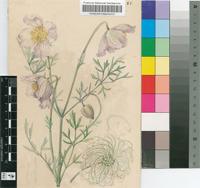
Clematis stanleyi

5 Images see all

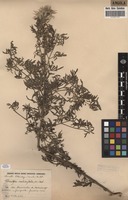
Filed as Clematopsis scabiosifolia (DC) Hutch. [family RANUNCULACEAE]
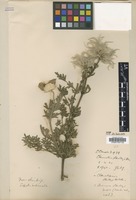
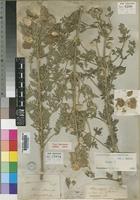
Filed as Clematis stanleyi Hook. [family RANUNCULACEAE]
Clematopsis stanleyi (Hook.) Hutch. [family RANUNCULACEAE]
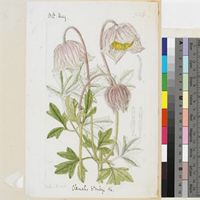
Clematis stanleyi Hook. original illustration from Curtis's Botanical Magazine
Clematopsis stanleyi (Hook.) Hutch.
Previous
Next

Name

Identification
Clematis stanleyi Hook. [family RANUNCULACEAE ]
Related name
  • Clematis stanleyi

Flora

Entry for CLEMATIS Stanleyi Hook. [family RANUNCULACEAE]
Herbarium
Royal Botanic Gardens, Kew (K)
Collection
Flora Capensis
Resource Type
Reference Sources
Entry From
Flora Capensis, Vol 1, page 1, (1894) Author: (By W. H. HARVEY).
Names
CLEMATIS Stanleyi Hook. [family RANUNCULACEAE], Ic. t. 589
Information
densely albo-tomentose; leaves tripinnately parted, pinnæ 3–4 pairs, multipartite, the laciniæ narrow-linear, simple or cloven; flowering branches paniculate, the panicle leafy; peduncles single-flowered, longer than the leaves; flower-buds obtuse; sepals spreading, broadly obovate, obtuse or emarginate. A tall, stout, much branched, suberect shrub, thickly clothed in all parts with pale, silky, spreading hairs. Leaves densely set, and cut into slender shreds. Panicles terminal, and corymbose. The peduncles are often bracteate in the middle. The flowers are 1 1/2 inches in diameter and seemingly purple (or blue?).
Distribution
SOUTH AFRICA Macallisberg, Burke! Port Natal, Miss Owen (Herb. T.C.D., Hook.)
Notes
A noble species, named in compliment to the late Lord Derby by whose collector it was first sent to Europe. It was, however, first found by Miss Owen, in the Zooloo Country, in 1840.

Related Materials

  • Terms and Conditions
  • Privacy Policy
  • Cookie Policy
  • Cookie Settings
  • Accessibility
  • Help
  • Contact Us
  • Facebook
  • Twitter
ITHAKA

JSTOR is part of ITHAKA, a not-for-profit organization helping the academic community use digital technologies to preserve the scholarly record and to advance research and teaching in sustainable ways.

©2000-2026 ITHAKA. All Rights Reserved. JSTOR®, the JSTOR logo, JPASS®, Aluka®, and ITHAKA® are registered trademarks of ITHAKA.

╳