JSTOR Global Plants Home
  • Home
  • Browse
  • About
  • Access
  • Account
    • Saved Items
    • Profile
  • Log in

Global Plants

Skip to Main Content
  • JSTOR Global Plants Home
  • Global Plants

    • Browse
    • About
    • Access
    • Account
      • Saved Items
      • Profile
Log in
  • Browse
  • About
  • Access
  • Account
    • Saved Items
    • Profile
Advanced Search

Compilation
Clematis friesiorum

2 Images see all

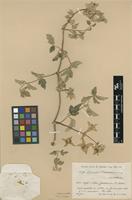
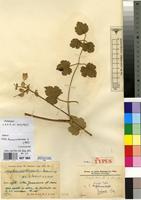
Type of Clematis friesiorum Ulbr. [family RANUNCULACEAE]
Isotype of Clematis friesiorum Ulbr. [family RANUNCULACEAE]
Previous
Next

Name

Identification
Isotype of Clematis friesiorum Ulbr. [family RANUNCULACEAE ] Verified by Not on sheet, Clematis hirsuta Perr. & Guill. [family RANUNCULACEAE ] (stored under name); Verified by Léonard, 1949
Related name
  • Clematis hirsuta
  • Clematis friesiorum

Flora

Entry for CLEMATIS hirsuta Perr. & Guill. [family RANUNCULACEAE]
Herbarium
Royal Botanic Gardens, Kew (K)
Collection
Flora of Tropical East Africa
Resource Type
Reference Sources
Entry From
Flora of Tropical East Africa, page 1, (1952) Author: E. MILNE-REDHEAD AND W. B. TURRILL
Names
CLEMATIS hirsuta Perr. & Guill. [family RANUNCULACEAE], in Fl. Seneg. Tent. 1: 1 (1831); Exell & Mendonça in Consp. Fl. Angol. 1: 3 (1937); F.C.B. 2, 192 (1951). Type: Cape Verde Peninsula, Leprieur (P, holo.)
CLEMATIS glaucescens Fresen. [family RANUNCULACEAE], in Mus. Senckenb. 2: 268 (1837). Type: Abyssinia, Rüppell (FR, holo.!)
CLEMATIS inciso-dentata A. Rich. [family RANUNCULACEAE], Tent. Fl. Abyss. 1: 2 (1847). Type: Abyssinia, Choa, Petit (P, holo.!)
CLEMATIS petersiana Klotzsch [family RANUNCULACEAE], in Peters, Mossamb. Bot. 1: 170 (1861). Type; Portuguese East Africa, Tette, Peters (B, holo.)
CLEMATIS grata Wall. sec. Oliv. [family RANUNCULACEAE], F.T.A. 1: 7 (1868), non Wall.
CLEMATIS friesiorum Ulbr. [family RANUNCULACEAE], in N. B. G. B. 10: 914 (1930). Type: Kenya: Mt. Kenya between Jaracuma and Meru, Fries 1598 (UPS, holo., K, iso.!)
Information
A tall climbing shrubby plant (more rarely decumbent in grassland), 1–4 m. or more tall; younger stems more or less softly hairy but usually becoming glabrous or nearly so, longitudinally ribbed and furrowed. Leaves pinnate with 5 leaflets, rarely bipinnate, frequently well developed leaves are associated with the inflorescence; leaflets suborbicular to ovate in general outline, acuminate, shortly acuminate, acute, or subobtuse, cordate to rounded rarely truncate at base, most often a longer central lobe with a shorter lateral one on each side, crenate-dentate with teeth of different sizes, from almost glabrous to lanate on lower surface, glabrous to more or less pubescent on upper surface. Inflorescences generally many-flowered; pedicels 1–3 cm. long; flower buds spherical to ellipsoid, rounded to acuminate. Sepals 1–2.7 cm. long, cream or white.
Range
DISTR. U1–4; K3–7; T2, 4, 5, 7, 8 widely spread in most parts of Tropical Africa
Altitude range
1000–3000 m.
Distribution
KENYA Kericho District Sotik Hills, 22 Aug. 1946, Greenway 7851!TANGANYIKA Mbulu District Mbulumbulu, 13 July 1943, Greenway 6764!UGANDA Mengo District mile 8 Masaka Road, Sept. 1937, Chandler 1930!
Notes
VARIATION. As accepted here this is an extremely variable species, especially in leaflet shape and size, leaf-margin, indumentum and flower size. The commonest East African variant has leaflets averaging 3 cm. long and 2.5 cm. broad, with a dense indumentum on the lower surface. Engler described a var. pilosissima, in E. J. 30: 309 (1902) (Goetze 1283, E.A., isotype!) under the specific name C. wightiana Wall. with all the parts shortly and densely grey-pilose. An extreme variant is Purseglove 3372 from Uganda, Kigezi District, Bukimbiri, 1950 m., May 1950. This has leaflets with blades up to 9 cm. long and 6.5 cm. broad, with dense golden yellow indumentum on the under surface. Owing to the reticulation of characters it has not been found possible to divide the species, as here accepted, into clear-cut varieties. It may be suggested that what were at one time two or more distinct species have amalgamated by interbreeding and back-crossing in Tropical Africa to produce the variable populations assigned here to C. hirsuta, and which may, in origin, represent a hybrid swarm. The attention of botanists is called to the need for intensive field studies on populations of this variable species.C. hirsuta is very closely related to the Indian C. wightiana Wall. ex Wight, Prod. Fl. Penins. Ind. Or. 2 (1834), but this latter has a yellow, not cream or white, indumentum to the sepals (as well seen in bud).

Related Materials

  • Terms and Conditions
  • Privacy Policy
  • Cookie Policy
  • Cookie Settings
  • Accessibility
  • Help
  • Contact Us
  • Facebook
  • Twitter
ITHAKA

JSTOR is part of ITHAKA, a not-for-profit organization helping the academic community use digital technologies to preserve the scholarly record and to advance research and teaching in sustainable ways.

©2000-2026 ITHAKA. All Rights Reserved. JSTOR®, the JSTOR logo, JPASS®, Aluka®, and ITHAKA® are registered trademarks of ITHAKA.

╳