JSTOR Global Plants Home
  • Home
  • Browse
  • About
  • Access
  • Account
    • Saved Items
    • Profile
  • Log in

Global Plants

Skip to Main Content
  • JSTOR Global Plants Home
  • Global Plants

    • Browse
    • About
    • Access
    • Account
      • Saved Items
      • Profile
Log in
  • Browse
  • About
  • Access
  • Account
    • Saved Items
    • Profile
Advanced Search

Compilation
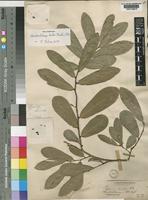
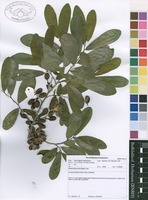
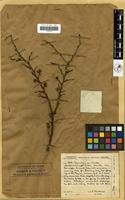
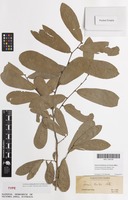
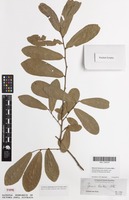
Cleistochlamys kirkii

5 Images see all

Cleistochlamys kirkii (Benth.) Oliv. [family ANNONACEAE]
Filed as Cleistochlamys kirkii (Benth.) Oliv. [family ANNONACEAE]
Syntype of Popowia kirkii Benth. [family ANNONACEAE]
Previous
Next

Name

Identification
Cleistochlamys kirkii (Benth.) Oliv. [family ANNONACEAE ] (stored under name); Verified by H.G. Faulkner,
Related name
  • Popowia kirkii
  • Cleistochlamys kirkii
  • Cleistochlamys unrecorded

Flora

Entry for CLEISTOCHLAMYS kirkii (Benth.) Oliv. [family ANNONACEAE]
Herbarium
Royal Botanic Gardens, Kew (K)
Collection
Flora of Tropical East Africa
Resource Type
Reference Sources
Entry From
Flora of Tropical East Africa, page 1, (1971) Author: B. Verdcourt
Names
CLEISTOCHLAMYS kirkii (Benth.) Oliv. [family ANNONACEAE], in J.L.S. 9: 175 (1865) & F.T.A. 1: 24 (1868); Engl. & Diels in E.M. 6: 36, t. 13/B (1901); Diels in N.B.G.B. 13: 267 (1936); T.T.C.L.: 41 (1949); Robson in F.Z. 1: 120, t. 11/A (1960); F.F.N.R.: 52 (1962). Types: Mozambique, opposite Sena & at foot of Mt. Morrumbala, Kirk (both K, syn. !)
Popowia? kirkii Benth. [family ], in Trans. Linn. Soc. 23: 470 (1862); Sprague & Hutch. in K.B. 1916: 157 (1916)
Unona parvifolia Engl. var. petersii [family ANNONACEAE], P.O.A. C: 179 (1895). Type: Mozambique, Sena, Peters (B, holo.)
Information
Shrub or small weak-stemmed tree 2.4–7(–10) m. tall, usually much branched and straggling; bark ± smooth, grey-brown with buff-coloured lenticels, peeling in untidy flakes; branchlets glabrous, at first pale but soon dark brown and lenticellate. Leaf-blades elliptic-oblong, oblanceolate-elliptic, or obovate, (1–)6–11(–14) cm. long, (0.8–)2–5(–6.5) cm. wide, obtuse, rounded or emarginate at the apex, cuneate to rounded at the base, rather thin, bright green, sometimes rather paler beneath and glaucous, glabrous above, very sparsely and inconspicuously pubescent beneath and apparently glabrous to the naked eye; venation fine, reticulate, slightly prominent on both surfaces; petiole 2–5 mm. long, glabrous. Flowers solitary, axillary, sessile, with a heavy sweet scent; buds spherical, ± 3 mm. in diameter, persisting through the dry season when the tree is deciduous and probably opening just before the rains; bracteoles 4–5, biseriate, imbricate, cucullate, increasing in size towards the flowers, reddish-brown, up to 3 mm. long and 3 mm. wide, persistent, glabrous or ciliate. Calyx yellow, reddish-brown or red-bordered, shining scarious-coriaceous, completely covering the petals in bud, dividing at anthesis into (2–)3 subequal cucullate broadly triangular lobes, these 3–3.5 mm. long, 2.5–4.5 mm. wide, finely rugose, glabrous. Petals cream or white, obovate or oblong, 4.5–6 mm. long, 2.5–3.5 mm. wide, the inner rather shorter, thick, densely white silky pilose outside and inside near the apex, glabrous inside at the base. Stamens 0.75 mm. long, just over 1 mm. wide, glabrous. Monocarps (1–)3–10, purplish-red or black, 1.3–2.3 cm. long, 0.7–1 cm. wide, often apiculate, glabrous, finely rugose, edible; stipes 4–5.5 mm. long. Seeds pale, cyhndric-ellipsoid, 1.6–2 cm. long, 8–9 mm. wide and thick; hilum terminal, more or less round. Fig. 25.
Range
DISTR. T6, 8
Distribution
TANGANYIKA Masasi, Gillman 1202 !;TANGANYIKA Lindi District Seliman-Mamba, 4 June 1903, Busse 2760 ! & Lake Lutamba, 4 Oct. 1934, Schlieben 5431 ! & 2 Dec. 1934, Schlieben 5675!
Distribution (external)
; Mozambique
Malawi
Zambia
Rhodesia
Notes
Hutchinson (G.F.P. 1: 100 (1964)) has included Cleistochlamys in “ Popowia ”, but although there may be technical similarities the general facies and entire calyx suggest to me that the two are widely separated. I follow the interpretation of Unona parvifolia var. petersii given by Sprague & Hutch. (loc. cit.); I have not re-examined the type.

Related Materials

  • Terms and Conditions
  • Privacy Policy
  • Cookie Policy
  • Cookie Settings
  • Accessibility
  • Help
  • Contact Us
  • Facebook
  • Twitter
ITHAKA

JSTOR is part of ITHAKA, a not-for-profit organization helping the academic community use digital technologies to preserve the scholarly record and to advance research and teaching in sustainable ways.

©2000-2026 ITHAKA. All Rights Reserved. JSTOR®, the JSTOR logo, JPASS®, Aluka®, and ITHAKA® are registered trademarks of ITHAKA.

╳