JSTOR Global Plants Home
  • Home
  • Browse
  • About
  • Access
  • Account
    • Saved Items
    • Profile
  • Log in

Global Plants

Skip to Main Content
  • JSTOR Global Plants Home
  • Global Plants

    • Browse
    • About
    • Access
    • Account
      • Saved Items
      • Profile
Log in
  • Browse
  • About
  • Access
  • Account
    • Saved Items
    • Profile
Advanced Search

Compilation
Citrullus naudinianus

3 Images see all

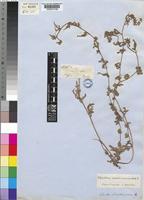
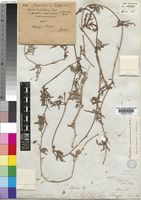
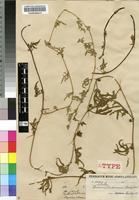
Isotype of Citrullus naudinianus (Sond.) Hook.f. [family CUCURBITACEAE]
Acanthosicyos naudinianus (Sond.) C.Jeffrey [family CUCURBITACEAE]
Previous
Next

Name

Identification
Citrullus naudinianus (Sond.) Hook.f. [family CUCURBITACEAE ] Cucumis unrecorded unrecorded [family CUCURBITACEAE ] Acanthosicyos naudinianus (Sond.) C.Jeffrey [family CUCURBITACEAE ] (stored under name);
Related name
  • Acanthosicyos naudinianus
  • Cucumis dissectifolius
  • Citrullus naudinianus
  • Cucumis naudinianus
  • Citrullus unrecorded
  • Cucumis unrecorded

Flora

Entry for CITRULLUS Naudinianus Sonder [family CUCURBITACEAE]
Herbarium
Royal Botanic Gardens, Kew (K)
Collection
Flora of Tropical Africa
Resource Type
Reference Sources
Entry From
Flora of Tropical Africa, Vol 2, page 521, (1871) Author: (By Mr. J. G. Baker.)
Names
CITRULLUS Naudinianus Sonder [family CUCURBITACEAE], (Cucumis Naudinianus, in part) in Fl. Cap. ii. 496.
Information
Root perennial (Sonder). Stem trailing, scabrid and pubescent. Leaves as in C. Colocynthis. Tendrils reduced to spines. Fruit unknown.
Distribution
South Central T. Baines!
Notes
A curious form, of which I have seen male flowers only. South African specimens of it occur mixed with those of Cucumis dissectifolius, Naud. in Herb. Hook. Sonder's C. Naudinianus consists of flowering specimens of this and fruiting of C. dissectifolius, Naud.; these two plants being so similar that the flowers (themselves black and obscure) alone distinguish them. It is probably a desert form of C. Colocynthis or C. vulgaris .

Related Materials

  • Terms and Conditions
  • Privacy Policy
  • Cookie Policy
  • Cookie Settings
  • Accessibility
  • Help
  • Contact Us
  • Facebook
  • Twitter
ITHAKA

JSTOR is part of ITHAKA, a not-for-profit organization helping the academic community use digital technologies to preserve the scholarly record and to advance research and teaching in sustainable ways.

©2000-2026 ITHAKA. All Rights Reserved. JSTOR®, the JSTOR logo, JPASS®, Aluka®, and ITHAKA® are registered trademarks of ITHAKA.

╳