JSTOR Global Plants Home
  • Home
  • Browse
  • About
  • Access
  • Account
    • Saved Items
    • Profile
  • Log in

Global Plants

Skip to Main Content
  • JSTOR Global Plants Home
  • Global Plants

    • Browse
    • About
    • Access
    • Account
      • Saved Items
      • Profile
Log in
  • Browse
  • About
  • Access
  • Account
    • Saved Items
    • Profile
Advanced Search

Compilation
Cissus unguiformifolius

4 Images see all

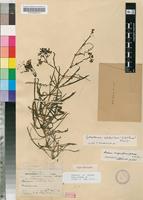
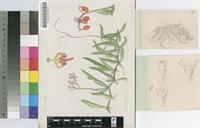
Type of Cissus unguiformifolius C.A.Sm. [family VITACEAE]
Cissus unguiformifolius C.A.Sm.
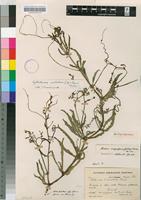
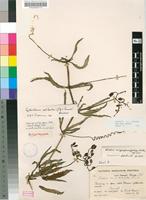
Syntype of Cissus unguiformifolius C.A.Sm. [family VITACEAE]
Previous
Next

Name

Identification
Cissus unguiformifolius C.A.Sm. [family VITACEAE ]
Related name
  • Cissus unguiformifolius

Flora

Entry for Cyphostemma schlechteri Gilg & Brandt Descoings [family VITACEAE]
Herbarium
Royal Botanic Gardens, Kew (K)
Collection
Flora Zambesiaca
Resource Type
Reference Sources
Entry From
FZ, Vol 2, Part 2, page 439, (1966) Author: H. Wild and R. B. Drummond
Names
Cyphostemma schlechteri Gilg & Brandt Descoings [family VITACEAE], in Notul. Syst. 16: 124 (1960). Type: Mozambique, Ressano Garcia, Schlechter 11893 (B, holotype †).
Cissus schlechteri Gilg & Brandt [family VITACEAE], in Engl., Bot. Jahrb. 46: 489 (1912). — Suesseng. in Engl. & Prantl, Nat. Pflanzenfam. ed. 2, 20d: 240 (1953). Type as above.
Cissus unguiformifolius C.A. Sm. [family VITACEAE], in Burtt Davy, F.P.F.T. 2: xx, 476 (1932). — I.C. Verdoorn in Fl. Pl. Afr. 25: t. 972 (1946). Type from the Transvaal (Messina).
Information
Prostrate or procumbent herb, glabrous and ± glaucous in all parts; stems green or pinkish, up to 1 m. long, with tendrils as a rule along the whole length. Leaves digitately 3–5-foliolate, sessile or subsessile; leaflet-lamina subfleshy, up to c. 12 × 3·5 cm., lateral leaflets smaller, linear-lanceolate to narrowly oblong-obovate, acute and often apiculate at the apex, margins sparsely but coarsely serrate, narrowly cuneate to the subsessile base. Cymes lax at the apex of axillary branches; peduncles up to c. 6 cm. long; pedicels slender, up to c. 6 mm. long; bracts and bracteoles c. 2 mm. long, subulate. Flower-bud 2·5–3 mm. long, oblong-cylindric, slightly constricted at the middle. Calyx 0·7 mm. long, entire or minutely 4-toothed. Petals greenish-yellow with purplish tips. Ovary glabrous; style c. 1·75 mm. long, scarcely capitate. Fruit peach-red, 1·4 × 0·8 cm., ellipsoid-oblong. Seed 1, 7 × 4 mm., almost smooth but with a fairly strong dorsal furrow.
Habitat
Usually on rocky or sandy soils.
Distribution
Mozambique M Goba-Fronteira, fl. 13.xii.1947, Barbosa 720 (LISC; LM).Zimbabwe S Bubye-Limpopo junction, Chikwarekware, fl. 23.ii.1961, Wild 5349 (K; PRE; SRGH).Botswana SE Derdepoort, fl. 29.xi.1954, Codd 8852 (PRE).
Distribution (external)
Transvaal
Notes
The fruit is reputed by Bechuanaland Africans to be poisonous.

Related Materials

  • Terms and Conditions
  • Privacy Policy
  • Cookie Policy
  • Cookie Settings
  • Accessibility
  • Help
  • Contact Us
  • Facebook
  • Twitter
ITHAKA

JSTOR is part of ITHAKA, a not-for-profit organization helping the academic community use digital technologies to preserve the scholarly record and to advance research and teaching in sustainable ways.

©2000-2026 ITHAKA. All Rights Reserved. JSTOR®, the JSTOR logo, JPASS®, Aluka®, and ITHAKA® are registered trademarks of ITHAKA.

╳