JSTOR Global Plants Home
  • Home
  • Browse
  • About
  • Access
  • Account
    • Saved Items
    • Profile
  • Log in

Global Plants

Skip to Main Content
  • JSTOR Global Plants Home
  • Global Plants

    • Browse
    • About
    • Access
    • Account
      • Saved Items
      • Profile
Log in
  • Browse
  • About
  • Access
  • Account
    • Saved Items
    • Profile
Advanced Search

Compilation
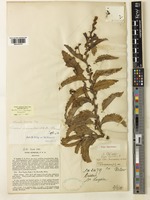
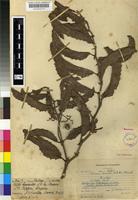
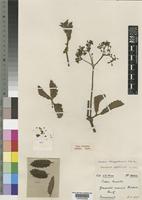
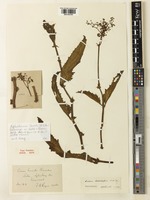
Cissus humilis

4 Images see all

Cyphostemma humile (N.E.Br.) Desc. ex Wild & R.B.Drumm. [family VITACEAE]
Type of Cissus humilis (N.E.Br.) Planch. [family VITACEAE]
Cyphostemma dasypleurum (C.A.Sm.) J.J.M.van der Merwe [family VITACEAE]
Cyphostemmon dolichopus unrecorded [family VITACEAE]
Previous
Next

Name

Identification
Cyphostemma dasypleurum (C.A.Sm.) J.J.M.van der Merwe [family VITACEAE ] (stored under name); Cissus humilis (N.E.Br.) Planch. [family VITACEAE ] Cissus dasypleurus C.A.Sm. [family VITACEAE ] Verified by Smith, C.A.,
Related name
  • Cissus humilis
  • Cyphostemma humile
  • Cyphostemma dasypleurum
  • Cissus dasypleurus

Flora

Entry for Cyphostemma humile N.E. Br. Descoings [family VITACEAE]
Herbarium
Royal Botanic Gardens, Kew (K)
Collection
Flora Zambesiaca
Resource Type
Reference Sources
Entry From
FZ, Vol 2, Part 2, page 439, (1966) Author: H. Wild and R. B. Drummond
Names
Cyphostemma humile N.E. Br. Descoings [family VITACEAE], in Notul. Syst. 16: 122 (1960). Type from Natal.
Vitis humilis N.E. Br. [family VITACEAE], in Hook., Ic. Pl. 16: t. 1565 (1887). Type as above.
Cissus humilis N.E. Br. Planch. [family VITACEAE], in A. & C. DC., Mon. Phan. 5, 2: 629 (1887). — Gilg & Brandt in Engl., Bot. Jahrb. 46: 488 (1912). — Suesseng. in Engl. & Prantl, Nat. Pflanzenfam. ed. 2, 20d: 240 (1953). Type as above.
Information
Prostrate herb or occasionally climbing; stems up to c. 0·6 m. long, often zigzag, with scattered stalked glandular hairs and often with long eglandular whitish hairs in addition; tendrils absent. Leaves simple, or occasionally deeply 3-lobed or 3-foliolate; leaf-lamina rather thick and fleshy when fresh, up to 20 × 12 cm., from oblong-elliptic to almost circular, apex rounded or acute, margin coarsely serrate, base from broadly cuneate to truncate, sometimes asymmetric, glabrous above or puberulous with longer hairs on the main nerves, densely pubescent or puberulous below or with a few hairs restricted to the main nerves, rarely quite glabrous; petioles 0·2–2·5 cm. long; stipules up to 2 × 0·8 cm., lanceolate-oblong, acuminate, margins ciliate. Cymes rather lax; peduncle up to 12 cm. long, at the apex of axillary branches, with a few scattered glandular hairs c. 1 mm. long and often also with whitish eglandular hairs; pedicels with denser and often shorter glandular hairs, otherwise glabrous; bracts and bracteoles 1–2 mm. long, lanceolate-acuminate, ciliate on the margins. Flower-bud c. 3 mm. long, oblong-cylindric, only slightly constricted in the middle, glabrous. Calyx c. 0·7 mm. long, entire. Petals green, red-tipped. Ovary glabrous; style c. 1·2 mm. long, slightly capitate. Fruit c. 2·2 × 1·7 cm. when fresh, ellipsoid, glabrous. Seed usually 1, c. 1·1 × 0·6 cm., dorsal crest very faint, with 2 pairs of faint lateral furrows, faintly rugose and foveolate (markings often almost invisible in old seeds).

Related Materials

  • Terms and Conditions
  • Privacy Policy
  • Cookie Policy
  • Cookie Settings
  • Accessibility
  • Help
  • Contact Us
  • Facebook
  • Twitter
ITHAKA

JSTOR is part of ITHAKA, a not-for-profit organization helping the academic community use digital technologies to preserve the scholarly record and to advance research and teaching in sustainable ways.

©2000-2026 ITHAKA. All Rights Reserved. JSTOR®, the JSTOR logo, JPASS®, Aluka®, and ITHAKA® are registered trademarks of ITHAKA.

╳