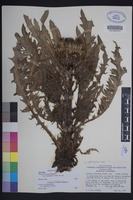
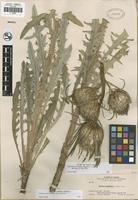
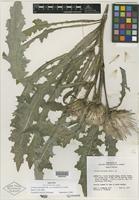
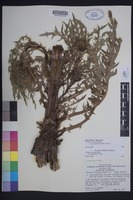
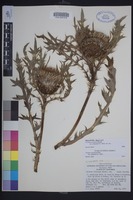
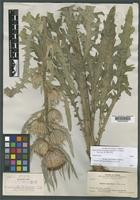
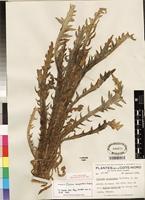
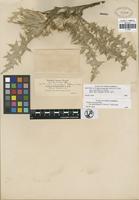
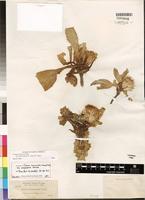
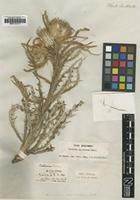
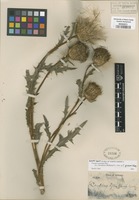
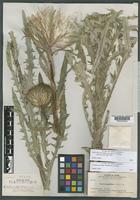
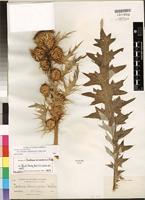
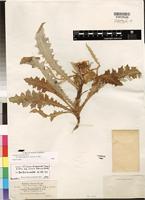
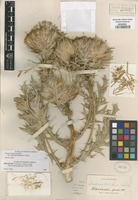
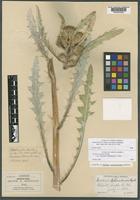
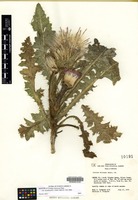
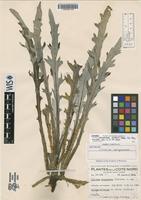
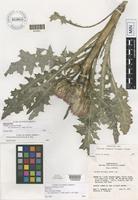
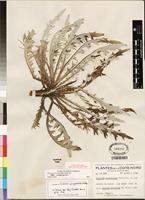
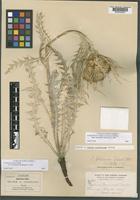
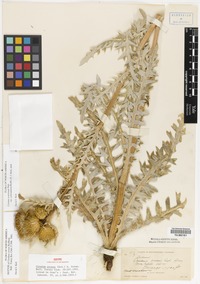
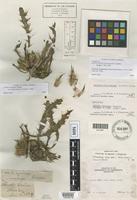
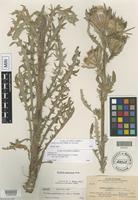
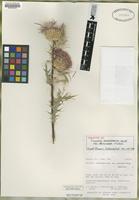
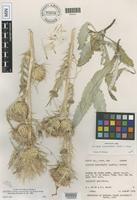
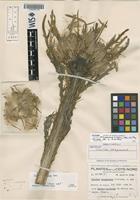
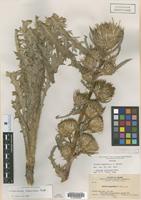
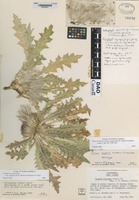
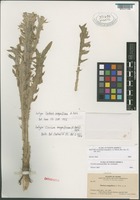
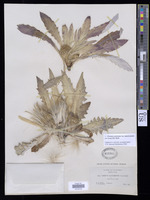
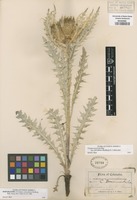
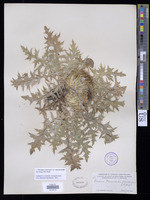
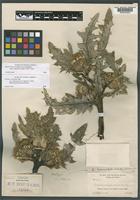
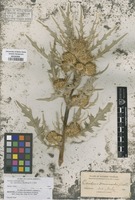
Biennials or monocarpic perennials, acaulescent, short caulescent and forming low rounded mounds, or caulescent and erect, 0–200 cm; taprooted. Stems absent, or with crowded branches from near base, or simple and erect, often fleshy and thickened, glabrous to thinly gray- tomentose, often villous with septate trichomes. Leaves: blades linear to elliptic, 5–20 × 3–7 cm, plane to strongly undulate, unlobed or shallowly to deeply pinnatifid, lobes linear-lanceolate to broadly triangular, closely spaced, spreading, spinose-dentate or lobed, main spines slender to stout, 2–15+ mm, abaxial faces glabrous or thinly to densely tomentose, ± villous with septate trichomes along the veins, glabrate or trichomes persistent, adaxial thinly arachnoid tomentose and soon glabrescent; basal often present at flowering, sessile or winged-petiolate; cauline many in caulescent forms, reduced distally or not, winged-petiolate or distal sessile; distal often well developed, similar to proximal, sometimes much narrower and bractlike. Heads 1–many, erect, borne singly or often densely crowded in spiciform, racemiform, or subcapitate arrays, especially in acaulescent or short-caulescent plants, often closely subtended by distalmost leaves. Peduncles 0–10 cm, leafy-bracted. Involucres ovoid to hemispheric, 2–4 × 1.5–6 cm, loosely arachnoid on phyllary margins or glabrate. Phyllaries in 5–10 series, imbricate, ovate or lanceolate (outer) to linear or linear-lanceolate (inner), margins (outer) entire or scarious-fringed, abaxial faces without glutinous ridge; outer and mid appressed, spines erect to spreading 0.5–13 mm; apices of mid and inner narrowed and scabro-denticulate or with expanded, erose-dentate tips, spineless or tipped with flattened spines. Corollas white or pale lavender to purple, 20–40 mm, tubes 7–24 mm, throats 4–12 mm (noticeably larger than tubes), lobes 4–10 mm; style tips 3.5–8 mm. Cypselae light to dark brown, 4–6.5 mm, apical collars usually colored like body; pappi 17–35 mm, white to tan. 2n = 34, 36.