JSTOR Global Plants Home
  • Home
  • Browse
  • About
  • Access
  • Account
    • Saved Items
    • Profile
  • Log in

Global Plants

Skip to Main Content
  • JSTOR Global Plants Home
  • Global Plants

    • Browse
    • About
    • Access
    • Account
      • Saved Items
      • Profile
Log in
  • Browse
  • About
  • Access
  • Account
    • Saved Items
    • Profile
Advanced Search

Compilation
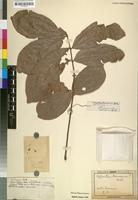
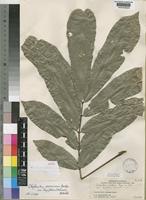
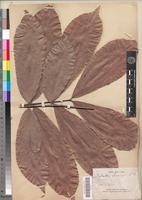
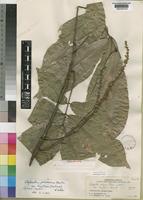
Chytranthus prieurianus

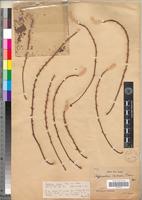
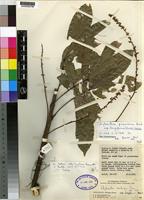
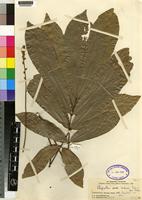
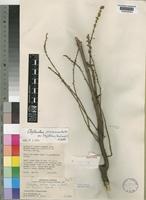
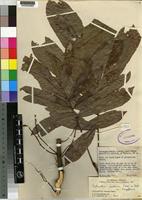
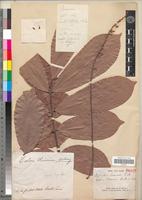
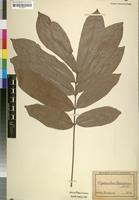
11 Images see all

Type of Chytranthus sacleuxii Pierre [family SAPINDACEAE]
Isotype of Chytranthus prieurianus Baill. ssp. longiflorus (Verdc.) Halle [family SAPINDACEAE]
Chytranthus prieurianus Baill. var. longiflorus (Verdc.) N.Hallé [family SAPINDACEAE]
Filed as Chytranthus prieurianus Baill. [family SAPINDACEAE]
Chytranthus prieurianus Baill. var. longiflorus (Verdc.) N.Hallé [family SAPINDACEAE]
Type of Chytranthus prieurianus Baill. [family SAPINDACEAE]
Holotype of Chytranthus sacleuxii Pierre ex Sacleux var. longiflorus Verdc. [family SAPINDACEAE]
Isotype of Chytranthus prieurianus Baill. ssp. longiflorus (Verdc.) Halle [family SAPINDACEAE]
Type of Chytranthus prieurianus Baill. [family SAPINDACEAE]
Filed as Chytranthus prieurianus Baill. [family SAPINDACEAE]
Previous
Next

Name

Identification
Isotype of Chytranthus prieurianus Baill. [family SAPINDACEAE ] (stored under name); Verified by Not on sheet,
Related name
  • Chytranthus sacleuxii
  • Chytranthus prieurianus

Flora

Entry for CHYTRANTHUS prieurianus Baill. [family SAPINDACEAE]
Herbarium
Royal Botanic Gardens, Kew (K)
Collection
Flora of Tropical East Africa
Resource Type
Reference Sources
Entry From
Flora of Tropical East Africa, page 1, (1998) Author: DAVIES & B. VERDCOURT
Names
CHYTRANTHUS prieurianus Baill. [family SAPINDACEAE], in Adansonia 11: 241 (1874); Radlk. in E.P. IV, 165: 793 (1932); F.W.T.A., ed. 2, 1: 718 (1958); Hallé in Bull. Mus. Hist. Nat. Paris, sér. 3, 127: 11, fig. 1–4 (1973). Type: from Zanzibar, cultivated in Paris, July 1866 (P, holo. & living original specimen in glasshouse at Paris)
CHYTRANTHUS sacleuxii Pierre & Sacleux [family SAPINDACEAE], in Bull. Mus. Nat. Hist. Paris, sér. 2, 6: 110 (1934). Type: Zanzibar, plant grown in Paris from seeds sent from Kombeni, Sacleux 521 (P!, holo.)
CHYTRANTHUS sacleuxii Verdc. subsp. longiflorus [family SAPINDACEAE], in K.B. 10: 604 (1956); K.T.S.: 508 (1961); Haerdi in Acta Trop., suppl. 8: 124 (1964). Type: Tanzania, Morogoro District, Lusunguru Forest Reserve, near Mtibwa sawmills, Drummond & Hemsley 1937 (K!, holo., EA!, K!, iso.)
CHYTRANTHUS prieurianus (Verdc.) Hallé subsp. longiflorus [family SAPINDACEAE], in Bull. Mus. Hist. Nat. Paris, sér. 3, 127: 19, fig. 1/8’, 3/5–6, 3/12–14, 3/24, 3/29, 4/7–9 (1973); Vollesen in Opera Bot. 59: 58 (1980); Beentje, K.T.S.L.: 415 (1994)
Information
Slender single-stemmed dioecious shrub, (0.2–)1–2 m. tall, from a thick starchy root; bark slightly rough with raised lenticels which when young are covered with quartered or stellate cork cell masses. Leaves up to 50 cm. long, with 3–6 pairs of leaflets; petiole 5–15 cm. long, ± woody, brownish puberulous; rhachis 9–19 cm. long; petiolules ± thickened, 6–8 mm. long, brown-pubescent; leaflets opposite or alternate, the leaves sometimes appearing pseudo-imparipinnate, oblanceolate, obovate-lanceolate or elliptic-oblong, 4.5–23(–?32) cm. long, 2.9–8(–?11.5) cm. wide, acuminate at the apex, the actual tip ± obtuse or slightly acute, cuneate to truncate or very slightly subcordate at the base, glabrous save occasionally for few hairs on midrib beneath. Inflorescences pseudoracemose, borne on the stems just above or below ground-level, 4.5–30 cm. long, brown-puberulous; peduncle 7.5–25 cm. long; individual cymules numerous, up to ± 50, each 3–6-flowered. Flowers sweet-scented; buds grey-tomentose; pedicels up to 1.3(–2) mm. long; calyx pale green, campanulate to cylindric, 3–5.5 mm. long, shortly densely pilose, lobes unequal, 1–1.5 mm. long, 0.75–1.75 mm. wide; petals 4–5, cream, narrowly clawed, the claw linear (0.5–)1–2.5 mm. long, limb elliptic-oblong, (2–)4–5.5 mm. long, (0.5–)2 mm. wide, lobulate at the apex, margin crenulate, scale very variable, up to 1/3 the length of limb, adnate at the base or sometimes throughout, entire or bilobed at the apex, lobes simple, triangular, 0.5 m. long, a narrow horn-like crest sometimes present; disk semilunar, unilateral. Stamens 7–9; filaments 3–5 mm. long, pubescent. Ovary ellipsoid, 2.5 mm. long, 2 mm. wide, 3-angled, 3-locular; style conical, 2.5 mm. long, 1 mm. wide, the stigmatose apex clavate and sulcate. Fruiting inflorescence mostly prostrate on ground; fruit fleshy, orange, 3-angled-subglobose or obtetrahedral, 3-lobed, (2.7–)3.6–5 cm. long and wide, acuminate at apex, rounded at base, the lobe margins acute, minutely pubescent. Seed ellipsoid or subdiscoid, 1.5–1.8 cm. long, 1–1.5 cm. wide, 4–6 mm. thick, distinctly compressed, pale brown; hilum linear, 9 mm. long; testa scurfy-reticulate when dry. Fig. 21.
Range
DISTR. K 7; T 6, 8; Z not known elsewhere
Altitude range
0–600 m.
Distribution
KENYA Kwale District Shimoni, 20 Aug. 1953, Drummond & Hemsley 3926! & Kaya Kinondo, 16 July 1987, S.A. Robertson & Luke 4911!KENYA Mombasa District Bamburi, 19 Apr. 1996, S.A. Robertson & Baer 7191!TANZANIA Morogoro, near Chief Conservator’s house, Jan. 1954, Eggeling 6778!TANZANIA Ulanga District near Ifakara, Ifangera, 1 July 1959, Haerdi 264/0TANZANIA Kilwa District Selous Game Reserve, Nandembo, 19 Dec. 1976, Vollesen in M.R.C. 4241!TANZANIA Zanzibar , Fumba, 9 Feb. 1930, Vaughan 1212!
Notes
The type of C. prieurianus was originally thought to have been grown from Senegambian material but Hallé showed that it is the same as C. sacleuxii described much later by Sacleux from Zanzibar, although I am not certain how he knew the seeds came from Zanzibar rather than the Zanguebar coast of East Africa. It had even been thought that the original material had been collected in French Guiana by Leprieur but Baillon thought there must have been confusion with Leprieur’s Senegal collections. Hallé kept up subsp. longiflorus mentioning that the epidermal cellular reticulation had 1.5–2 areoles per 0.1 mm. as against 2–3 in the type, also that the scale of the petal was very variable and sometimes adnate without a free lobe. These do not seem to be good reasons for maintaining the subspecies. No recent specimen has been seen from Zanzibar.

Related Materials

  • Terms and Conditions
  • Privacy Policy
  • Cookie Policy
  • Cookie Settings
  • Accessibility
  • Help
  • Contact Us
  • Facebook
  • Twitter
ITHAKA

JSTOR is part of ITHAKA, a not-for-profit organization helping the academic community use digital technologies to preserve the scholarly record and to advance research and teaching in sustainable ways.

©2000-2026 ITHAKA. All Rights Reserved. JSTOR®, the JSTOR logo, JPASS®, Aluka®, and ITHAKA® are registered trademarks of ITHAKA.

╳