JSTOR Global Plants Home
  • Home
  • Browse
  • About
  • Access
  • Account
    • Saved Items
    • Profile
  • Log in

Global Plants

Skip to Main Content
  • JSTOR Global Plants Home
  • Global Plants

    • Browse
    • About
    • Access
    • Account
      • Saved Items
      • Profile
Log in
  • Browse
  • About
  • Access
  • Account
    • Saved Items
    • Profile
Advanced Search

Compilation
Chytranthus longibracteatus

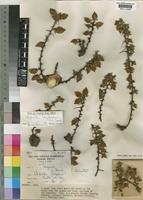
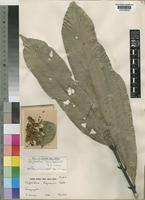
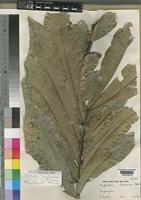
3 Images see all

Chytranthus longibracteatus F.G.Davies [family SAPINDACEAE]
Previous
Next

Name

Identification
Chytranthus longibracteatus F.G.Davies [family SAPINDACEAE ] (stored under name); Verified by Verdcourt, B., Chytranthus obliquinervis Radlk. [family SAPINDACEAE ]
Related name
  • Chytranthus obliquinervis
  • Chytranthus longibracteatus

Flora

Entry for CHYTRANTHUS longibracteatus F.G. Davies [family SAPINDACEAE]
Herbarium
Royal Botanic Gardens, Kew (K)
Collection
Flora of Tropical East Africa
Resource Type
Reference Sources
Entry From
Flora of Tropical East Africa, page 1, (1998) Author: DAVIES & B. VERDCOURT
Names
CHYTRANTHUS longibracteatus F.G. Davies [family SAPINDACEAE], sp. nov.,. C. obliquinervi Engl. similis, floribus vel cymulis longibracteatis, bracteis usque 2 cm. longis, petalis majoribus, antherodiis glabris differt. Typus: Tanzania, Morogoro District, Nguru Mts., Turiani, Mhonda Mission, Semsei 1402 (K!, holo., EA, iso.)
Information
Small dioecious tree; bark grey. Leaves with petiole 6 cm. long, 1 cm. wide at base, woody, ribbed, shortly pubescent in the grooves; rhachis up to 1 m. long, tapering, angular; leaflets crowded, ± 12-jugate, the uppermost oblong-oblanceolate or oblong, 20–33 cm. long, 5–8 cm. wide, the lowermost elliptic, 7–8 cm. long, 3–5 cm. wide, obtuse to acute or shortly acuminate at the apex, truncate at the base, glabrous; lateral veins in ± 8 pairs in small leaflets, ± 20 in upper larger leaflets, prominent. Inflorescences borne on trunk near ground and lower parts of the branches, 10–25 cm. long, at first brownish velvety; male not known; female flowers borne singly or in pairs subtended by a subulate bract up to 2 cm. long. Calyx 2-lipped with 2 triangular sepals 5 mm. long, separated by a sinus of 2 mm. and 3 sepals 4 mm. long, separated by sinuses of 1.2 mm., increasing slightly in fruit, densely pubescent; petals 4, drying reddish, oblong, 8 mm. long, 2 mm. wide with claw 0.7 mm. long; scattered hairs present, especially at the junction of the scale, scale ligulate, 4 mm. long, slightly narrower than petal-limb, hooded at the apex, with a shallowly lobed appendage; disk reniform. Staminodes with pilose filaments and glabrous anthers. Ovary triangular. Immature fruit ovoid, 2.5 cm. long, 3-ribbed, 3-locular, orange-brown velvety tomentose and with longer hairs; pedicels 6 mm. long.
Range
DISTR. T 6 known only from the type
Altitude range
± 1000 m.
Distribution
TANZANIA Morogoro District Nguru Mts., Turiani, Mhondo Mission, Nov. 1953, Semsei 1402!
Notes
This species has foliage identical to some material of C. obliquinervis but no such obvious bracts have been seen in either male or female inflorescences of that species.

Related Materials

  • Terms and Conditions
  • Privacy Policy
  • Cookie Policy
  • Cookie Settings
  • Accessibility
  • Help
  • Contact Us
  • Facebook
  • Twitter
ITHAKA

JSTOR is part of ITHAKA, a not-for-profit organization helping the academic community use digital technologies to preserve the scholarly record and to advance research and teaching in sustainable ways.

©2000-2026 ITHAKA. All Rights Reserved. JSTOR®, the JSTOR logo, JPASS®, Aluka®, and ITHAKA® are registered trademarks of ITHAKA.

╳