JSTOR Global Plants Home
  • Home
  • Browse
  • About
  • Access
  • Account
    • Saved Items
    • Profile
  • Log in

Global Plants

Skip to Main Content
  • JSTOR Global Plants Home
  • Global Plants

    • Browse
    • About
    • Access
    • Account
      • Saved Items
      • Profile
Log in
  • Browse
  • About
  • Access
  • Account
    • Saved Items
    • Profile
Advanced Search

Compilation
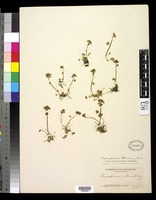
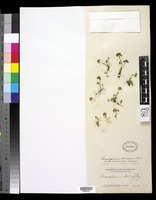
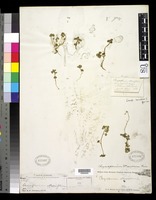
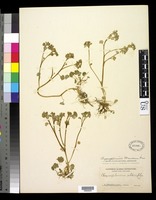
Chrysosplenium tetrandrum

7 Images see all

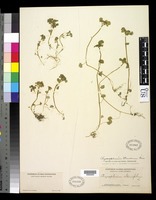
Chrysosplenium tetrandrum (Lundell) Th. Fr. [family SAXIFRAGACEAE]
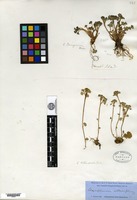
Type of Chrysosplenium alternifolium Linnaeus [family SAXIFRAGACEAE]
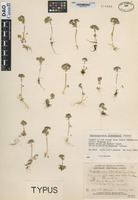
Type of Chrysosplenium rosendahlii Packer [family SAXIFRAGACEAE]
Previous
Next

Name

Identification
Chrysosplenium tetrandrum Th. Fries [family SAXIFRAGACEAE ] (stored under name); Verified by Not on Sheet, Chrysosplenium alternifolium Linnaeus [family SAXIFRAGACEAE ] Verified by L., 1753 Chrysosplenium alternifolium Linnaeus [family SAXIFRAGACEAE ] Verified by Not on Sheet,
Related name
  • Chrysosplenium tetrandrum
  • Chrysosplenium alternifolium
Common name
  • dorine à quatre étamines, Flora of North America Vol. 8
  • Northern golden-saxifrage, Flora of North America Vol. 8

Flora

Entry for Chrysosplenium tetrandrum Th. Fries [family SAXIFRAGACEAE]
Herbarium
Flora of North America (FNA)
Collection
Flora of North America
Resource Type
Reference Sources
Entry From
Flora of North America, Vol 8,
Names
Chrysosplenium tetrandrum Th. Fries [family SAXIFRAGACEAE], Bot. Not., 1858: 193. 1859 ,
Chrysosplenium alternifolium Linnaeus subsp. tetrandrum (Th. Fries) Hultén [family SAXIFRAGACEAE]
Treatment Author(s)
Craig C. Freeman
Nicholas D. Levsen
Information
Stolons white, 0.3–1 mm diam., sparsely villous, hairs white, reddish brown, or purplish. Flowering stems erect, branching in distal 1/6–1/3(–1/2), (1.2–)3–21 cm, glabrous or sparsely villous, especially proximally, hairs white or reddish brown. Leaves alternate, membranous or fleshy. Stolon leaves: petiole 12–55 mm, usually sparsely villous, sometimes glabrous, hairs white or reddish brown; blade usually depressed-ovate to reniform, sometimes nearly round, 3–14 × 5–18 mm, base cordate, margins 5–7-crenate, not purple-spotted, glabrous or sparsely ciliate, hairs white, surfaces glabrous or sparsely villous adaxially, hairs usually white, rarely purple. Cauline leaves 1–3(–4); petiole (2–)4–20(–31) mm, glabrous or sparsely villous proximally, hairs white or reddish brown, sometimes purplish; blade depressed-ovate, flabellate, or reniform, 3–9 × 4–13 mm, base truncate to cuneate or cordate, margins 3–7-crenate, glabrous, surfaces glabrous. Inflorescences terminal, (2–)3–15-flowered, compact cymes; bracts green, usually purple-spotted, foliaceous, ovate to depressed-ovate or flabellate, 2–9 × 3–12 mm, margins subentire or 3–5-crenate. Pedicels absent or 0.1–1.5 mm. Flowers: hypanthium green or greenish yellow, usually not purple-spotted, rarely purple-spotted distally, turbinate to campanulate, 1–2.2 × 1.2–2.1 mm, glabrous; sepals usually erect, sometimes spreading, usually green, rarely yellow, usually purple-spotted throughout or distally, rarely not purple-spotted, ovate to broadly ovate or depressed-ovate, 0.8–1.5 × 0.8–1.7 mm, apex obtuse to rounded; nectary disc apparently absent; stamens (3–)4, 0.3–0.4 mm; anthers yellow, 0.1–0.3 × 0.1–0.3 mm; styles 0.2–0.3 mm. Seeds (6–)15–40, reddish brown, ovoid to ellipsoid, 0.5–0.8 mm, glabrous. 2n = 24.
Phenology
Flowering May–Aug
Altitude range
0–3300 m
Distribution
Greenlandn Eurasia.USA AlaskaUSA Colo.USA IdahoUSA Mont.USA Wash.Canada Alta.Canada B.C.Canada Man.Canada Nfld. and Labr. (Labr.)Canada N.W.T.Canada NunavutCanada Ont.Canada Que.Canada Sask.Canada Yukon
Discussion
As treated here, Chrysosplenium tetrandrum is circumpolar. In North America, disjunct populations occur in subalpine and alpine habitats in the Bitterroot Range of Idaho and Montana, and in the Front Range of Colorado. Some specimens from northern Europe and the Russian Far East that have been referred to C. alternifolium appear to be morphologically indistinguishable from C. tetrandrum.

Related Materials

  • Terms and Conditions
  • Privacy Policy
  • Cookie Policy
  • Cookie Settings
  • Accessibility
  • Help
  • Contact Us
  • Facebook
  • Twitter
ITHAKA

JSTOR is part of ITHAKA, a not-for-profit organization helping the academic community use digital technologies to preserve the scholarly record and to advance research and teaching in sustainable ways.

©2000-2026 ITHAKA. All Rights Reserved. JSTOR®, the JSTOR logo, JPASS®, Aluka®, and ITHAKA® are registered trademarks of ITHAKA.

╳