JSTOR Global Plants Home
  • Home
  • Browse
  • About
  • Access
  • Account
    • Saved Items
    • Profile
  • Log in

Global Plants

Skip to Main Content
  • JSTOR Global Plants Home
  • Global Plants

    • Browse
    • About
    • Access
    • Account
      • Saved Items
      • Profile
Log in
  • Browse
  • About
  • Access
  • Account
    • Saved Items
    • Profile
Advanced Search

Compilation
Chrysosplenium americanum

7 Images see all

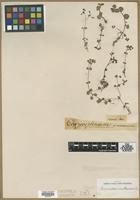
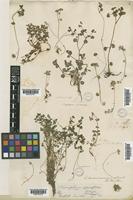
Type? of Chrysosplenium americanum Schwein. ex Hook. [family SAXIFRAGACEAE]
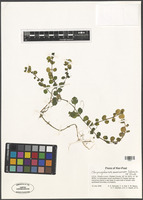
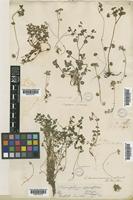
Chrysosplenium americanum Schwein. ex Hook. [family SAXIFRAGACEAE]
Filed as Chrysosplenium americanum Schwein. ex Hook. [family SAXIFRAGACEAE]
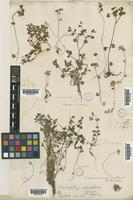
Filed as Chrysosplenium oppositifolium L. [family SAXIFRAGACEAE]
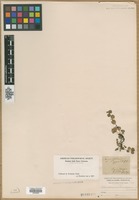
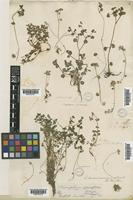
Chrysosplenium americanum Schwein. ex Hook. [family SAXIFRAGACEAE]
Previous
Next

Name

Identification
Chrysosplenium americanum Schwein. ex Hook. [family SAXIFRAGACEAE ] (stored under name);
Related name
  • Chrysosplenium americanum
  • Chrysosplenium oppositifolium
Common name
  • dorine d’Amérique, Flora of North America Vol. 8
  • American golden-saxifrage, Flora of North America Vol. 8
  • water-mat or, Flora of North America Vol. 8
  • carpet, Flora of North America Vol. 8

Flora

Entry for Chrysosplenium americanum Schweinitz ex Hooker [family SAXIFRAGACEAE]
Herbarium
Flora of North America (FNA)
Collection
Flora of North America
Resource Type
Reference Sources
Entry From
Flora of North America, Vol 8,
Names
Chrysosplenium americanum Schweinitz ex Hooker [family SAXIFRAGACEAE], Fl. Bor.-Amer., 1: 242. 1832 ,
Treatment Author(s)
Craig C. Freeman
Nicholas D. Levsen
Information
Stolons white or tan, 0.3–1 mm diam., glabrous. Flowering stems repent, decumbent, or ascending, branching in distal 1/4–1/2, 4–30 cm, glabrous. Leaves opposite, sometimes alternate distally, membranous. Stolon leaves: petiole 1–4 mm, glabrous; blade ovate to depressed-ovate, round, or flabellate, 2.5–15 × 2–10(–20) mm, base attenuate to cordate, margins subentire or 5–7(–9)-crenate or -crenulate, not purple-spotted, glabrous, surfaces glabrous abaxially and adaxially. Cauline leaves 4–9; petiole absent or 0.1–4 mm, glabrous; blade ovate to depressed-ovate, round, or flabellate, 2.5–15 × 2–10(–20) mm, base attenuate to cordate, margins 5–7(–9)-crenate or -crenulate, glabrous, surfaces glabrous abaxially and adaxially. Inflorescences terminal or axillary solitary flowers or 2–10-flowered, open cymes; bracts green, not purple-spotted, foliaceous, ovate to flabellate, 2–7 × 2–7 mm, margins subentire or 5–7-crenate or -crenulate. Pedicels absent or 0.1–0.8 mm. Flowers: hypanthium green, not purple-spotted, turbinate, 0.9–1.8 × 1.4–2.6 mm, glabrous; sepals spreading to erect, green, greenish yellow, or greenish red, not purple-spotted or purplish brown-spotted distally, broadly triangular or broadly ovate to nearly round, 1.3–1.8 × 0.9–1.6 mm, apex obtuse to rounded; nectary disc conspicuous, green or purple, 8-lobed; stamens 4–8, 0.5–0.9 mm; anthers purple, red, or orange, 0.2–0.3 × 0.4–0.5 mm; styles 0.2–0.6 mm. Seeds 6–16, dark brown, spheroid to ovoid, (0.5–)0.6–0.8 mm, puberulent. 2n = 18, 24.
Phenology
Flowering Mar–Jul
Altitude range
0–1500 m
Distribution
USA Conn.USA Del.USA Ga.USA Ind.USA MaineUSA Md.USA Mass.USA Mich.USA Minn.USA N.H.USA N.J.USA N.Y.USA N.C.USA OhioUSA R.I.USA S.C.USA Tenn.USA Vt.USA Va.USA W.Va.USA Wis.Canada N.B.Canada N.S.Canada Ont.Canada P.E.I.Canada Que.

Related Materials

  • Terms and Conditions
  • Privacy Policy
  • Cookie Policy
  • Cookie Settings
  • Accessibility
  • Help
  • Contact Us
  • Facebook
  • Twitter
ITHAKA

JSTOR is part of ITHAKA, a not-for-profit organization helping the academic community use digital technologies to preserve the scholarly record and to advance research and teaching in sustainable ways.

©2000-2026 ITHAKA. All Rights Reserved. JSTOR®, the JSTOR logo, JPASS®, Aluka®, and ITHAKA® are registered trademarks of ITHAKA.

╳