JSTOR Global Plants Home
  • Home
  • Browse
  • About
  • Access
  • Account
    • Saved Items
    • Profile
  • Log in

Global Plants

Skip to Main Content
  • JSTOR Global Plants Home
  • Global Plants

    • Browse
    • About
    • Access
    • Account
      • Saved Items
      • Profile
Log in
  • Browse
  • About
  • Access
  • Account
    • Saved Items
    • Profile
Advanced Search

Compilation
Chrysopsis nitidula

6 Images see all

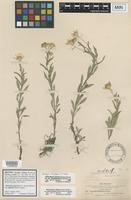
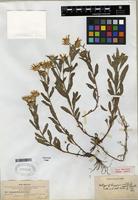
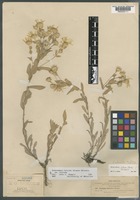
Isotype of Chrysopsis nitidula Woot. & Standl. [family ASTERACEAE]
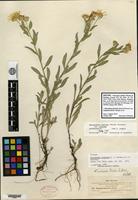
Isotype of Chrysopsis nitidula Wooten & Standley [family ASTERACEAE]
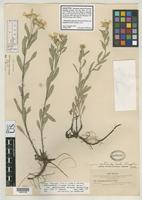
Holotype of Chrysopsis nitidula Wooton, E.O. & Standley, P.C. 1913 [family ASTERACEAE]
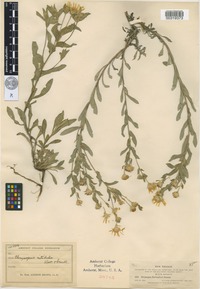
Isotype of Chrysopsis nitidula Wooton and Standl. [family ASTERACEAE]
Isotype of Chrysopsis berlandieri Greene [family ASTERACEAE]
Isotype of Chrysopsis nitidula Wooton & Standl. [family ASTERACEAE]
Previous
Next

Name

Identification
Isotype of Chrysopsis nitidula Wooton and Standl. [family ASTERACEAE ] (stored under name); Verified by Not on sheet,
Related name
  • Chrysopsis berlandieri
  • Heterotheca fulcrata
  • Chrysopsis nitidula

Flora

Entry for Heterotheca fulcrata (Greene) Shinners var. amplifolia (Rydberg) Semple [family COMPOSITAE]
Herbarium
Flora of North America (FNA)
Collection
Flora of North America
Resource Type
Reference Sources
Entry From
Flora of North America, Vol 20,
Names
Heterotheca fulcrata (Greene) Shinners var. amplifolia (Rydberg) Semple [family COMPOSITAE], Rev. Heterotheca Pyllotheca, 74. 1996
Chrysopsis amplifolia Rydberg [family COMPOSITAE], Bull. Torrey Bot. Club, 31: 648. 1905
Chrysopsis foliosa Nuttall var. amplifolia (Rydberg) A. Nelson [family COMPOSITAE]
Chrysopsis nitidula Wooton & Standley [family COMPOSITAE]
Treatment Author(s)
John C. Semple
Information
Stems moderately to densely short-strigose, eglandular or nearly so. Distal cauline leaf blades ovate to lanceolate, 17–40 × 5–15 mm, margins with few long-hispido-strigose cilia, faces moderately to densely short-strigose (small leaves sometimes nearly white), eglandular or sparsely stipitate-glandular. Subtending bracts ovate, usually large (6–17 × 1.5–5.5 mm), leaflike, well differentiated (sometimes densely strigose when small). Involucres 6.4–10 mm. Phyllaries lanceolate to triangular-lanceolate, faces moderately strigose, usually eglandular. Ray laminae 8.5–14(–16) mm. Cypsela faces moderately strigose. 2n = 18, 36.
Phenology
jun-jul (summer), sep-oct (fall)
Altitude range
1300–3500 m;
Distribution
USA Ariz.USA Colo.USA N.Mex.USA UtahUSA Wyo.
Discussion
Variety amplifolia is similar in most respects to var. fulcrata, but the leaf indument is usually densely short-strigose (50–200 hairs/mm2) with few or no glands. Some plants maintain the proximal leaf shape well up the stem, only the few distalmost leaves becoming narrowly ovate-lanceolate; those are similar to Heterotheca villosa var. pedunculata. In southern Utah and eastern Arizona, small-leaved plants may be similar to H. zionensis due to the density of leaf hairs, but in that area the latter typically have densely stipitate-glandular phyllaries, moderately stipitate-glandular distal leaves, and no large bracts subtending the heads.

Related Materials

  • Terms and Conditions
  • Privacy Policy
  • Cookie Policy
  • Cookie Settings
  • Accessibility
  • Help
  • Contact Us
  • Facebook
  • Twitter
ITHAKA

JSTOR is part of ITHAKA, a not-for-profit organization helping the academic community use digital technologies to preserve the scholarly record and to advance research and teaching in sustainable ways.

©2000-2026 ITHAKA. All Rights Reserved. JSTOR®, the JSTOR logo, JPASS®, Aluka®, and ITHAKA® are registered trademarks of ITHAKA.

╳