JSTOR Global Plants Home
  • Home
  • Browse
  • About
  • Access
  • Account
    • Saved Items
    • Profile
  • Log in

Global Plants

Skip to Main Content
  • JSTOR Global Plants Home
  • Global Plants

    • Browse
    • About
    • Access
    • Account
      • Saved Items
      • Profile
Log in
  • Browse
  • About
  • Access
  • Account
    • Saved Items
    • Profile
Advanced Search

Compilation
Chrysopsis horrida

11 Images see all

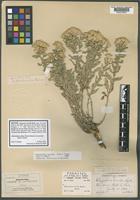
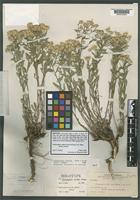
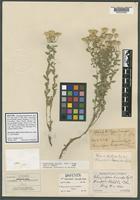
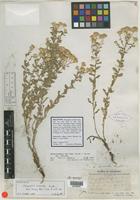
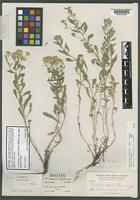
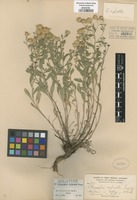
Isotype of Chrysopsis horrida Rydb. [family ASTERACEAE]
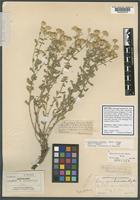
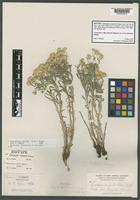
Type of Chrysopsis compacta Greene [family ASTERACEAE]
Isotype of Chrysopsis compacta Greene [family ASTERACEAE]
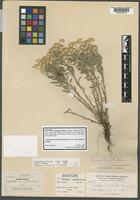
Holotype of Chrysopsis arida A. Nelson [family ASTERACEAE]
Isotype of Chrysopsis horrida Rydb. [family ASTERACEAE]
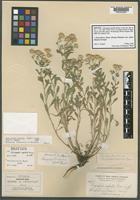
Holotype of Chrysopsis horrida Rydb. [family ASTERACEAE]
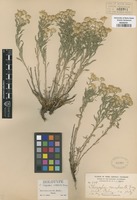
Isotype of Chrysopsis asprella Greene [family ASTERACEAE]
Type of Chrysopsis asprella Greene [family ASTERACEAE]
Isotype of Chrysopsis compacta Greene [family ASTERACEAE]
Isotype of Chrysopsis asprella Greene [family ASTERACEAE]
Previous
Next

Name

Identification
Chrysopsis horrida Rydb. [family ASTERACEAE ] (stored under name); Verified by Not on sheet,
Related name
  • Heterotheca horrida
  • Heterotheca villosa
  • Chrysopsis horrida

Flora

Entry for Heterotheca villosa (Pursh) Shinners var. nana (A. Gray) Semple [family COMPOSITAE]
Herbarium
Flora of North America (FNA)
Collection
Flora of North America
Resource Type
Reference Sources
Entry From
Flora of North America, Vol 20,
Names
Heterotheca villosa (Pursh) Shinners var. nana (A. Gray) Semple [family COMPOSITAE], Novon, 4: 54. 1994
Chrysopsis canescens (de Candolle) Torrey & A. Gray var. nana A. Gray [family COMPOSITAE], Mem. Amer. Acad. Sci., n. s., 4: 78. 1849
Chrysopsis horrida Rydberg [family COMPOSITAE]
Heterotheca horrida (Rydberg) V. L. Harms [family COMPOSITAE]
Heterotheca villosa (Pursh) Shinners var. horrida (Rydberg) Semple [family COMPOSITAE]
Treatment Author(s)
John C. Semple
Information
Stems ascending to erect (1–60+), 9–40(–63) cm, moderately to densely hispido-strigose, abundantly long-hirsute, sparsely to densely stipitate-glandular. Distal cauline leaf blades (often perpendicluar to stems), linear to broadly oblong, (6–)10–24(–32) mm, ± reduced distally, bases rounded, margins flat, apices usually acute, often obtuse, faces moderately hispido-strigose (hairs 9–56/mm2), moderately to densely stipitate-glandular (glands 2–36/mm2). Heads 2–20(–33) in usually congested, corymbiform arrays. Peduncles (4–)10–35(–48) mm, moderately to densely hispido-strigose, moderately to densely glandular; bracts 1–4, linear-oblong, reduced distally, not leaflike. Involucres cylindric to campanulate (fresh), (5.4–)6.4–8.4(–9) mm. Phyllaries narrowly triangular-lanceolate, margins sometimes reddish purple distally, faces sparsely to moderately strigose, sparsely to densely glandular. Ray florets 11–19(–22); laminae (3.5–)6.9–11(–12) mm. 2n = 18.
Phenology
may (spring), jun-aug (summer), oct (fall)
Altitude range
1300–2700(–2900) m;
Distribution
USA Ariz.USA Colo.USA Kans.USA Nebr.USA N.Mex.USA Tex.USA UtahUSA Wyo.
Discussion
Variety nana is distinguished by its linear to broadly oblong, often perpendicular, distal stem leaves and often congested, corymbiform arrays. Forms of var. minor with oblong to ovate leaves generally have stems with longer internodes and fewer leaves. Plants at higher elevations in the foothills approach narrow-leaved forms of Heterotheca fulcrata in general appearance, and may hybridize with them, especially in the Laramie Hills of Wyoming. Possible hybrids between var. nana and var. foliosa occur in Colorado and Wyoming, where the two are sympatric. In the Four Corners area, var. nana grades into var. scabra, and collections often are difficult to place into one of the two taxa; both have broader leaf bases than var. minor as it occurs in the region. Rare plants in Wisconsin show similarities to both var. minor and var. nana. The variety was long known under the epithet horrida (either as a species or variety), but at the varietal rank the epithet nana is older.

Related Materials

  • Terms and Conditions
  • Privacy Policy
  • Cookie Policy
  • Cookie Settings
  • Accessibility
  • Help
  • Contact Us
  • Facebook
  • Twitter
ITHAKA

JSTOR is part of ITHAKA, a not-for-profit organization helping the academic community use digital technologies to preserve the scholarly record and to advance research and teaching in sustainable ways.

©2000-2026 ITHAKA. All Rights Reserved. JSTOR®, the JSTOR logo, JPASS®, Aluka®, and ITHAKA® are registered trademarks of ITHAKA.

╳