JSTOR Global Plants Home
  • Home
  • Browse
  • About
  • Access
  • Account
    • Saved Items
    • Profile
  • Log in

Global Plants

Skip to Main Content
  • JSTOR Global Plants Home
  • Global Plants

    • Browse
    • About
    • Access
    • Account
      • Saved Items
      • Profile
Log in
  • Browse
  • About
  • Access
  • Account
    • Saved Items
    • Profile
Advanced Search

Compilation
Chrysopsis foliosa

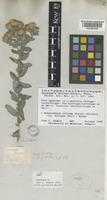
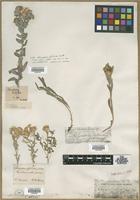
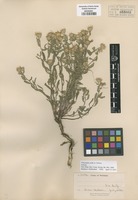
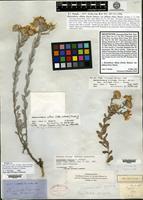
10 Images see all

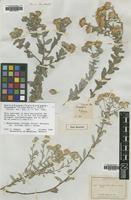
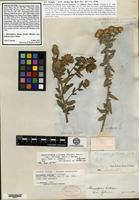
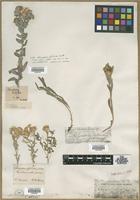
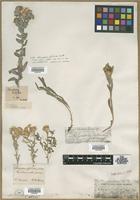
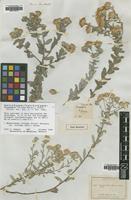
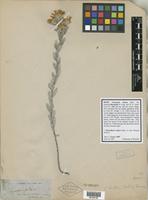
Lectotype of Chrysopsis foliosa Nutt. [family ASTERACEAE]
Isotype of Chrysopsis foliosa Nuttall [family ASTERACEAE]
Type? of Chrysopsis foliosa Nutt. [family ASTERACEAE]
Isotype of Chrysopsis foliosa Nutt. [family COMPOSITAE]
Type? of Chrysopsis foliosa Nutt. [family ASTERACEAE]
Isotype of Chrysopsis arida A. Nelson [family ASTERACEAE]
Isotype of Chrysopsis foliosa Nuttall [family ASTERACEAE]
Lectotype of Chrysopsis foliosa Nutt. [family ASTERACEAE]
Filed as Chrysopsis foliosa var. sericeovillosissima A. Gray [family ASTERACEAE]
Previous
Next

Name

Identification
Heterotheca villosa (Nutt.) V.L.Harms [family ASTERACEAE ] (stored under name); Verified by John Cameron Semple, Chrysopsis foliosa Nutt. [family ASTERACEAE ] Verified by John Cameron Semple,
Related name
  • Chrysopsis foliosa
  • Chrysopsis villosa
  • Heterotheca villosa
Common name
  • Huachuca or Rutter’s goldenaster, Flora of North America Vol. 20

Flora

Entry for Heterotheca rutteri (Rothrock) Shinners [family COMPOSITAE]
Herbarium
Flora of North America (FNA)
Collection
Flora of North America
Resource Type
Reference Sources
Entry From
Flora of North America, Vol 20,
Names
Heterotheca rutteri (Rothrock) Shinners [family COMPOSITAE], Field & Lab., 19: 71. 1951
Chrysopsis villosa (Pursh) Nuttall ex de Candolle var. rutteri Rothrock [family COMPOSITAE], Rep. U.S. Geogr. Surv., Wheeler, 142. 1879
Chrysopsis foliosa Nuttall var. sericeovillosissima A. Gray [family COMPOSITAE]
Chrysopsis rutteri (Rothrock) Greene [family COMPOSITAE]
Treatment Author(s)
John C. Semple
Information
Perennials, 30–55 cm; taprooted. Stems 1–10+, ascending to erect (sometimes reddish brown), moderately to densely strigose, sparsely to mederately long-hirsute, sometimes proximally glabrescent with age, eglandular or sparsely stipitate-glandular beneath hairs. Leaves: proximal cauline subpetiolate to sessile, blades oblanceolate, 125–250 × 4–9 mm, bases attenuate to rounded, margins flat or weakly undulate, entire, strigoso-ciliate, a few longer hispid cilia near bases, apices acute, faces densely long-strigose (silvery white); distal sessile, blades narrowly ovate to lanceolate, 17–25 × 4.5–8.5 mm, reduced distally, bases narrowly to broadly cuneate, margins entire, large spreading hispido-strigose cilia numerous, apices sharply acute, mucronate-spinulose, faces densely long-strigose, sparsely stipitate-glandular. Heads 4–10, in open corymbiform arrays. Peduncles 10–60+ mm, strigoso-canescent, stipitate-glandular; bracts 6–10, proximal lanceolate, leafy, strigose, becoming linear, less hairy, and more glandular near heads, 1–4+ larger, lanceolate to narrowly ovate, leafy bracts (10–15 × 1.8–4.5 mm; bases sometimes attenuate to winged subpetiolate) subtending heads. Involucres cylindric to campanulate, 8.5–10.5 mm. Phyllaries in 4–5 series, lanceolate to triangular-lanceolate, unequal, scarious, moderately to densely strigose, sparsely glandular. Ray florets 15–35; laminae 12–16 × 1–2 mm. Disc florets 23–65; corollas barely ampliate, 6.5–8.3 mm, lobes 0.6–0.8 mm, lobes glabrous or sparsely hairy (0.1–0.5 mm). Cypselae monomorphic, obconic, compressed, 3–4 mm, ribs 7–10, sparsely moderately densely strigose; pappi off-white, outer of linear scales 0.5–1 mm, inner of 35–45 attenuate bristles 7–9 mm, longest attenuate. 2n = 18.
Conservation Status
of conservation concern;
Phenology
aug (summer), sep-oct (fall)
Altitude range
1000–1500 m;
Distribution
Mexico (Sonora).USA Ariz.
Discussion
Heterotheca rutteri grows in the vicinity of the Huachuca and Santa Rita mountains of southern Arizona and adjacent Sonora, Mexico. It is distinguished by its light green to silvery white, densely hairy, narrowly ovate to lanceolate leaves, sharply acute distal leaves, and large leaflike bracts with similar (or more glandular) indument subtending the showy heads. The species is included on the BLM Sensitive Species List for Arizona.

Related Materials

  • Terms and Conditions
  • Privacy Policy
  • Cookie Policy
  • Cookie Settings
  • Accessibility
  • Help
  • Contact Us
  • Facebook
  • Twitter
ITHAKA

JSTOR is part of ITHAKA, a not-for-profit organization helping the academic community use digital technologies to preserve the scholarly record and to advance research and teaching in sustainable ways.

©2000-2026 ITHAKA. All Rights Reserved. JSTOR®, the JSTOR logo, JPASS®, Aluka®, and ITHAKA® are registered trademarks of ITHAKA.

╳