JSTOR Global Plants Home
  • Home
  • Browse
  • About
  • Access
  • Account
    • Saved Items
    • Profile
  • Log in

Global Plants

Skip to Main Content
  • JSTOR Global Plants Home
  • Global Plants

    • Browse
    • About
    • Access
    • Account
      • Saved Items
      • Profile
Log in
  • Browse
  • About
  • Access
  • Account
    • Saved Items
    • Profile
Advanced Search

Compilation
Chrysopsis elata

2 Images see all

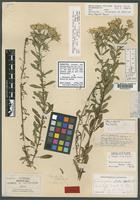
Holotype of Chrysopsis elata Osterh. [family ASTERACEAE]
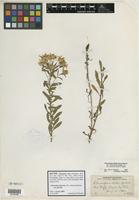
Isotype of Chrysopsis elata Osterh. [family ASTERACEAE]
Previous
Next

Name

Identification
Isotype of Chrysopsis elata Osterh. [family ASTERACEAE ] (stored under name); Verified by Not on sheet,
Related name
  • Chrysopsis elata
  • Heterotheca fulcrata

Flora

Entry for Heterotheca fulcrata (Greene) Shinners var. fulcrata [family COMPOSITAE]
Herbarium
Flora of North America (FNA)
Collection
Flora of North America
Resource Type
Reference Sources
Entry From
Flora of North America, Vol 20,
Names
Heterotheca fulcrata (Greene) Shinners var. fulcrata [family COMPOSITAE]
Chrysopsis cryptocephala Wooton & Standley [family COMPOSITAE]
Chrysopsis elata Osterhout [family COMPOSITAE]
Chrysopsis resinolens A. Nelson [family COMPOSITAE]
Chrysopsis resinolens var. ciliata A. Nelson [family COMPOSITAE]
Chrysopsis viscida subsp. ciliata (A. Nelson) S. F. Blake [family COMPOSITAE]
Treatment Author(s)
John C. Semple
Information
Stems sparsely to moderately hispido-strigose and stipitate-glandular. Distal cauline leaf blades ovate to lanceolate, (12–)16–39(–55) × 5–15 mm, margins with few long-hispido-strigose cilia, faces sparsely to moderately hispido-strigose and stipitate-glandular. Subtending bracts ovate, usually large (7–22 × 2–6 mm), leaflike, well differentiated. Involucres 6.7–10.3 mm. Phyllaries lanceolate to triangular-lanceolate, moderately strigose and stipitate-glandular. Ray laminae (8–)9.8–14.5 mm. Cypsela faces sparsely to moderately strigose. 2n = 18, 36.
Phenology
jun, aug (summer), sep-oct (fall)
Altitude range
1500–3100 m;
Distribution
USA Ariz.USA Colo.USA IdahoUSA Nev.USA N.Mex.USA Tex.USA UtahUSA Wyo.
Discussion
Variety fulcrata grows in the Front Range of the Rocky Mountains (Colorado and Wyoming), and in disjunct populations in Arizona, New Mexico, and Utah; it is considered very rare and atypical in adjacent Idaho, Nevada, and Texas, where it is of conservation concern. Variety fulcrata is the most variable member of Heterotheca fulcrata. It is characterized by having more hairs than glands per area of leaf face, the hairs being sparse to moderate. Many collections are morphologically intermediate in indument features with var. amplifolia. A few intermediates with the other two varieties also have been collected, as well as a number of possible hybrids with H. pumila and with several varieties of H. villosa.

Related Materials

  • Terms and Conditions
  • Privacy Policy
  • Cookie Policy
  • Cookie Settings
  • Accessibility
  • Help
  • Contact Us
  • Facebook
  • Twitter
ITHAKA

JSTOR is part of ITHAKA, a not-for-profit organization helping the academic community use digital technologies to preserve the scholarly record and to advance research and teaching in sustainable ways.

©2000-2026 ITHAKA. All Rights Reserved. JSTOR®, the JSTOR logo, JPASS®, Aluka®, and ITHAKA® are registered trademarks of ITHAKA.

╳