JSTOR Global Plants Home
  • Home
  • Browse
  • About
  • Access
  • Account
    • Saved Items
    • Profile
  • Log in

Global Plants

Skip to Main Content
  • JSTOR Global Plants Home
  • Global Plants

    • Browse
    • About
    • Access
    • Account
      • Saved Items
      • Profile
Log in
  • Browse
  • About
  • Access
  • Account
    • Saved Items
    • Profile
Advanced Search

Compilation
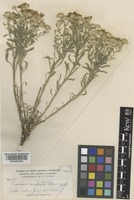
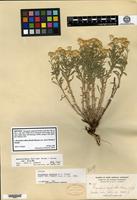
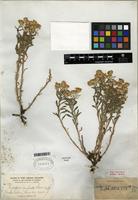
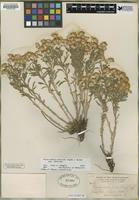
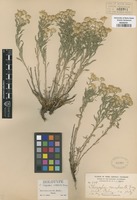
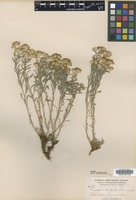
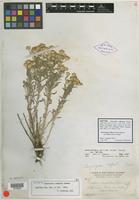
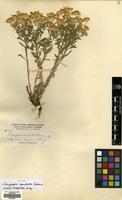
Chrysopsis compacta

12 Images see all

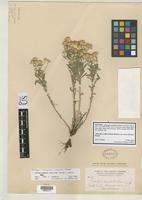
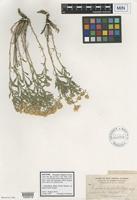
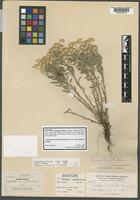
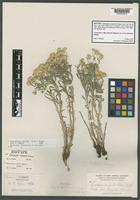
Heterotheca compacta unrecorded [family COMPOSITAE]
Isotype of Chrysopsis compacta Greene [family ASTERACEAE]
Type of Chrysopsis compacta Greene [family ASTERACEAE]
Type? of Chrysopsis compacta Greene [family ASTERACEAE]
Isotype of Chrysopsis compacta Greene [family ASTERACEAE]
Isotype of Chrysopsis compacta Greene [family COMPOSITAE]
Isotype of Chrysopsis compacta Greene, E.L. 1905 [family ASTERACEAE]
Isotype of Chrysopsis compacta Greene [family ASTERACEAE]
Previous
Next

Name

Identification
Chrysopsis compacta Greene [family COMPOSITAE ] Verified by Greene, E.L., Heterotheca villosa (Pursh) Shinners [family COMPOSITAE ] (stored under name); Verified by Not on sheet, Isotype of Chrysopsis compacta Greene [family COMPOSITAE ] Verified by Not on sheet,
Related name
  • Heterotheca horrida
  • Chrysopsis compacta
  • Heterotheca villosa

Flora

Entry for Heterotheca villosa (Pursh) Shinners var. minor (Hooker) Semple [family COMPOSITAE]
Herbarium
Flora of North America (FNA)
Collection
Flora of North America
Resource Type
Reference Sources
Entry From
Flora of North America, Vol 20,
Names
Heterotheca villosa (Pursh) Shinners var. minor (Hooker) Semple [family COMPOSITAE], Novon, 4: 54. 1994
Chrysopsis villosa (Pursh) Nuttall ex de Candolle var. minor Hooker [family COMPOSITAE], London J. Bot., 6: 244. 1847
Chrysopsis arida A. Nelson [family COMPOSITAE]
Chrysopsis asprella Greene [family COMPOSITAE]
Chrysopsis bakeri Greene [family COMPOSITAE]
Chrysopsis columbiana Greene [family COMPOSITAE]
Chrysopsis compacta Greene [family COMPOSITAE]
Chrysopsis floribunda Greene [family COMPOSITAE]
Chrysopsis grandis Rydberg [family COMPOSITAE]
Chrysopsis hirsuta Greene [family COMPOSITAE]
Chrysopsis hirsutissima Greene [family COMPOSITAE]
Chrysopsis hispida (Hooker) de Candolle [family COMPOSITAE]
Chrysopsis villosa (Pursh) Nuttall ex de Candolle var. discoidea A. Gray [family COMPOSITAE]
Chrysopsis villosa var. hispida (Hooker) A. Gray [family COMPOSITAE]
Chrysopsis wisconsinensis Shinners [family COMPOSITAE]
Diplogon villosum (Pursh) Kuntze var. discoideum (A. Gray) Kuntze [family POACEAE]
Diplopappus hispidus Hooker [family COMPOSITAE]
Heterotheca villosa (Pursh) Shinners var. hispida (Hooker) V. L. Harms [family COMPOSITAE]
Treatment Author(s)
John C. Semple
Information
Stems decumbent to ascending-erect, (9–)16–33(–48) mm, sparsely to densely hispido-strigose, sparsely to abundantly long-hirsute, sparsely to densely stipitate-glandular. Distal cauline leaf blades usually narrowly to broadly oblanceolate or oblong, sometimes ovate (in mountains), (11–)16–28(–40) mm, ± reduced distally, bases usually narrowly to broadly convex-cuneate to attenuate, sometimes rounded, margins flat, sometimes remotely undulate, apices obtuse or acute, faces sparsely to moderately hispido-strigose, (1–75/mm2), sparsely to moderately glandular (glands 1–32/mm2). Heads 1–13(–42) in congested to open, corymbiform arrays, branches usually not very long. Peduncles 4.5–40(–60) mm, moderately to densely hispido-strigose, usually sparsely to moderately stipitate-glandular rarely eglandular; bracts usually linear-oblong, reduced, rarely linear-lanceolate and leaflike, sparsely to moderately hispido-strigose, sparsely to moderately stipitate-glandular. Involucres cylindric to campanulate (fresh), (5.5–)6.5–8.5(–9.3) mm. Phyllaries narrowly triangular-lanceolate, faces usually sparsely, rarely densely strigose (hairs to 1 mm), usually sparsely to moderately stipitate-glandular, rarely eglandular. Ray florets (7–)10–18(–26), laminae (4–)6–10(–12.6) mm. 2n = 18, 36.
Phenology
may (spring), jun-aug (summer), nov (fall)
Altitude range
(60–)300–2900(–3200) m;
Distribution
USA Ariz.USA Calif.USA Colo.USA Idaho.USA Ill.USA IowaUSA Kans.USA Minn.USA Mont.USA Nebr.USA Nev.USA N.Mex.USA N.Dak.USA Oreg.USA S.Dak.USA UtahUSA Wash.USA Wis.USA Wyo.Canada Alta.Canada B.C.Canada Man.Canada Sask.
Discussion
Variety minor is distinguished by its usually narrowly to broadly oblancelate distal cauline leaves (sometime oblong or ovate) and moderately glandular and hispido-strigose indument. The leaf bases are usually narrowly to broadly cuneate or attenuate (rarely rounded). Distal leaf faces usually have about 10–50 hairs/mm2 and about 4–20 glands/mm2. The variety is the most variable in the species and includes some local distinctive morphotypes that grade into other forms. Plants intermediate between this and all other varieties occur in areas where the ranges are sympatric, and they make infraspecific taxonomy of the species difficult. The variety has been incorrectly referred to as var. hispida (a later synonym) in most floras.
The status of Heterotheca barbata (Rydberg) Semple (Chrysopsis barbata Rydberg), the Spokane goldenaster, is uncertain. J. C. Semple (1996) treated it as a separate species to draw attention to the problem; a detailed description based on the type and detailed illustrations were included. It is known from the type collection along the Spokane River Valley east of Spokane, Idaho, and two down-river, atypical collections (Benton and Spokane counties, Washington). It flowers in July (sometimes August). It is similar to H. villosa var. minor, but differs in having lanceolate-elliptic distal cauline leaves (34–38 × 8–9 mm) that are little reduced distally, long branches (each with one to a few large heads), and disc corollas with a few, very long hairs on the tube. Further work is needed to increase the number of specimens available for a detailed comparison with H. villosa var. minor in order to clarify whether H. barbata warrants species level recognition, should be included in H. villosa as a variety, or placed in synonymy under var. minor.

Related Materials

  • Terms and Conditions
  • Privacy Policy
  • Cookie Policy
  • Cookie Settings
  • Accessibility
  • Help
  • Contact Us
  • Facebook
  • Twitter
ITHAKA

JSTOR is part of ITHAKA, a not-for-profit organization helping the academic community use digital technologies to preserve the scholarly record and to advance research and teaching in sustainable ways.

©2000-2026 ITHAKA. All Rights Reserved. JSTOR®, the JSTOR logo, JPASS®, Aluka®, and ITHAKA® are registered trademarks of ITHAKA.

╳