JSTOR Global Plants Home
  • Home
  • Browse
  • About
  • Access
  • Account
    • Saved Items
    • Profile
  • Log in

Global Plants

Skip to Main Content
  • JSTOR Global Plants Home
  • Global Plants

    • Browse
    • About
    • Access
    • Account
      • Saved Items
      • Profile
Log in
  • Browse
  • About
  • Access
  • Account
    • Saved Items
    • Profile
Advanced Search

Compilation
Chrysopsis camphorata

11 Images see all

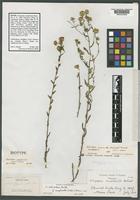
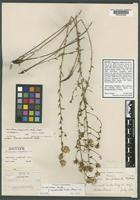
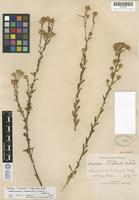
Isotype of Chrysopsis camphorata Eastw. [family ASTERACEAE]
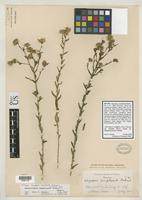
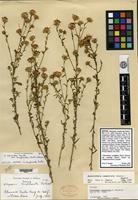
Isotype of Chrysopsis camphorata Eastwood, A. 1900 [family ASTERACEAE]
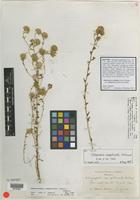
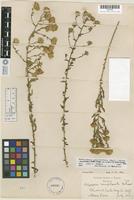
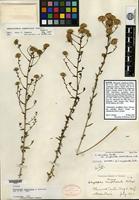
Isotype of Chrysopsis camphorata Eastw. [family ASTERACEAE]
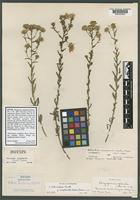
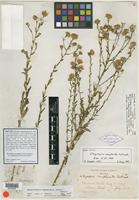
Isotype of Chrysopsis camphorata Eastwood [family ASTERACEAE]
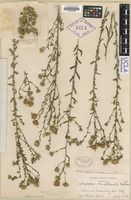
Holotype of Chrysopsis camphorata Eastw. [family ASTERACEAE]
Isotype of Chrysopsis camphorata Eastw. [family ASTERACEAE]
Isotype of Chrysopsis camphorata Eastwood [family ASTERACEAE]
Isotype of Chrysopsis camphorata Eastwood and Zoe [family ASTERACEAE]
Previous
Next

Name

Identification
Chrysopsis camphorata Eastw. [family ASTERACEAE ] (stored under name); Verified by Not on sheet,
Related name
  • Chrysopsis echioides
  • Chrysopsis camphorata
  • Heterotheca sessiliflora

Flora

Entry for Heterotheca sessiliflora (Nuttall) Shinners subsp. echioides (Bentham) Semple [family COMPOSITAE]
Herbarium
Flora of North America (FNA)
Collection
Flora of North America
Resource Type
Reference Sources
Entry From
Flora of North America, Vol 20,
Names
Heterotheca sessiliflora (Nuttall) Shinners subsp. echioides (Bentham) Semple [family COMPOSITAE], Phytologia, 73: 450. 1993
Chrysopsis echioides Bentham [family COMPOSITAE], Bot. Voy. Sulphur, 25. 1844
Chrysopsis californica Elmer [family COMPOSITAE]
Chrysopsis camphorata Eastwood [family COMPOSITAE]
Chrysopsis vestita Greene [family COMPOSITAE]
Chrysopsis villosa (Pursh) Nuttall ex de Candolle var. camphorata (Eastwood) Jepson [family COMPOSITAE]
Chrysopsis villosa var. echioides (Bentham) A. Gray [family COMPOSITAE]
Heterotheca camphorata (Eastwood) Semple [family COMPOSITAE]
Heterotheca echioides (Bentham) Shinners [family COMPOSITAE]
Heterotheca sessiliflora var. bolanderioides Semple [family COMPOSITAE]
Heterotheca sessiliflora var. camphorata (Eastwood) Semple [family COMPOSITAE]
Treatment Author(s)
John C. Semple
Information
Stems 1–20, (10–)26–65(–80) cm, sparsely to densely hispido-strigose (long-hispid hairs many), sparsely to moderately stipitate-glandular, sometimes sparsely hispido-strigose and densely stipitate-glandular distally. Cauline leaves: proximal subsesile to sessile, blades oblanceolate, (8–)15–35(–47) × (2.4–)3.6–62(–90) mm, margins entire, proximally with spreading, large, stiff strigose cilia, apices acute, faces sparsely to densely hispido-strigose, sparsely to densely stipitate-glandular; distal sessile, blades lanceolate, 6.5–40 × 1.5–7.7 mm, reduced distally, bases rounded, margins flat to ± undulate, abundantly spreading-ciliate, faces sparsely to densely hispido-strigose, sparsely to densely stipitate-glandular. Peduncle bracts 0–5, grading from leaves, reduced distally, those subtending head not larger and more leafy, faces sparsely to moderately hispido-strigose, moderately to densely stipitate-glandular. Involucres 6.3–10(–12) mm. Ray florets (6–)8–14(–17); laminae (4.5–)5.8–9.8(–13) mm. Disc florets: corolla lobes sparsely pilose (hairs 0.2–1 mm). Cypsela faces moderately to densely strigose. 2n = 18, 36.
Phenology
may (spring), jul-aug (summer), sep-oct (fall), dec (winter)
Altitude range
10–2100 m;
Distribution
USA Calif.
Discussion
Subspecies echioides is the most common and widely distributed subspecies, growing in most of central and southern California west of the Sierra Nevada and deserts. It is characterized by its coarse, hispido-strigose indument on the stems and leaves, at least on the proximal portions of the plant. Three varieties have been recognized on the basis of leaf indument and, to a lesser degree, leaf margin undulation, stem height, and number of heads per shoot. Diploid var. echioides has coarse, spreading hairs on the distal stems, peduncles, leaves, and bracts. In the southern part of the range and in the Tehachapi Mountains, the distal stem leaves of var. echioides are somewhat undulate, but this is not the case farther north or in other varieties of the subspecies. It is the weedy race of the species and occurs throughout much of the range of the subspecies. It is difficult to distinguish from less typical individuals of var. camphorata (diploids and tetraploids), which is much less hispid and more stipitate-glandular distally on the stems. It occurs in the coastal ranges from Santa Clara to northern San Luis Obispo counties. The serpentine endemic var. bolanderioides has larger heads, more longer hairs on the corolla lobes than var. echioides, usually is much shorter in stature, and sometimes has whitish leaves due to the dense hispido-strigose hairs; it occurs mostly on hill and mountain tops surrounding San Francisco Bay. It is the only exclusively tetraploid member of the species. Individuals can be similar in appearance to plants of subsp. bolanderi, and in indument to var. camphorata and var. echioides. Intermediates between var. echioides and var. camphorata occur.

Related Materials

  • Terms and Conditions
  • Privacy Policy
  • Cookie Policy
  • Cookie Settings
  • Accessibility
  • Help
  • Contact Us
  • Facebook
  • Twitter
ITHAKA

JSTOR is part of ITHAKA, a not-for-profit organization helping the academic community use digital technologies to preserve the scholarly record and to advance research and teaching in sustainable ways.

©2000-2026 ITHAKA. All Rights Reserved. JSTOR®, the JSTOR logo, JPASS®, Aluka®, and ITHAKA® are registered trademarks of ITHAKA.

╳