JSTOR Global Plants Home
  • Home
  • Browse
  • About
  • Access
  • Account
    • Saved Items
    • Profile
  • Log in

Global Plants

Skip to Main Content
  • JSTOR Global Plants Home
  • Global Plants

    • Browse
    • About
    • Access
    • Account
      • Saved Items
      • Profile
Log in
  • Browse
  • About
  • Access
  • Account
    • Saved Items
    • Profile
Advanced Search

Compilation
Chrysopsis bolanderi

4 Images see all

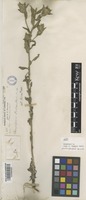
Heterotheca villosa (Pursh) Shinners var. stenophylla [family COMPOSITAE]
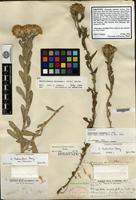
Holotype of Chrysopsis bolanderi A. Gray [family ASTERACEAE]
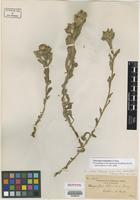
Isotype of Chrysopsis bolanderi A. Gray [family ASTERACEAE]
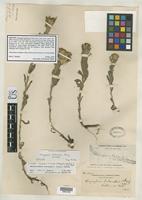
Isotype of Chrysopsis bolanderi Gray, A. 1865 [family ASTERACEAE]
Previous
Next

Name

Identification
Heterotheca sessiliflora (Nuttall) Shinners [family ASTERACEAE ] (stored under name); Verified by J. C. Semple, Chrysopsis bolanderi A. Gray [family ASTERACEAE ] Verified by A. Gray, 1866
Related name
  • Chrysopsis bolanderi
  • Heterotheca sessiliflora

Flora

Entry for Heterotheca sessiliflora (Nuttall) Shinners subsp. bolanderi (A. Gray) Semple [family COMPOSITAE]
Herbarium
Flora of North America (FNA)
Collection
Flora of North America
Resource Type
Reference Sources
Entry From
Flora of North America, Vol 20,
Names
Heterotheca sessiliflora (Nuttall) Shinners subsp. bolanderi (A. Gray) Semple [family COMPOSITAE], Phytologia, 73: 449. 1993
Chrysopsis bolanderi A. Gray [family COMPOSITAE], Proc. Amer. Acad. Arts, 6: 543. 1866
Chrysopsis arenaria Elmer [family COMPOSITAE]
Chrysopsis villosa (Pursh) Nuttall ex de Candolle var. bolanderi (A. Gray) A. Gray [family COMPOSITAE]
Heterotheca bolanderi (A. Gray) V. L. Harms [family COMPOSITAE]
Treatment Author(s)
John C. Semple
Information
Stems sparsely hispido-strigose proximally. Cauline leaves: proximal subsessile to sessile, blades oblanceolate, margins entire, flat or weakly undulate, apices acute, faces usually moderately, rarely densely hispido-strigose, sparsely stipitate-glandular; distal sessile, blades oblanceolate or lanceolate, (13–)21–40 × (4–)5–7(–8) mm, often little reduced distally, margins flat, with large spreading cilia along much of length, faces moderately long-strigose, sparsely to moderately stipitate-glandular. Peduncle bracts 1–4, grading from leaves, lanceolate to linear distally, faces sparsely to moderately long hispido-strigose, sparsely to moderately stipitate-glandular; sometimes 1–3+ larger leaflike bracts subtending and exceeding involucres. Involucres 9–12.6(–15) mm. Ray florets (9–)12–18(–21); laminae 9–15(–20) mm. Disc florets: corolla tubes and throats glabrate, lobes glabrate to sparsely strigose (hairs 0.2–0.7(–1) mm). Cypsela faces moderately to densely strigose.
Conservation Status
of conservation concern;
Phenology
jun-aug (summer), sep-oct (fall)
Altitude range
0–200 m;
Distribution
USA Calif.
Discussion
Subspecies bolanderi is known from Mendocino to San Mateo counties and is rare south to n Monterey County near the coast and at lower elevations around San Francisco Bay. The few collections from northwestern Washington came from sandy sites near the ocean. None are typical for subsp. bolanderi, but they would be aberrant in Heterotheca villosa. These were likely chance introductions that did not persist.
Subspecies bolanderi is distinguished by its arrays with few, large heads, flat leaf margins, long hairs, and large cypselae with long pappi bristles. Corolla lobe hairs are often very few and sometimes difficult to find, especially in older heads past flowering. Plants from more upland habitats can be confused with (subsp. echioides) var. bolanderioides, which tends to have easily seen, very long hairs attached to the corolla lobes and tubes. Plants from Mendocino often have long peduncles, while those from around San Fransico Bay tend to have shorter peduncles and more congested arrays.

Related Materials

  • Terms and Conditions
  • Privacy Policy
  • Cookie Policy
  • Cookie Settings
  • Accessibility
  • Help
  • Contact Us
  • Facebook
  • Twitter
ITHAKA

JSTOR is part of ITHAKA, a not-for-profit organization helping the academic community use digital technologies to preserve the scholarly record and to advance research and teaching in sustainable ways.

©2000-2026 ITHAKA. All Rights Reserved. JSTOR®, the JSTOR logo, JPASS®, Aluka®, and ITHAKA® are registered trademarks of ITHAKA.

╳