JSTOR Global Plants Home
  • Home
  • Browse
  • About
  • Access
  • Account
    • Saved Items
    • Profile
  • Log in

Global Plants

Skip to Main Content
  • JSTOR Global Plants Home
  • Global Plants

    • Browse
    • About
    • Access
    • Account
      • Saved Items
      • Profile
Log in
  • Browse
  • About
  • Access
  • Account
    • Saved Items
    • Profile
Advanced Search

Compilation
Chrysophyllum kayei

5 Images see all

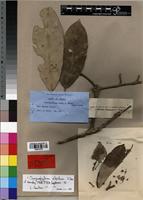
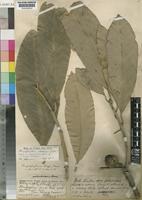
Isotype of Chrysophyllum kayei S. Moore [family SAPOTACEAE]
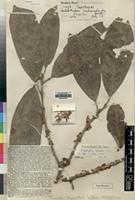
Type of Chrysophyllum kayei S.Moore [family SAPOTACEAE]
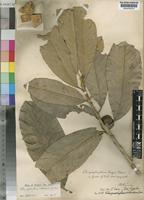
Chrysophyllum albidum G.Don [family SAPOTACEAE]
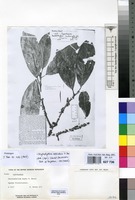
Type of Chrysophyllum kayei S.Moore [family SAPOTACEAE]
Chrysophyllum albidum G.Don [family SAPOTACEAE]
Previous
Next

Name

Identification
Chrysophyllum kayei S.Moore [family SAPOTACEAE ] Chrysophyllum albidum G.Don [family SAPOTACEAE ] (stored under name);
Related name
  • Chrysophyllum kayei
  • Chrysophyllum albidum

Flora

Entry for CHRYSOPHYLLUM albidum G. Don [family SAPOTACEAE]
Herbarium
Royal Botanic Gardens, Kew (K)
Collection
Flora of Tropical East Africa
Resource Type
Reference Sources
Entry From
Flora of Tropical East Africa, page 1, (1968) Author: J. H. Hemsley
Names
CHRYSOPHYLLUM albidum G. Don [family SAPOTACEAE], Gen. Syst. 4: 32 (1837); Baker in F.T.A. 3: 500 (1877); Engl., E.M. 8: 45, t. 15/C (1904); I.T.U., ed. 2: 391 (1952); F.P.S. 2: 374, fig. 139 (1952); K.T.S.: 524 (1961); Heine in F.W.T.A., ed. 2, 2: 27, fig. 205 (1963); J. H. Hemsl. in K.B. 20: 461 (1966). Type: S. Tomé G. Don (BM, holo.!, K, iso.!)
Achras sericea Schumach. [family SAPOTACEAE], Beskr. Guin. Pl: 179 (1827), non Chrysophyllum sericeum A. DC. (1844). Type: Ghana, Thonning (C, holo., K, photo. !)
Chrysophyllum millenianum Engl. [family SAPOTACEAE], E.M. 8: 44 (1904). Type: Nigeria, Lagos, Millen 47 (B, holo. †, K, iso. !)
Chrysophyllum kayei S. Moore [family SAPOTACEAE], in J.B. 47: 412 (1909). Type: Uganda, Mengo District, Mabira Forest, E. Brown 473 (BM, holo. !)
Gambeya albida (G. Don) Aubrév. & Pellegr. [family SAPOTACEAE], in Not. Syst. 16: 247 (1960); Fl. Cameroun 2: 112 (1964)
Planchonella albida (G. Don) Baehni [family ], in Boissiera 11: 68 (1965)
Information
Tall tree, height up to 45 m., with long straight ± fluted bole and buttressed base. Young shoots, buds and petioles with greyish to tawny-brown indumentum of minute closely appressed hairs. Petioles 1.2–3 cm. in length. Leaf-lamina oblong-elliptic to oblanceolate-elliptic, (8-) 12–25(–35) cm. long, 3–9(–10.5) cm. wide, acuminate or sometimes obtuse, narrowly to broadly cuneate; upper surface glabrous, lower surface with soft silky tawny or golden-brown indumentum of minute appressed hairs, later becoming greyish or silvery-grey; midrib and lateral nerves prominently raised, primary lateral nerves (7-)9–14(–16) on each side, arcuate, ascending. Flowers fascicled in current leaf axils or on warty projections on older branchlets. Pedicels 1.5–4 mm. long; both pedicels and calyx with brown pubescence. Sepals broadly ovate to suborbicular, up to 3.5 mm. long, 3 mm. wide. Corolla cream; tube up to 3 mm. long; lobes rounded, up to 2 mm. long, ciliate. Filaments up to 2 mm. long; small subulate staminodes sometimes present. Ovary up to 2 mm. long, pilose; style up to 2 mm. long. Fruit edible, very shortly and stoutly stalked, yellow to orange when mature, depressed globose, up to 5 cm. in diameter, glabrescent. Seeds shiny brown, ± ellipsoid but straight along one margin, laterally compressed, up to 2.5 cm. long and 1.4 cm. wide.
Range
DISTR. U1–4; K5 widely distributed from West Africa through to the Sudan Republic and Uganda, its easternmost limit appearing to be in the Kakamega Forest, Kenya
Altitude range
sometimes protected and even planted for its fruit ~ 900–1700 m.
Distribution
KENYA N. Kavirondo District Kakamega Forest, June 1933 (fl.), Dale in F.D. 3085 !UGANDA Bunyoro District Budongo Forest, Busingiro area, May 1933 (fl.), Eggeling 1219 in F.D. 1326!UGANDA Busoga District Luka, Eggeling 724 in F.D. 1139!UGANDA Mengo District Mabira Forest, near Najembe, 30 June 1950 (fl.), Dawkins 603 !
Notes
A common tree in the forests at lower altitudes in Uganda, especially in the Budongo and Mabira Forests. It yields a useful timber and is commercially exploited (see Uganda Forest Dept. Timber Leaflet No. 7). Flowers from Uganda material are a little larger than those from West Africa, with longer corolla-tube in proportion to the lobes. Mature leaves from flowering shoots are correspondingly larger, the shape tending towards oblong-elliptic and with short and bluntly acuminate apices. This is in contrast to leaves of West African material where oblanceolate-elliptic shapes predominate, often with longer acuminate apices. Such variability is considered to fall within the concept of a single widespread species.

Related Materials

  • Terms and Conditions
  • Privacy Policy
  • Cookie Policy
  • Cookie Settings
  • Accessibility
  • Help
  • Contact Us
  • Facebook
  • Twitter
ITHAKA

JSTOR is part of ITHAKA, a not-for-profit organization helping the academic community use digital technologies to preserve the scholarly record and to advance research and teaching in sustainable ways.

©2000-2026 ITHAKA. All Rights Reserved. JSTOR®, the JSTOR logo, JPASS®, Aluka®, and ITHAKA® are registered trademarks of ITHAKA.

╳