JSTOR Global Plants Home
  • Home
  • Browse
  • About
  • Access
  • Account
    • Saved Items
    • Profile
  • Log in

Global Plants

Skip to Main Content
  • JSTOR Global Plants Home
  • Global Plants

    • Browse
    • About
    • Access
    • Account
      • Saved Items
      • Profile
Log in
  • Browse
  • About
  • Access
  • Account
    • Saved Items
    • Profile
Advanced Search

Compilation
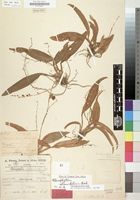
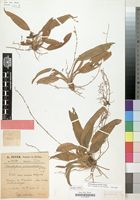
Chlorophytum pulverulentum

2 Images see all

Type of Chlorophytum pulverulentum Peter ex Poelln. [family LILIACEAE]
Previous
Next

Name

Identification
Chlorophytum pulverulentum Peter ex Poelln. [family LILIACEAE ] Verified by Not on sheet., Chlorophytum holstii Engl. [family LILIACEAE ] (stored under name); Verified by Not on sheet.,
Related name
  • Chlorophytum holstii
  • Chlorophytum pulverulentum

Flora

Entry for CHLOROPHYTUM holstii Engl. [family ANTHERICACEAE]
Herbarium
Royal Botanic Gardens, Kew (K)
Collection
Flora of Tropical East Africa
Resource Type
Reference Sources
Entry From
Flora of Tropical East Africa, page 1, (1997) Author: NORDAL (University of Oslo), SHAKKIE KATIVU (University of Zimbabwe) & AXEL D. POULSEN (University of Copenhagen)
Names
CHLOROPHYTUM holstii Engl. [family ANTHERICACEAE], P.O.A. C: 140 (1895); Baker in F.T.A. 7: 497 (1898). Type: Tanzania, Tanga District, Usambara Mts., Amboni, Holst 2674 (B, holo.!, K, iso.!)
CHLOROPHYTUM hoffmannii Engl. [family ANTHERICACEAE], in E.J. 34: 158 (1904). Type: Tanzania, Handeni District, Useguha, cult. Berlin, Hoffmann & Stolz (B, holo.!)
CHLOROPHYTUM holstii Poelln. var. glabrum [family ANTHERICACEAE], in Portug. Acta Biol., sér. B, 1: 298 (1946). Type: Tanzania, E. Usambara Mts., Amani, Peter 16230 (B, holo.!, B, iso.!)
CHLOROPHYTUM pulverulentum Poelln. [family ANTHERICACEAE], in Portug. Acta Biol., sér. B, 1: 329 (1946). Type: Tanzania, Handeni District, Useguha, between Sindeni and Handeni, Peter 40578 (B, holo.!)
CHLOROPHYTUM uvinsense Poelln. [family ANTHERICACEAE], in Portug. Acta Biol., sér. B, 1: 348 (1946). Type: Tanzania, Kigoma District, E. of Uvinza, Peter 36263 (B, holo.!)
Information
Small plants up to 15 cm. Rhizome short; roots rather thin with tubers on short lateral branches. Leaves drying yellowish brown, rosulate, sheathing, with distinctly canaliculate petiole, 5–10 cm. long; lamina forming a distinct angle somewhere between 90° and 180° with the petiole so that it is parallel with the soil surface, 10–20cm. long, 1–3 cm. wide, papillose below at least along the midvein, distinct teeth along the margin, leaf-base attenuate, apex obtuse to acute. Peduncle slender, 5–20 cm. long, scabrid to papillate. Inflorescence a lax raceme, 8–20 cm. long, simple or slightly branched at the base with ± pubescent rhachis; floral bracts papillose, 7–18 mm., obovoid, acute. Pedicels articulated in lower half, 5–6 mm. long in flower, up to 12 mm. in fruit, scabrid to pubescent, 2–4-nate at the lower nodes. Perianth white; tepals patent, 5–8 mm. long, 1.5–3 mm. wide, 3-veined. Filaments fusiform, 2–4 mm. long, with scale-like papillae; anthers ± 2 mm. Capsule trigonous, ± 5–7 mm. long, 5–9 mm. wide, with truncate base. Seeds 2 per locule, saucer-shaped, relatively large, 3–3.5 mm. in diameter.
Range
DISTR. K 7; T 3–6 not known elsewhere
Altitude range
0–± 1000 m.
Distribution
KENYA Kwale District Mwachi Forest Reserve, 17 May 1990, Robertson & Luke 6240!TANZANIA Tanga District 8 km. S. of Ngomeni, 29 July 1953, Drummond & Hemsley 3504! & Kange Gorge, 19 Apr. 1950, Faulkner 1850!TANZANIA Mpwapwa, 22 Feb. 1934, Hornby 630!
Notes
C. holstii has often been identified as the Guineo-Congolean rain-forest species, C. alismifolium Baker, to which it is obviously related (cf. C. sp. B ). They differ, however, by several traits: C. alismifolium has thicker, tomentose roots, with tubers as thickenings along the main axes, not on lateral branches; the leaves display less dense venation in that species; it has a shorter more erect peduncle, only up to 5 cm. long; the tepals are widest in the upper part, and not ± parallel-sided as in C. holstii; and in particular, the capsules are distinctly stipitate in C. alismifolium, but truncate, without any sign of a stipe, in C. holstii. The two taxa might represent vicariant subspecies of C. alismifolium; more material and more thorough analyses are needed.

Related Materials

  • Terms and Conditions
  • Privacy Policy
  • Cookie Policy
  • Cookie Settings
  • Accessibility
  • Help
  • Contact Us
  • Facebook
  • Twitter
ITHAKA

JSTOR is part of ITHAKA, a not-for-profit organization helping the academic community use digital technologies to preserve the scholarly record and to advance research and teaching in sustainable ways.

©2000-2026 ITHAKA. All Rights Reserved. JSTOR®, the JSTOR logo, JPASS®, Aluka®, and ITHAKA® are registered trademarks of ITHAKA.

╳