JSTOR Global Plants Home
  • Home
  • Browse
  • About
  • Access
  • Account
    • Saved Items
    • Profile
  • Log in

Global Plants

Skip to Main Content
  • JSTOR Global Plants Home
  • Global Plants

    • Browse
    • About
    • Access
    • Account
      • Saved Items
      • Profile
Log in
  • Browse
  • About
  • Access
  • Account
    • Saved Items
    • Profile
Advanced Search

Compilation
Chlorophytum puberulum

4 Images see all

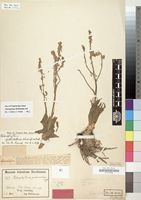
Type of Chlorophytum puberulum Engl. [family LILIACEAE]
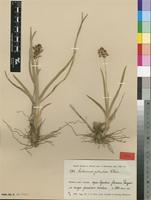
Type of Anthericum puberulum Weim. [family ANTHERICACEAE]
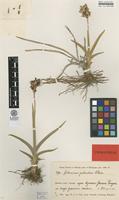
Holotype of Anthericum puberulum Weim. [family ANTHERICACEAE]
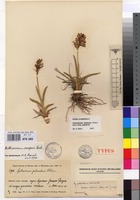
Type of Anthericum puberulum Weim. [family AGAVACEAE]
Previous
Next

Name

Identification
Chlorophytum puberulum Engl. [family LILIACEAE ] Verified by Not on sheet., Chlorophytum floribundum Baker [family LILIACEAE ] (stored under name); Verified by Not on sheet.,
Related name
  • Chlorophytum puberulum
  • Chlorophytum floribundum

Flora

Entry for CHLOROPHYTUM puberulum Engl. [family ANTHERICACEAE]
Herbarium
Royal Botanic Gardens, Kew (K)
Collection
Flora of Tropical Africa
Resource Type
Reference Sources
Entry From
Flora of Tropical Africa, Vol 7, page 421, (1898) Author: (By J. G. Baker.)
Names
CHLOROPHYTUM puberulum Engl. [family ANTHERICACEAE], Pfl. Ost-Afr. C. 139.
Information
Near C. gallabatense, Schweinf. Rootstock thick; root-fibres filiform; rudimentary leaves many, very broad. Produced leaves thin, broadly lanceolate, acuminate, crisped at the broad pale margin, 1/3– 1/4 the length of the peduncle. Peduncle densely pubescent. Racemes dense, ascending, panicled; bracts lanceolate; pedicels short. Perianth 1/3 in. long; segments lanceolate. Filaments as long as the anthers.
Distribution
German East Africa Mozamb. Dist. Ukome, Emin Pasha Gulf, Lake Victoria Nyanza, ex Engler, without mention of the collector.
Notes
No specimen in the Kew Herbarium.

Related Materials

  • Terms and Conditions
  • Privacy Policy
  • Cookie Policy
  • Cookie Settings
  • Accessibility
  • Help
  • Contact Us
  • Facebook
  • Twitter
ITHAKA

JSTOR is part of ITHAKA, a not-for-profit organization helping the academic community use digital technologies to preserve the scholarly record and to advance research and teaching in sustainable ways.

©2000-2026 ITHAKA. All Rights Reserved. JSTOR®, the JSTOR logo, JPASS®, Aluka®, and ITHAKA® are registered trademarks of ITHAKA.

╳