JSTOR Global Plants Home
  • Home
  • Browse
  • About
  • Access
  • Account
    • Saved Items
    • Profile
  • Log in

Global Plants

Skip to Main Content
  • JSTOR Global Plants Home
  • Global Plants

    • Browse
    • About
    • Access
    • Account
      • Saved Items
      • Profile
Log in
  • Browse
  • About
  • Access
  • Account
    • Saved Items
    • Profile
Advanced Search

Compilation
Chlorophytum papillososcapum

4 Images see all

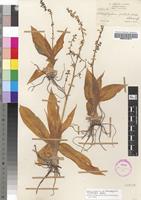
Isotype of Chlorophytum papillososcapum Poelln. [family ANTHERICACEAE]
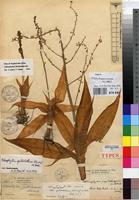
Type of Chlorophytum papillososcapum Poelln. [family ANTHERICACEAE]
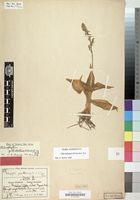
Holotype of Chlorophytum papillososcapum Poelln. [family LILIACEAE]
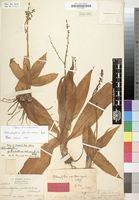
Isotype of Chlorophytum papillososcapum Poelln. [family LILIACEAE]
Previous
Next

Name

Identification
Chlorophytum papillososcapum Poelln. [family LILIACEAE ] Verified by Not on sheet., Chlorophytum floribundum Baker [family LILIACEAE ] (stored under name); Verified by Not on sheet.,
Related name
  • Chlorophytum papillososcapum
  • Chlorophytum floribundum

Flora

Entry for CHLOROPHYTUM floribundum Baker [family ANTHERICACEAE]
Herbarium
Royal Botanic Gardens, Kew (K)
Collection
Flora of Tropical East Africa
Resource Type
Reference Sources
Entry From
Flora of Tropical East Africa, page 1, (1997) Author: NORDAL (University of Oslo), SHAKKIE KATIVU (University of Zimbabwe) & AXEL D. POULSEN (University of Copenhagen)
Names
CHLOROPHYTUM floribundum Baker [family ANTHERICACEAE], in K.B. 1897: 285 (1897) & in F.T.A. 7: 505 (1898). Type: Malawi, Mt. Zomba, Whyte (K, holo.!, B, iso.!)
CHLOROPHYTUM puberulum Engl. [family ANTHERICACEAE], P.O.A. C: 139 (1895); Baker in F.T.A. 7: 505 (1898). Type: Tanzania, Biharamulo District, Ukome, Stuhlmann 877 (B, holo.!)
CHLOROPHYTUM papillososcapum Poelln. [family ANTHERICACEAE], in Portug. Acta Biol., sér. B, 1: 322 (1946). Type: Tanzania, Rungwe District, Kyimbila, Madehani, Stolz 2324a (B, holo.!, BM, BR, K, iso.!)
Information
Plants 16–55 cm. high. Rhizome short, vertical, moniliform; roots narrow, shortly branched, bearing small, rounded tubers on the branches. Leaves rosulate, 4–13 to a plant, lanceolate to broadly lanceolate, clasping at the base, rarely with short petioles, broadest at the middle, narrowed above to a fine point, usually glabrous, 10–40(–60) cm. long, 1–5(–8) cm. wide. Peduncle terete, compressed when dry, glabrous below, often papillate to pubescent above, up to 24 cm. long. Inflorescence exserted, with 2–many racemes, very rarely unbranched, bearing flowers from the base; racemes subtended by lanceolate bracts, these up to 5 cm. long; rhachis terete, often papillate; floral bracts lanceolate, softly apiculate, up to 10 mm. long. Pedicels articulated above the middle, 4–5 mm. long in fruit, papillate, 2–4-nate at the lower nodes. Perianth greenish or whitish, keeled green; tepals 5–8 mm. long, 1–2 mm. wide, 3-veined. Stamens as long as the perianth; filaments fusiform, papillose, ± 5 mm. long; anthers versatile, 1 mm. long. Style straight, ± the length of the stamens. Capsule triquetrous, emarginate, 5–7 mm. long, 6–7 mm. wide. Seeds disc- to saucer-shaped, ± 2 mm. diameter.
Range
DISTR. T 1, 4, 7, 8
Altitude range
800–2150 m.
Distribution
TANZANIA Biharamulo District Lusahungu, 15 Oct. 1960, Tanner 5606A!;TANZANIA Ufipa District Lake Sundu, 8 Nov. 1958, Richards 10251!;TANZANIA Rungwe District Kyimbila, Madehani, 3 Dec. 1913, Stolz 2324a!;TANZANIA Songea District ± 8 km. W. of Songea, 1 Jan. 1956, Milne-Redhead & Taylor 7998!
Distribution (external)
; Zambia
Malawi
Zimbabwe
Notes
C. floribundum is closely related to C. gallabatense with which it can be confused. The former is characterized by pubescence on upper part of the peduncle, the rhachis and the pedicels, further by somewhat longer capsules. The taxonomic delimitation might be justified only at subspecific rank.

Related Materials

  • Terms and Conditions
  • Privacy Policy
  • Cookie Policy
  • Cookie Settings
  • Accessibility
  • Help
  • Contact Us
  • Facebook
  • Twitter
ITHAKA

JSTOR is part of ITHAKA, a not-for-profit organization helping the academic community use digital technologies to preserve the scholarly record and to advance research and teaching in sustainable ways.

©2000-2026 ITHAKA. All Rights Reserved. JSTOR®, the JSTOR logo, JPASS®, Aluka®, and ITHAKA® are registered trademarks of ITHAKA.

╳