JSTOR Global Plants Home
  • Home
  • Browse
  • About
  • Access
  • Account
    • Saved Items
    • Profile
  • Log in

Global Plants

Skip to Main Content
  • JSTOR Global Plants Home
  • Global Plants

    • Browse
    • About
    • Access
    • Account
      • Saved Items
      • Profile
Log in
  • Browse
  • About
  • Access
  • Account
    • Saved Items
    • Profile
Advanced Search

Compilation
Chlorophytum geophilum

9 Images see all

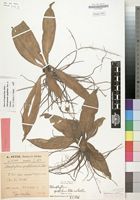
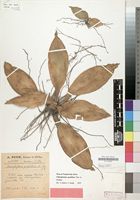
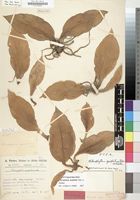
Isotype of Chlorophytum geophilum Peter ex Poelln. [family LILIACEAE]
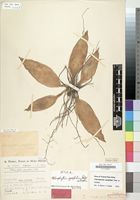
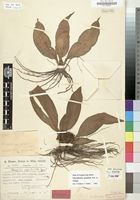
Filed as Chlorophytum geophilum Peter ex Poelln. [family ANTHERICACEAE]
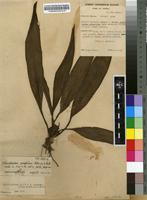
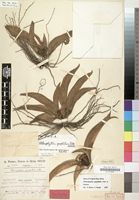
Holotype of Chlorophytum mahengense Poelln. [family LILIACEAE]
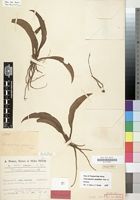
Paratype of Chlorophytum geophilum Peter ex Poelln. [family LILIACEAE]
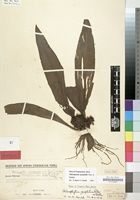
Type of Chlorophytum geophilum Peter ex Poelln. [family LILIACEAE]
Holotype of Chlorophytum geophilum Peter ex Poelln. [family LILIACEAE]
Paratype of Chlorophytum geophilum Peter ex Poelln. [family LILIACEAE]
Previous
Next

Name

Identification
Chlorophytum geophilum Peter ex Poelln. [family LILIACEAE ] (stored under name); Verified by Not on sheet.,
Related name
  • Chlorophytum mahengense
  • Chlorophytum geophilum

Flora

Entry for CHLOROPHYTUM geophilum Poelln. [family ANTHERICACEAE]
Herbarium
Royal Botanic Gardens, Kew (K)
Collection
Flora of Tropical East Africa
Resource Type
Reference Sources
Entry From
Flora of Tropical East Africa, page 1, (1997) Author: NORDAL (University of Oslo), SHAKKIE KATIVU (University of Zimbabwe) & AXEL D. POULSEN (University of Copenhagen)
Names
CHLOROPHYTUM geophilum Poelln. [family ANTHERICACEAE], in Ber. Deutsch. Bot. Ges. 61: 127 (1943); F.W.T.A., ed. 2, 3: 100 (1968); Nordal & Thulin in Nordic Journ. Bot. 13: 265 (1993); Nordal in Fl. Ethiopia 6: 93 (1997). Type: Tanzania, Tabora District, Unyamwezi, Kombe, Peter 35409 (B, holo.!, B, iso.!)
CHLOROPHYTUM mahengense Poelln. [family ANTHERICACEAE], in Ber. Deutsch. Bot. Ges. 61: 129 (1943). Type: Tanzania, Ulanga District, Mahenge, Mbangala, Schlieben 1796 (B, holo.!)
Information
Plants up to 5 cm. high. Rhizome short, carrying narrow roots with elongated tubers. Leaves in a prostrate rosette, oblanceolate, petiolate, obtuse, glabrous, up to 20 cm. long and 4–8 cm. wide, rather thick with prominent veins, occasionally undulate and ciliate. Peduncle terete, up to 2 cm. long, so that the inflorescence appears at ground-level among the leaves. Inflorescence up to 4 cm. long, dense, often branched, sometimes looking almost capitate; floral bracts large, up to 10 mm. long, often ciliate. Pedicels apparently not articulated, ± 5 mm. long, often reflexed in fruit, several at the nodes. Perianth white; tepals 6–8 mm. long, 5-veined; stamens as long as the perianth; anthers ± 2 mm. long, shorter than the filiform filaments. Style filiform, as long as the stamens. Capsule shallowly trigonous, ± 5 mm. long, 4 mm. wide, smooth. Seeds saucer-shaped, ± 2 mm. in diameter. Fig. 11/1.
Range
DISTR. U 3; T 4, 6–8
Altitude range
200–1100 m.
Distribution
UGANDA Mbale District Sebei, Buligenyi, 19 May 1955, Norman 264!TANZANIA Iringa District 30 km. W. of Iringa along road to Idodi, 13 Jan. 1972, A. Bjørnstad 1232!TANZANIA Songea District 32 km. E. of Songea by Mkurira R., 19 Jan. 1956, Milne-Redhead & Taylor 8369!TANZANIA Masasi District Ndanda mission, 1 Feb. 1991, Bidgood, Abdallah & Vollesen 1332!
Distribution (external)
; Burkina Faso
Ghana
Nigeria
Cameroon
Ethiopia
Zambia
Malawi
Notes
The species is very similar to another widespread, ± prostate species with reduced peduncle, C. pusillum Baker (1878), with the type from the Sudan. Petiolate leaves which are rather thick with prominent veins and branched inflorescences characterise C. geophilum, whereas C. pusillum has broad-based thin leaves and unbranched inflorescence. The relation between the two species should be further investigated.

Related Materials

  • Terms and Conditions
  • Privacy Policy
  • Cookie Policy
  • Cookie Settings
  • Accessibility
  • Help
  • Contact Us
  • Facebook
  • Twitter
ITHAKA

JSTOR is part of ITHAKA, a not-for-profit organization helping the academic community use digital technologies to preserve the scholarly record and to advance research and teaching in sustainable ways.

©2000-2026 ITHAKA. All Rights Reserved. JSTOR®, the JSTOR logo, JPASS®, Aluka®, and ITHAKA® are registered trademarks of ITHAKA.

╳