JSTOR Global Plants Home
  • Home
  • Browse
  • About
  • Access
  • Account
    • Saved Items
    • Profile
  • Log in

Global Plants

Skip to Main Content
  • JSTOR Global Plants Home
  • Global Plants

    • Browse
    • About
    • Access
    • Account
      • Saved Items
      • Profile
Log in
  • Browse
  • About
  • Access
  • Account
    • Saved Items
    • Profile
Advanced Search

Compilation
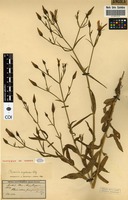
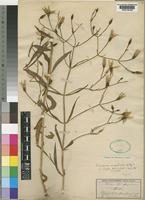
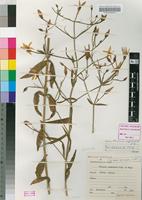
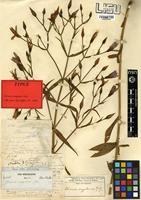
Chironia angolensis

5 Images see all

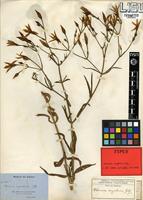
Isotype of Chironia angolensis Gilg [family GENTIANACEAE]
Chironia angolensis Gilg [family GENTIANACEAE]
Isotype of Chironia angolensis Gilg [family GENTIANACEAE]
Type of Chironia angolensis Gilg [family GENTIANACEAE]
Previous
Next

Name

Identification
Chironia angolensis Gilg [family GENTIANACEAE ] (stored under name); Plocandra purpurascens E.Mey. [family GENTIANACEAE ]
Related name
  • Plocandra purpurascens
  • Chironia angolensis

Flora

Entry for CHIRONIA purpurascens Benth. et Hook. f. [family GENTIANACEAE]
Herbarium
Royal Botanic Gardens, Kew (K)
Collection
Flora Capensis
Resource Type
Reference Sources
Entry From
Flora Capensis, Vol 4, page 1056, (1909) Author: By A. W. HILLand D. PRAIN.
Names
CHIRONIA purpurascens Benth. et Hook. f. [family GENTIANACEAE], Gen. Pl. ii. 805;—Gilg in Engl. Jahrb. xxvi. 103; Knobl. in Bot. Centralbl. lx. 329; Wood, Natal Pl. iii. part 4, 19, t. 288; Schoch in Bot. Centralbl. Beih. xiv. 219.
CHIRONIA Bachmannii Gilg [family GENTIANACEAE], in Engl. Jahrb. xxvi. 103; Schoch in Bot. Centralbl. Beih. xiv. 218.
CHIRONIA angolensis Schoch [family GENTIANACEAE], in Bot. Centralbl. Beih. xiv. 228 (as to Natal plant only); not of Gilg.
Plocandra purpurascens E. Meyer [family ], Comm. 182; Krauss, Beitr. Fl. Cap. und Natal. 122; Griseb. in DC. Prodr. ix. 44.
Information
stems distinctly angled, simple or branching upwards, leafy, 1 1/2–2 ft. long; leaves below obovate or obovate-lanceolate, 1 1/2–2 in. long, less often (form Bachmannii) lanceolate, 2–3 in. long, 3–6 lin. wide, higher up lanceolate, 1 1/2 in. or (form Bachmannii) linear-lanceolate or linear, 2–3 1/2 in. long, 1 1/2–2 lin. wide; flowers 3–5 in terminal cymes often forming lax panicles with branches ascending, 1 1/2–2 1/2 in. and peduncles 1/2–1 in. long; calyx 6–7 lin. long, divided almost to the base; lobes linear-subulate; corolla pink or purple; tube narrow-campanulate, shorter than the calyx; lobes lanceolate, acute, 6–8 lin. long, 1 1/2–2 lin. wide; filaments glandular at the base; anthers distinctly spiral; ovary narrow-oblong, acute, 3 1/2 lin. long. null
Distribution
EASTERN REGION Pondoland; near Bates (long-leaved form = C. Bachmannii), Bachmann, 1037! Griqualand East; near Clydesdale, 2500–4000 ft., Schlechter, 6618! and (mixed with Bachmannii form), Tyson, 2113 in Herb. Zurich! Zuurberg, between Kokstad and Clydesdale, 5000 ft., Tyson, 1161! Natal; between Umzimkulu River and Umkomaas River, Drège, 4923! Umlaas, Wood, 876! near Durban, Krauss, 192! Wood, 141! Gerrard, 669! Plant (Bachmannii form), 46! 48! Clairmont, Wood, 1154! Coastland, Sutherland! Sanderson (Bachmannii form), 170! and without precise locality, Gerrard, 463! Sanderson, 446 partly! Zululand; without precise locality, Mrs. McKenzie! Gerrard (Bachmannii form), 550! Var. β.: Griqualand East; near Clydesdale, 2500–4000 ft., Tyson, 2113 in Herb. Kew! and in MacOwan and Bolus, Herb. Austr.-Afr. 1290! Var. γ: Natal; Ixopo, Krook, 2028!
Notes
We are unable to separate C. Bachmannii from C. purpurascens; the two occur in the same localities and are connected by intermediates. We retain the variety Tysonii mainly because Dr. Gilg finds that Bolus, 1290 at Berlin, collected by Tyson, on which C. Tysonii is based, has all save the primary flowers of its cymes 4-merous. This is not the case with any specimen of this gathering in other herbaria; some of the specimens, indeed, are true C. purpurascens, others are the Bachmannii form.

Related Materials

  • Terms and Conditions
  • Privacy Policy
  • Cookie Policy
  • Cookie Settings
  • Accessibility
  • Help
  • Contact Us
  • Facebook
  • Twitter
ITHAKA

JSTOR is part of ITHAKA, a not-for-profit organization helping the academic community use digital technologies to preserve the scholarly record and to advance research and teaching in sustainable ways.

©2000-2026 ITHAKA. All Rights Reserved. JSTOR®, the JSTOR logo, JPASS®, Aluka®, and ITHAKA® are registered trademarks of ITHAKA.

╳