JSTOR Global Plants Home
  • Home
  • Browse
  • About
  • Access
  • Account
    • Saved Items
    • Profile
  • Log in

Global Plants

Skip to Main Content
  • JSTOR Global Plants Home
  • Global Plants

    • Browse
    • About
    • Access
    • Account
      • Saved Items
      • Profile
Log in
  • Browse
  • About
  • Access
  • Account
    • Saved Items
    • Profile
Advanced Search

Compilation
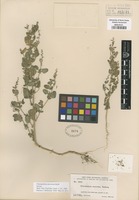
Chenopodium atrovirens

13 Images see all

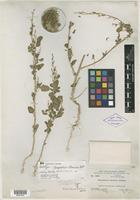
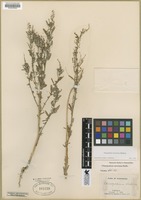
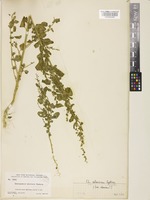
Holotype of Chenopodium atrovirens Rydb. [family CHENOPODIACEAE]
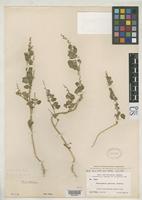
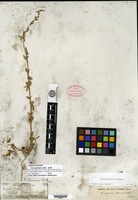
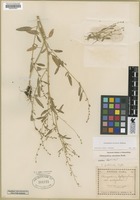
Isotype of Chenopodium atrovirens Rydberg [family CHENOPODIACEAE]
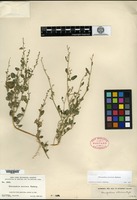
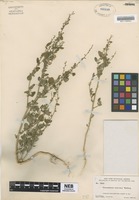
Filed as Chenopodium atrovirens Rydb. [family AMARANTHACEAE]
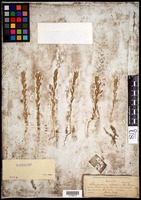
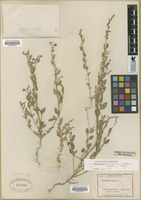
Isolectotype of Chenopodium wolfii Rydberg [family CHENOPODIACEAE]
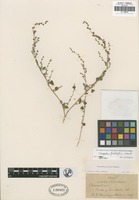
Chenopodium atrovirens Rydb. [family CHENOPODIACEAE]
Filed as Chenopodium atrovirens Rydb. [family AMARANTHACEAE]
Chenopodium atrovirens Rydb. [family AMARANTHACEAE]
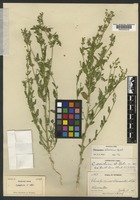
Isotype of Chenopodium atrovirens Rydberg, P.A. 1900 [family CHENOPODIACEAE]
Chenopodium atrovirens Rydb. [family CHENOPODIACEAE]
Filed as Chenopodium atrovirens Rydb. [family AMARANTHACEAE]
Isotype of Chenopodium flabellifolium Standl. [family AMARANTHACEAE]
Syntype of Chenopodium wolfii Rydb. [family AMARANTHACEAE]
Isotype of Chenopodium atrovirens Rydb. [family CHENOPODIACEAE]
Previous
Next

Name

Identification
Chenopodium atrovirens Rydb. [family CHENOPODIACEAE ] (stored under name); Verified by Not on sheet,
Related name
  • Chenopodium atrovirens

Flora

Entry for Chenopodium atrovirens Rydberg [family CHENOPODIACEAE]
Herbarium
Flora of North America (FNA)
Collection
Flora of North America
Resource Type
Reference Sources
Entry From
Flora of North America, Vol 4,
Names
Chenopodium atrovirens Rydberg [family CHENOPODIACEAE], Mem. New York Bot. Gard., 1: 131. 1900
Chenopodium fremontii S. Watson var. atrovirens (Rydberg) Fosberg [family CHENOPODIACEAE]
Treatment Author(s)
Steven E. Clemants
Sergei L. Mosyakin
Information
Stems erect to ascending, usually much-branched, 0.7–6.5 dm, moderately to densely farinose. Leaves nonaromatic; petiole 0.5–1.5 cm, usually markedly upward curved; blade ovate, broadly oblong, oblong, oval, or occasionally triangular, prominently 3-veined, 1–3 × 0.4–2.2 cm, 1.5–3 times longer than wide, thick, base rounded to cuneate, margins entire or occasionally with basal lobe, apex obtuse or rounded, farinose abaxially. Inflorescences glomerules in terminal and axillary paniculate spikes, 2–8 × 1–1.5 cm; glomerules maturing unevenly; bracts linear, 2 × 0.1 mm. Flowers: perianth segments 5, distinct nearly to base; lobes obovate, 0.8–0.9 × 0.6–0.8 mm, apex rounded or emarginate, carinate, farinose, not covering fruit at maturity; stamens 5; stigmas 2, 0.1 mm. Achenes or Utricles ovoid; pericarp adherent or nonadherent, smooth. Seeds 0.9–1.3 mm diam., margins acute; seed coat black, rugulate. 2n = 18.
Phenology Fruiting
fruiting mid summer–fall
Altitude range
100–3400 m;
Distribution
USA Ariz.USA Calif.USA Colo.USA IdahoUSA Mont.USA Nev.USA N.Mex.USA Oreg.USA UtahUSA Wyo.Canada Alta.Canada B.C.Canada Sask.
Discussion
Chenopodium atrovirens has been reported for Washington but we have seen no specimens. Reports of C. carnulosum Moquin-Tandon from Texas are, at least in part, this species. We have seen no reliable North American records of this southern South American species.

Related Materials

  • Terms and Conditions
  • Privacy Policy
  • Cookie Policy
  • Cookie Settings
  • Accessibility
  • Help
  • Contact Us
  • Facebook
  • Twitter
ITHAKA

JSTOR is part of ITHAKA, a not-for-profit organization helping the academic community use digital technologies to preserve the scholarly record and to advance research and teaching in sustainable ways.

©2000-2026 ITHAKA. All Rights Reserved. JSTOR®, the JSTOR logo, JPASS®, Aluka®, and ITHAKA® are registered trademarks of ITHAKA.

╳