JSTOR Global Plants Home
  • Home
  • Browse
  • About
  • Access
  • Account
    • Saved Items
    • Profile
  • Log in

Global Plants

Skip to Main Content
  • JSTOR Global Plants Home
  • Global Plants

    • Browse
    • About
    • Access
    • Account
      • Saved Items
      • Profile
Log in
  • Browse
  • About
  • Access
  • Account
    • Saved Items
    • Profile
Advanced Search

Compilation
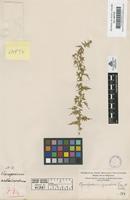
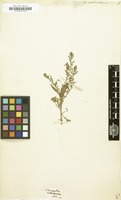
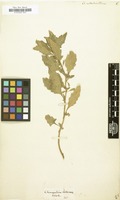
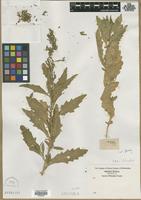
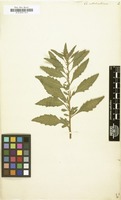
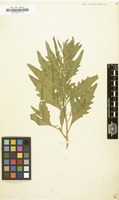
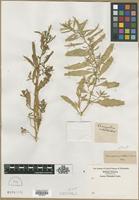
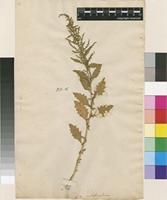
Chenopodium anthelminticum

15 Images see all

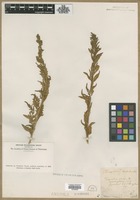
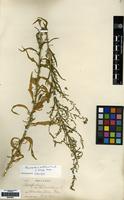
Filed as Chenopodium graveolens Lag. et Rodr. [family CHENOPODIACEAE]
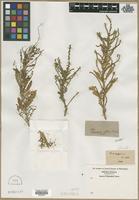
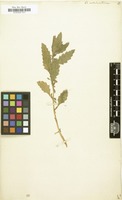
Filed as Chenopodium anthelminticum [family CHENOPODIACEAE]
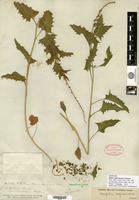
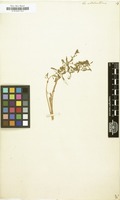
Filed as Chenopodium anthelminticum L. [family CHENOPODIACEAE]
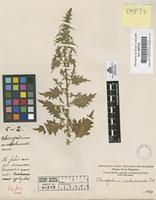
Filed as Chenopodium anthelminticum [family CHENOPODIACEAE]
Filed as Chenopodium sp. [family CHENOPODIACEAE]
Filed as Chenopodium anthelminticum L. [family AMARANTHACEAE]
Filed as Chenopodium anthelminticum L. [family CHENOPODIACEAE]
Syntype of Blitum californicum S. Watson [family CHENOPODIACEAE]
Filed as Chenopodium ambrosioides L. [family CHENOPODIACEAE]
Type? of Chenopodium ambrosioides L. var. anthelminticum (L.) Aellen [family AMARANTHACEAE]
Filed as Chenopodium anthelminticum [family CHENOPODIACEAE]
Previous
Next

Name

Identification
Chenopodium ambrosioides L. [family AMARANTHACEAE ] Verified by Not on sheet, Chenopodium anthelminticum L. [family AMARANTHACEAE ] Verified by Aellen, P., 1964 Chenopodium ambrosioides L. [family AMARANTHACEAE ] (stored under name); Verified by Not on sheet,
Related name
  • Chenopodium ambrosioides
  • Chenopodium anthelminticum
  • Chenopodium sp.
  • Chenopodium graveolens
Common name
  • Wormseed, Flora of North America Vol. 4

Flora

Entry for Dysphania anthelmintica (Linnaeus) Mosyakin & Clemants [family CHENOPODIACEAE]
Herbarium
Flora of North America (FNA)
Collection
Flora of North America
Resource Type
Reference Sources
Entry From
Flora of North America, Vol 4,
Names
Dysphania anthelmintica (Linnaeus) Mosyakin & Clemants [family CHENOPODIACEAE], Ukrayins’k. Bot. Zhur n., n. s., 59: 382. 2002
Chenopodium anthelminticum Linnaeus [family CHENOPODIACEAE], Sp. Pl., 1: 220. 1753
Chenopodium ambrosioides Linnaeus var. anthelminticum (Linnaeus) A. Gray [family CHENOPODIACEAE]
Treatment Author(s)
Steven E. Clemants
Sergei L. Mosyakin
Information
Plants annual. Stems erect to ascending, branched, 3.7–7.5(–10) dm, ± glandular-pubescent, puberulent, or glabrate. Leaves malodorous, distal leaves sessile; petiole 1.4 mm; blade narrowly ovate to lanceolate, 5–7 × 1.5–3 cm, base cuneate, margins dentate with large, widely spaced teeth, apex acute, gland-dotted (rarely nearly glabrous). Inflorescences terminal and lateral spikes or panicles, 3–8 cm; glomerules globose, 2.5–3.3 mm diam.; bracts absent or leaflike, linear, to 2.2 mm, apex acute. Flowers: perianth segments 5, connate for ca. 1/2 their length, distinct portion ovate, 0.7 mm, apex obtuse, rounded abaxially, glabrous, covering fruit at maturity; stamens 5; stigmas 3. Achenes ovoid; pericarp nonadherent, smooth, glandular. Seeds horizontal or vertical, reddish brown, ovoid, 0.6–0.8 × 0.8–1 mm; seed coat smooth.
Phenology Fruiting
fruiting summer–fall
Altitude range
0–1100 m;
Distribution
MexicoWest IndiesBermudaCentral America.USA Ala.USA Ark.USA Calif.USA Del.USA Fla.USA Ga.USA Ill.USA Ind.USA Kans.USA Ky.USA La.USA Md.USA Mass.USA Miss.USA Mo.USA N.J.USA N.Y.USA N.C.USA OhioUSA Okla.USA Pa.USA S.C.USA Tex.USA Va.USA W.Va.
Discussion
Dysphania anthelmintica is cultivated and locally naturalized elsewhere in the world. It is reported to not have leaves (pseudobracts) subtending the glomerules. In fact, it usually has very reduced leaflike bracts that are never longer than the glomerules. This species appears to be the most common representative along the Atlantic and Gulf coasts and is probably native to that region.

Related Materials

  • Terms and Conditions
  • Privacy Policy
  • Cookie Policy
  • Cookie Settings
  • Accessibility
  • Help
  • Contact Us
  • Facebook
  • Twitter
ITHAKA

JSTOR is part of ITHAKA, a not-for-profit organization helping the academic community use digital technologies to preserve the scholarly record and to advance research and teaching in sustainable ways.

©2000-2026 ITHAKA. All Rights Reserved. JSTOR®, the JSTOR logo, JPASS®, Aluka®, and ITHAKA® are registered trademarks of ITHAKA.

╳