JSTOR Global Plants Home
  • Home
  • Browse
  • About
  • Access
  • Account
    • Saved Items
    • Profile
  • Log in

Global Plants

Skip to Main Content
  • JSTOR Global Plants Home
  • Global Plants

    • Browse
    • About
    • Access
    • Account
      • Saved Items
      • Profile
Log in
  • Browse
  • About
  • Access
  • Account
    • Saved Items
    • Profile
Advanced Search

Compilation
Chaetopoa taylori

3 Images see all

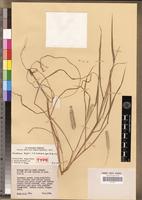
Type of Chaetopoa taylori C.E.Hubb. [family POACEAE]
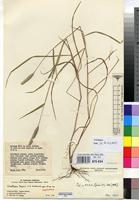
Isotype of Chaetopoa taylori C.E.Hubb. [family POACEAE]
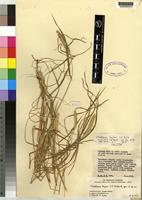
Isotype of Chaetopoa taylori C.E.Hubb. [family GRAMINEAE]
Previous
Next

Name

Identification
Isotype of Chaetopoa taylori C.E.Hubb. [family POACEAE ] (stored under name); Verified by Not on sheet,
Related name
  • Chaetopoa taylori

Flora

Entry for CHAETOPOA taylori C.E. Hubbard [family POACEAE]
Herbarium
Royal Botanic Gardens, Kew (K)
Collection
Flora of Tropical East Africa
Resource Type
Reference Sources
Entry From
Flora of Tropical East Africa, page 451, (1982) Author: W. D. CLAYTON and S.A. RENVOIZE
Names
CHAETOPOA taylori C.E. Hubbard [family POACEAE], in Hook., Ic. Pl. 37, fig. 3646 (1967). Type: Tanzania, Songea District, Litenga Hill, Milne-Redhead & Taylor 9684 (K, holo.!)
Information
Annual; culms 30–60 cm. high, ascending. Leaf-blades 6.5–30 cm. long, 2–6 mm. wide. Inflorescence 3.5–7 cm. long, the clusters with glabrous pedicels. Outer spikelets 3.5–4 mm. long (excluding awns), the awned glumes about as long but one in each cluster longer (8.5–12 mm.) than the rest; lower lemma mucronate; upper lemma commonly present. Inner spikelet a little larger; upper glume subulate from a broad base, almost as long as the spikelet; lower lemma acuminate to an awn-point 1.5 mm. long; upper lemma acuminate. Fig. 152.
Range
DISTR. T8 not known elsewhere
Altitude range
1170 m.
Distribution
TANZANIA Songea District Litenga Hill, 19 Apr. 1956, Milne-Redhead & Taylor 9684!

Related Materials

  • Terms and Conditions
  • Privacy Policy
  • Cookie Policy
  • Cookie Settings
  • Accessibility
  • Help
  • Contact Us
  • Facebook
  • Twitter
ITHAKA

JSTOR is part of ITHAKA, a not-for-profit organization helping the academic community use digital technologies to preserve the scholarly record and to advance research and teaching in sustainable ways.

©2000-2026 ITHAKA. All Rights Reserved. JSTOR®, the JSTOR logo, JPASS®, Aluka®, and ITHAKA® are registered trademarks of ITHAKA.

╳