JSTOR Global Plants Home
  • Home
  • Browse
  • About
  • Access
  • Account
    • Saved Items
    • Profile
  • Log in

Global Plants

Skip to Main Content
  • JSTOR Global Plants Home
  • Global Plants

    • Browse
    • About
    • Access
    • Account
      • Saved Items
      • Profile
Log in
  • Browse
  • About
  • Access
  • Account
    • Saved Items
    • Profile
Advanced Search

Compilation
Chaetopappa parryi

4 Images see all

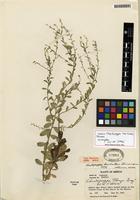
Holotype of Chaetopappa keerlioides Shinners [family ASTERACEAE]
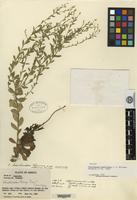
Isotype of Chaetopappa keerlioides Shinners [family ASTERACEAE]
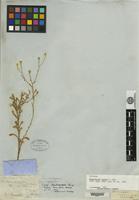
Holotype of Chaetopappa parryi A. Gray [family ASTERACEAE]
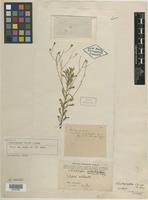
Isotype of Chaetopappa parryi A. Gray [family ASTERACEAE]
Previous
Next

Name

Identification
Chaetopappa parryi A. Gray [family ASTERACEAE ] (stored under name); Verified by A. Gray, 1881 Chaetopappa parryi A. Gray [family ASTERACEAE ] Verified by A. Gray, 1881 Chaetopappa parryi A. Gray [family ASTERACEAE ] Verified by Not on Sheet, Distasis modesta DC. [family ASTERACEAE ] Verified by Not on Sheet, Distasis parryi Kuntze [family ASTERACEAE ] Verified by Not on Sheet,
Related name
  • Chaetopappa keerlioides
  • Chaetopappa parryi
  • Distasis modesta
  • Distasis parryi
Common name
  • Parry’s lazy daisy, Flora of North America Vol. 20

Flora

Entry for Chaetopappa parryi A. Gray [family COMPOSITAE]
Herbarium
Flora of North America (FNA)
Collection
Flora of North America
Resource Type
Reference Sources
Entry From
Flora of North America, Vol 20,
Names
Chaetopappa parryi A. Gray [family COMPOSITAE], Proc. Amer. Acad. Arts, 16: 82. 1880
Treatment Author(s)
Guy L. Nesom
Information
Perennials, 10–35 cm, eglandular; fibrous-rooted with slender, branching rhizomes. Leaves (basal often persistent at rhizome tips) not densely overlapping; blades spatulate to spatulate-obovate, 15–30(–40) × 2–5 mm, gradually or little reduced distally, herbaceous, bases attenuate, not clasping, flat (2-grooved adaxially), faces hispido-pilose to strigose or glabrate. Involucres cylindro-turbinate, 4–6 × 2–4 mm. Ray florets 7–9; corollas white. Disc florets 10–15, bisexual. Cypselae 1.9–2 mm, 3–5-nerved, faces glabrate to sparsely strigose; pappi hyaline crowns of basally fused scales 0.3–0.8 mm in 1 series. 2n = 16.
Phenology
may (spring), jun-aug (summer), sep-oct (fall)
Altitude range
1400–1600 m;
Distribution
Mexico (Coahuila).Mexico (Nuevo León).Mexico (San Luis Potosí).Mexico (Tamaulipas).USA Tex.

Related Materials

  • Terms and Conditions
  • Privacy Policy
  • Cookie Policy
  • Cookie Settings
  • Accessibility
  • Help
  • Contact Us
  • Facebook
  • Twitter
ITHAKA

JSTOR is part of ITHAKA, a not-for-profit organization helping the academic community use digital technologies to preserve the scholarly record and to advance research and teaching in sustainable ways.

©2000-2026 ITHAKA. All Rights Reserved. JSTOR®, the JSTOR logo, JPASS®, Aluka®, and ITHAKA® are registered trademarks of ITHAKA.

╳