JSTOR Global Plants Home
  • Home
  • Browse
  • About
  • Access
  • Account
    • Saved Items
    • Profile
  • Log in

Global Plants

Skip to Main Content
  • JSTOR Global Plants Home
  • Global Plants

    • Browse
    • About
    • Access
    • Account
      • Saved Items
      • Profile
Log in
  • Browse
  • About
  • Access
  • Account
    • Saved Items
    • Profile
Advanced Search

Compilation
Chaetaria forskolii

14 Images see all

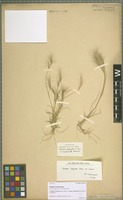
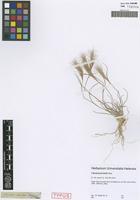
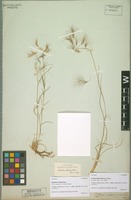
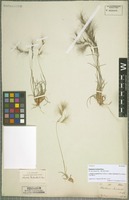
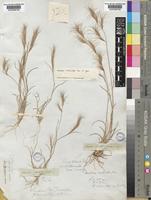
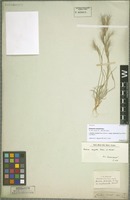
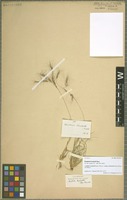
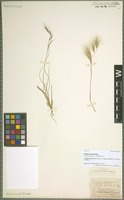
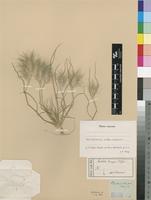
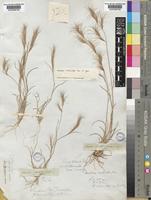
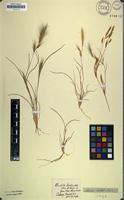
Syntype of Aristida congesta Roem. & Schult. subspecies barbicollis (Trin. & Rupr.) De Winter [family POACEAE]
Syntype of Chaetaria forskolii Nees [family POACEAE]
Syntype of Aristida congesta Roem. & Schult. subspecies barbicollis (Trin. & Rupr.) De Winter [family POACEAE]
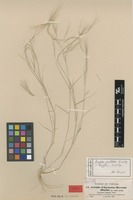
Aristida barbicollis Trin. & Rupr. [family POACEAE]
Isotype of Aristida mutabilis Trin. & Rupr. var. longiflora Trin. & Rupr. [family POACEAE]
Syntype of Aristida barbicollis Trin. & Rupr. [family POACEAE]
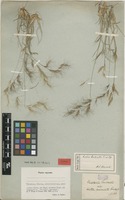
Syntype of Chaetaria forskolii Nees [family POACEAE]
Syntype of Aristida congesta Roem. & Schult. subspecies barbicollis (Trin. & Rupr.) De Winter [family POACEAE]
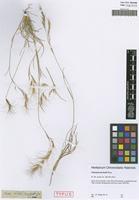
Type of Aristida rangei Pilg. [family POACEAE]
Aristida barbicollis Trin. & Rupr. [family POACEAE]
Filed as Aristida paniculata Forssk. [family POACEAE]
Previous
Next

Name

Identification
Chaetaria forskolii Nees [family POACEAE ] (stored under name); Verified by C. G. D. Nees,
Related name
  • Aristida rangei
  • Aristida congesta
  • Aristida paniculata
  • Aristida barbicollis
  • Chaetaria forskolii

Flora

Entry for Aristida barbicollis Trin. & Rupr. [family GRAMINEAE]
Herbarium
Royal Botanic Gardens, Kew (K)
Collection
Flora Zambesiaca
Resource Type
Reference Sources
Entry From
FZ, Vol 10, Part 1, (1971) Author: E. Launert
Names
Aristida barbicollis Trin. & Rupr. [family GRAMINEAE], Sp. Gram. Stip.: 152 (1842). — Steud., Syn. Pl. Glum. 1: 141 (1854). — Dur. & Schinz, Consp. Fl. Afr. 5: 800 (1894). — Engl., Pflanzenw. Ost-Afr. C: 107 (1895). — Stapf. in Harv. & Sond., F.C. 7: 559 (1899) — Wood, Natal Plants, 5: pl. 401 (1904). — Rendle in Journ. Linn. Soc. Bot. 40: 233 (1911). — Henrard, Crit. Rev. Aristida 1 in Meded. Rijks-Herb. 54: 48 (1926); Monogr. Aristida 1 in Meded. Rijks-Herb. 58: 132, t. 50 (1929). — Stent & Rattray in Proc. Rhod. Sci. Ass. 32: 45 (1933). — Bremerk. & Oberm. in Ann. Transv. Mus. 16: 405 (1935). — Schweickerdt in Bothalia, 4: 153 (1941). — Sturgeon in Rhod. Agric. Journ. 51: 503 (1954). — Chippindall in Meredith, Grasses & Pastures of S. Afr.: 313, pl. 9, map 44 (1955). — Pilg. in Engl. & Prantl, Nat. Pflanzenfam. ed. 2, 14d: 122 (1956). — W. D. Clayton, F.T.E.A., Gramineae: 157, fig. 50 (1970). TAB. 33. Type from S. Africa (Cape).
Chaetaria forskolii Nees [family GRAMINEAE], Fl. Afr. Austr.: 188 (1841) non Aristida forskohlii Tausch (1836). Type from S. Africa.
Aristida lommelii Mez [family GRAMINEAE], in Fedde, Repert. 17: 150 (1921). — Henrard, Crit. Rev. Aristida 2 in Meded. Rijks-Herb. 54a: 302 (1927); Monogr. Aristida 1 in Meded. Rijks-Herb. 58: 133, t. 50 (1929). — Sturgeon in Rhod. Agric. Journ. 51: 496 (1954). — Robyns & Tournay, Fl. Parc Nat. Alb. 3: 135, pl. 20 (1955). Type from SW. Africa.
Aristida barbicollis var. conglomerata Henrard [family GRAMINEAE], Crit. Rev. Aristida Suppl. in Meded. Rijks-Herb. 54c: 705 (1933). Type from S. Africa.
Aristida congesta subsp. barbicollis Trin. & Rupr. de Winter [family GRAMINEAE], in Bothalia, 8: 173 (1964); Bothalia, 8: 298, fig. 76, 78, 159/28a (1965). Type as for A. barbicollis.
Information
Perennial, 20-65 cm. high, usually glaucous, densely caespitose. Culms erect or ascending, slender, simple or branched from the lower nodes, somewhat wiry, distinctly compressed, especially below, usually glabrous, sometimes slightly scaberulous, 3-4-noded; nodes glabrous, smooth. Leaf-sheaths more or less keeled, tight or lax, glabrous or somewhat scaberulous. Ligule densely short-ciliolate; auricles usually long-barbate; collar laterally barbate, more or less glabrous on the back. Leaf-laminae up to 10(20) cm. long, narrowly linear, conduplicate or convolute, fairly rigid, curved or flexuous, with a rather obtuse apex, with somewhat thickened marginal nerves, scabrous or hispidulous above, glabrous and smooth beneath. Panicle variable in shape and size, usually 15 x 5-10 cm., open, ovate to oblong, with several more or less spreading branches having spikelets congested towards the ends, forming often false spikes; axis erect or flexuous, terete, glabrous, smooth below, more or less subangular, scaberulous in the upper part; branches solitary or 2-nate, distant, scaberulous, naked for 1-6 cm. in the lower part. Spikelets greenish, usually tinged with purple. Glumes keeled, subhyaline, 1-nerved; the inferior usually 5-5.5 mm. long, lanceolate, scaberulous on the keel and laterally towards the apex, usually gradually tapering into a short awn c. 0.8-2 mm. long; the superior c. 6.5-8 mm. long, narrowly lanceolate, usually smooth on the keel, awned or deeply 2-fid at the apex with a c. 1 mm. long awn from the sinus and sometimes with well-developed narrow lateral lobes. Lemma 3.5-4.5 mm. long, sometimes mottled with purple, glabrous below, scabrous towards the apex; callus c. 1 mm. long, usually subacute, densely barbate; column of the awns c. 2.5 mm. long, twisted, scaberulous; awns 11-25 mm. long, subequal or the central one somewhat longer up to 30 mm., slender, scaberulous, more or less spreading; articulation between the apex of the column and the base of the awns.
Habitat
On red sandy soils and sandy-clay, paragneiss and serpentine soils and on low granite kopjies projecting through black soils, in sandveld, open bushland, Acacia savanna, Brachystegia and Mopane woodland, on grassy hillsides, along roadsides, in heavily overgrazed old fallows, paddocks, on edges of sugar-cane lands and on disturbed areas
Distribution
Mozambique GI Chibuto, road to Alto Changane, at 15 km. from Chibuto, Lagoa Culela, 10.vi.1960, Lemos & Balsinhas 63 (COI; LISC; LMA).Mozambique Z Between Pebane and Mocubela, 25.x.1942, Torre 4684 (LISC).Mozambique MS Manica, Macequece, right bank of R. Revuè, 12.iii.1948, Garcia 583 (LISC).Zimbabwe S Fort Victoria, Makoholi Experimental Station, Newton & Juliasi 13 (SRGH).Zimbabwe E Umtali Commonage, 1050 m., 3.i.1947, Fisher 1177 (SRGH).Zimbabwe C Salisbury, Gwebi, 21.xii.1951, Barnes 22 (SRGH).Mozambique N Nampula, vii.1955, without collector 12? (LISC).Zimbabwe W Matopo Research Station, 1350 m., 16.ii.1954, Rattray 1617 (SRGH).Zambia S Mazabuka Distr., Zambezi escarpment 40 km. from Chirundu, layby on Lusaka-Chirundu road, c. 750 m., 3.i.1968, Simon 1631 (BM; SRGH).Botswana SE Mahalapye, 15.iv.1931, Pole Evans 3206 (SRGH).
Distribution (external)
south-western Africa
Cape Province
Natal
Transvaal
Swaziland
Congo
Tanzania
Kenya
Notes
A very variable sp., closely related to A. congesta from which it differs mainly in having a lax and open panicle with ± spreading branches bearing spikelets congested in dense or lax fascicles towards the ends of the branches. As already mentioned by Schweickerdt, intermediates between these spp. are frequent, especially in areas where they both occur. They may have arisen by hybridization. A variant of A. barbicollis with longer awns and column on the lemma and a shorter upper glume was described by Mez as a separate sp., A. lommelii. According to Henrard, in A. barbicollis the lemma, including the callus and column, is 6?5 mm. long, the awns of the lemma 11-12 mm. long, the inferior glume with an awn up to 0?75 mm. long and the superior glume 8 mm. long, whilst in A. lommelii the lemma, including the callus and column, is 22-27(30) mm. long, the lower glume with an awn up to 2 mm. long and the upper glume 6?5 mm. long. Examination of a large number of specimens from our area has revealed that the length of awns and column, as well as the size of the glumes are very variable characters, not correlated with other features. Since transitional forms exist between these taxa, their distinction is difficult, and therefore, they are treated here as being conspecific.

Related Materials

  • Terms and Conditions
  • Privacy Policy
  • Cookie Policy
  • Cookie Settings
  • Accessibility
  • Help
  • Contact Us
  • Facebook
  • Twitter
ITHAKA

JSTOR is part of ITHAKA, a not-for-profit organization helping the academic community use digital technologies to preserve the scholarly record and to advance research and teaching in sustainable ways.

©2000-2026 ITHAKA. All Rights Reserved. JSTOR®, the JSTOR logo, JPASS®, Aluka®, and ITHAKA® are registered trademarks of ITHAKA.

╳