JSTOR Global Plants Home
  • Home
  • Browse
  • About
  • Access
  • Account
    • Saved Items
    • Profile
  • Log in

Global Plants

Skip to Main Content
  • JSTOR Global Plants Home
  • Global Plants

    • Browse
    • About
    • Access
    • Account
      • Saved Items
      • Profile
Log in
  • Browse
  • About
  • Access
  • Account
    • Saved Items
    • Profile
Advanced Search

Compilation
Ceropegia setifera

10 Images see all

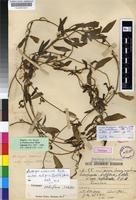
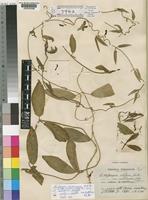
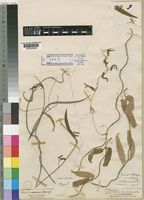
Isotype of Ceropegia setifera Schltr. [family APOCYNACEAE]
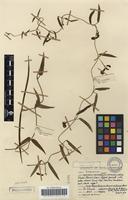
Filed as Ceropegia setifera Schltr. [family ASCLEPIADACEAE]
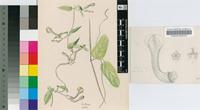
Ceropegia setifera Schltr.
Filed as Ceropegia setifera Schltr. [family APOCYNACEAE]
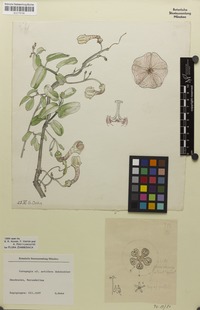
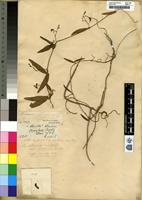
Type of Ceropegia setifera Schltr. var. natalensis N.E.Br. [family ASCLEPIADACEAE]
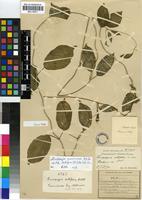
Isotype of Ceropegia setifera Schltr. [family ASCLEPIADACEAE]
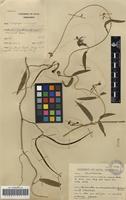
Filed as Ceropegia setifera Schltr. [family APOCYNACEAE]
Type of Ceropegia setifera Schltr. var. natalensis N.E.Br. [family ASCLEPIADACEAE]
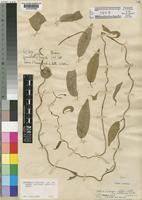
Syntype of Ceropegia racemosa N.E.Br. subsp. setifera (Schltr.) H.Huber [family APOCYNACEAE]
Previous
Next

Name

Identification
Ceropegia setifera Schltr. [family APOCYNACEAE ]
Related name
  • Ceropegia setifera

Flora

Entry for CEROPEGIA setifera Schlechter [family ASCLEPIADACEAE]
Herbarium
Royal Botanic Gardens, Kew (K)
Collection
Flora Capensis
Resource Type
Reference Sources
Entry From
Flora Capensis, Vol 4, page 518, (1909) Author: By N. E. BROWN.
Names
CEROPEGIA setifera Schlechter [family ASCLEPIADACEAE], in Engl. Jahrb. xx. Beibl. 51, 48;—Schlechter in Journ. Bot. 1897, 295; N. E. Br. in Dyer, Fl. Trop. Afr. iv. i. 457.
Information
stem several ft. long, twining, thinly and minutely pubescent along one side or glabrous; leaves herbaceous; petiole 3–10 lin. long, minutely pubescent in the channel only; blade 1–3 1/4 in. long, 1/2–1 3/4 in. broad, elliptic or elliptic-oblong, or the smaller sometimes lanceolate, acuminate, acute, or obtuse and apiculate, rounded or subcordate at the base, sometimes faintly sinuous at the margins, thinly puberulous (or glabrous, see note below) on both sides, very minutely adpressed-ciliate; peduncles lateral at the nodes, slender, ultimately 1–1 3/4 in. long, glabrous, racemosely 2–4-noded, with 2 flowers at a node, developing successively; pedicels 1/4– 1/3 in. long, glabrous; sepals 1 1/4–1 1/2 lin. long, lanceolate, acuminate, very slightly pubescent; corolla-tube slightly curved, 2/3 in. long, slightly ovoid-inflated and 2–2 1/2 lin. in diam. at the base, which gradually narrows into the 1/8 in. in diam. cylindric part above, enlarging to about 1/4 in. in diam. at the mouth, glabrous outside, pilose within to the base with very fine hairs, invisible when wetted, apparently dark purple-brown or perhaps spotted with that colour at the base, shading into greenish above; lobes 2 1/2–3 lin. long, connivent or incurved-connivent, connate at the tips, deltoid-lanceolate, deltoid-ovate, or oblong-ovate, tapering to the apex, replicate, 1/2– 3/4 lin. broad across the side, ciliate with long pale purple or white hairs along the fold or keel of the inner face, otherwise glabrous and apparently greenish or yellowish, with slightly darker edges; outer corona very shortly cupular at the base rising behind the inner corona-lobes into 5 cuneately subquadrate lobes 1/2 lin. long, with the shoulders produced into 2 widely spreading deltoid or deltoid-linear acute or obtuse teeth at the top, ciliate and hairy on the inner face with long white hairs; inner corona-lobes 1 1/4–1 1/3 lin. long, triquetrous-subulate or compressed linear-falcate acute (or obtuse in Schlechter, 4543, see note below), connivent-erect, with falcately recurving or diverging tips, dorsally connected at the base with the outer corona, glabrous, dark purple-brown. null
Distribution
EASTERN REGION Var. β: Natal; in thorny bush near the Tugela River, Gerrard, 1325! Umhloti River, Wood, 1318! near Durban, Wood, 8261!KALAHARI REGION Transvaal; second water between Nelspruit and Sibthorps, Burtt Davy, 1619! Masetana Valley, near Shiluvane, Junod, 1021! near Barberton, Thorncroft (cultivated specimen in Herb. Wood, 10289)!
Notes
This species is closely allied to C. carnosa, E. Meyer, but readily distinguished by its much larger leaves, it was originally collected by Dr. Schlechter in Tropical Transvaal, and of the two specimens he quotes, I have only seen his 4543 from Valdezia, which, although named by himself, does not agree with his description, as the leaves are not “sparsely pilose” but glabrous on both sides, and on the lobes of the outer corona (which are described as “deeply bifid at the apex, with the lanceolate lobules divaricate-falcate setaceous-acuminate”) I can find no trace of a setaceous point; they are exactly as described above for the Transvaal specimens, with which it is evidently conspecific, although differing from those quoted in its glabrous leaves and more compressed and therefore broader inner corona-lobes, all other characters being the same, and similar variations occur in other species. The variety natalensis may prove to be a distinct species, its narrower leaves giving it a different appearance, but a comparison of the living plants is needed to decide this point.

Related Materials

  • Terms and Conditions
  • Privacy Policy
  • Cookie Policy
  • Cookie Settings
  • Accessibility
  • Help
  • Contact Us
  • Facebook
  • Twitter
ITHAKA

JSTOR is part of ITHAKA, a not-for-profit organization helping the academic community use digital technologies to preserve the scholarly record and to advance research and teaching in sustainable ways.

©2000-2026 ITHAKA. All Rights Reserved. JSTOR®, the JSTOR logo, JPASS®, Aluka®, and ITHAKA® are registered trademarks of ITHAKA.

╳