JSTOR Global Plants Home
  • Home
  • Browse
  • About
  • Access
  • Account
    • Saved Items
    • Profile
  • Log in

Global Plants

Skip to Main Content
  • JSTOR Global Plants Home
  • Global Plants

    • Browse
    • About
    • Access
    • Account
      • Saved Items
      • Profile
Log in
  • Browse
  • About
  • Access
  • Account
    • Saved Items
    • Profile
Advanced Search

Compilation
Ceropegia meyeri

6 Images see all

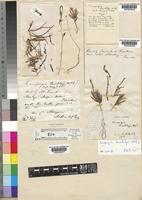
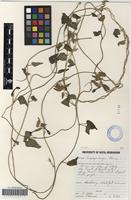
Ceropegia meyeri Decne. [family ASCLEPIADACEAE]
Ceropegia barklyi Hook.f. [family ASCLEPIADACEAE]
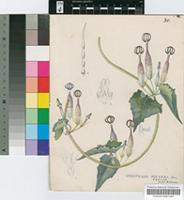
Ceropegia meyeri Decne. [family ASCLEPIADACEAE]
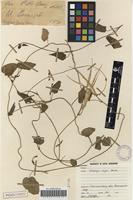
Filed as Ceropegia meyeri Decne. [family APOCYNACEAE]
Ceropegia meyeri Decne.
Filed as Ceropegia meyeri Decne. [family APOCYNACEAE]
Previous
Next

Name

Identification
Ceropegia meyeri Decne. [family APOCYNACEAE ]
Related name
  • Ceropegia meyeri

Flora

Entry for CEROPEGIA Meyeri Decne [family ASCLEPIADACEAE]
Herbarium
Royal Botanic Gardens, Kew (K)
Collection
Flora Capensis
Resource Type
Reference Sources
Entry From
Flora Capensis, Vol 4, page 518, (1909) Author: By N. E. BROWN.
Names
CEROPEGIA Meyeri Decne [family ASCLEPIADACEAE], in DC. Prodr. viii. 645;—Schlechter in Engl. Jahrb. xviii. Beibl. 45, 12 and 24; xx. Beibl. 51, 47, and xxi. Beibl. 54, 13; Journ. Bot. 1897, 294; N. E. Br. in Dyer, Fl. Trop. Afr. iv. i. 454.
CEROPEGIA pubescens E. Meyer [family ASCLEPIADACEAE], Comm. 193; Dietr. Syn. Pl. ii. 891, not of Wall.
Information
rootstock a flattened tuber; stem herbaceous, up to 3 or 4 ft. long, twining, pubescent; leaves herbaceous; petiole 1/3–1 1/4 in. long, pubescent; blade 3/4–1 3/4 in. long, 1/3–1 1/6 in. broad, cordate-ovate or lanceolate-ovate, acute or somewhat acuminate, cordate or rounded at the base, entire, variably toothed, or somewhat lobed and the margin cut into numerous short linear-oblong lobules, more or less pubescent or rarely subglabrous on both sides; cymes sessile or subsessile at the nodes, 2–4-flowered; pedicels 1/4– 2/3 in. long, villous-pubescent; sepals 3 1/4–4 1/2 lin. long, 1/2 lin. broad at the base, subulate, pubescent; corolla-tube 1–1 1/2 in. long, bottle-shaped, the basal 2/3 inflated cylindric-oblong and 1/4– 1/3 in. in diam., narrowed above into a cylindric neck 1–1 1/4 lin. in diam., abruptly dilated to 1/4 in. in diam. at the mouth, glabrous outside and within, except at the slightly pubescent inner surface of the mouth, white or greenish-white on the basal part, striate or dotted with light or dark purple-brown or violet on the upper 2/3, dark (purple?) at the base inside; lobes 4 1/2–5 lin. long, 1 1/2 lin. broad at the very base, linear, with reflexed margins, connate at the tips, in dried specimens usually appearing to be connivent-erect, but when alive, they are horizontally spreading at the base and horizontally incurved at the middle, almost black, with 2 central green longitudinal stripes on the inner face, glabrous, not ciliate; outer corona-lobes 1/2 lin. long, deltoid, acute, ascending, glabrous, white; inner corona-lobes 1 lin. long, linear or slightly spathulate-linear, obtuse, connivent at the base, then slightly diverging and in a broad curve again connivent at the tips, blackish at the basal part, white above; follicles erect, subparallel, 3 1/2–4 in. long, 1/8 in. thick, terete, tapering into a beak, smooth, glabrous. null
Range
Also in Tropical Transvaal.
Distribution
COAST REGION Komgha Div.; near Komgha, Flanagan, 640!EASTERN REGION Transkei; near Fort Bowker, Bowker, 483! 541! Butterworth, Mrs. Barber (Bowker), 942! 943! valleys around Kentani, Miss Pegler, 313! Tembuland; between the Bashee River and Morley, Drège, 4945! Natal; Umcomaas, McKen, 8! Inanda, Wood, 1307! Olivers Hoek Pass, Wood, 3476! and without precise locality, Gerrard, 430! Mrs. K. Saunders!KALAHARI REGION Transvaal; hills at Riemers Creek, near Barberton, Galpin, 812; Elandspruit Mountains, 6000 ft., Schlechter, 3864; by the Litonandoa and Limvovo Rivers, 1800 ft., Schlechter, 4527, all ex Schlechter. Masetana Valley, near Shiluvane (with entire subglabrous and toothed pubescent leaves) Junod, 1020!

Related Materials

  • Terms and Conditions
  • Privacy Policy
  • Cookie Policy
  • Cookie Settings
  • Accessibility
  • Help
  • Contact Us
  • Facebook
  • Twitter
ITHAKA

JSTOR is part of ITHAKA, a not-for-profit organization helping the academic community use digital technologies to preserve the scholarly record and to advance research and teaching in sustainable ways.

©2000-2026 ITHAKA. All Rights Reserved. JSTOR®, the JSTOR logo, JPASS®, Aluka®, and ITHAKA® are registered trademarks of ITHAKA.

╳