JSTOR Global Plants Home
  • Home
  • Browse
  • About
  • Access
  • Account
    • Saved Items
    • Profile
  • Log in

Global Plants

Skip to Main Content
  • JSTOR Global Plants Home
  • Global Plants

    • Browse
    • About
    • Access
    • Account
      • Saved Items
      • Profile
Log in
  • Browse
  • About
  • Access
  • Account
    • Saved Items
    • Profile
Advanced Search

Compilation
Ceropegia lugardae

5 Images see all

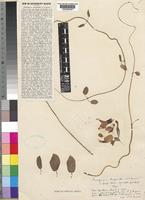
Type of Ceropegia seticorona E.A.Bruce [family ASCLEPIADACEAE]
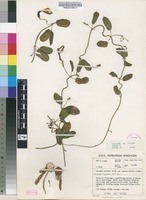
Type of Ceropegia lugardae N.E.Br. [family ASCLEPIADACEAE]
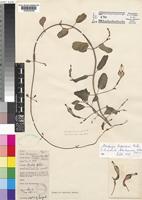
Filed as Ceropegia lugardae N.E.Br. [family APOCYNACEAE]
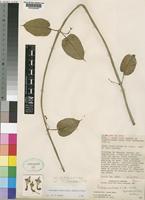
Type of Ceropegia lugardae N.E.Br. [family ASCLEPIADACEAE]
Ceropegia brevirostris P.R.O.Bally & D.V.Field [family ASCLEPIADACEAE]
Previous
Next

Name

Identification
Ceropegia lugardae N.E.Br. [family ASCLEPIADACEAE ] Verified by Dyer, R.A., Ceropegia distincta N.E.Br. [family ASCLEPIADACEAE ] (stored under name); Verified by Dyer, R.A., Ceropegia lugardae N.E.Br. [family ASCLEPIADACEAE ] Verified by Brown, N.E.,
Related name
  • Ceropegia seticorona
  • Ceropegia volubilis
  • Ceropegia lugardae
  • Ceropegia aristolochioides
  • Ceropegia distincta
  • Ceropegia brevirostris

Flora

Entry for Ceropegia lugardae [family ASCLEPIADACEAE]
Herbarium
South African National Biodiversity Institute, Compton Herbarium, Cape Town (SAM)
Collection
Flora of Southern Africa
Resource Type
Reference Sources
Entry From
Flora of South Africa, (2003) Author: Dr J.P. Roux
Names
Ceropegia lugardae [family ASCLEPIADACEAE]
Common names
C. distincta subsp. lugardae (N.E. Br.) Huber in Mems Soc. broteriana 12: 88 (1958). C. apiculata Schltr. in Bot. Jb. 51: 152 (1913); Huber in Mems Soc. broteriana 12: 175 (1958); in F.S.W.A. 114: 23 (1967). Syntypes: South West Africa, Dinter 703, 703a; Epata, Seiner 260 (no types seen).
Information
Rootstock producing cluster of fleshy, cylindric or fusiform roots. Stem annual, somewhat succulent, twining or rambling up to 2 m or more, sparsely branched. Leaves slightly fleshy; petiole about 10 mm long; blade more or less oblong, apiculate, gla­brous; margin sometimes ciliolate and undulate. Flowers 3-6, in cymes lateral at nodes, subumbellate, developing successively; peduncles up to about 40 mm long; pedicels up to 12 mm long. Sepals subulate, 3-4 mm long. Corolla 25-35 mm long; tube globose-inflated at base, upcurved abruptly above inflation, cylindric, then dilated into a funnel-shaped mouth, white at base, purple-spotted above on light green inflation and sulphur-yellow mouth, pubescent within base and towards mouth; lobes 10-20 mm long, connivent-erect, connate at tips, broadly deltoid below to linear-spathulate in upper half, replicate, purplish-veined. Corona with cup-shaped base; outer lobes ±1,5 mm long, bilobuled to middle, dark purple with long white hairs on inner side; inner lobes 3 mm long, incumbent-
Habitat
The present author, who has not seen the rich material examined by Huber, is unable to agree that this species should be associated subspecifically with C. distincta ( = C. haygarthii and C. tristis).
Use
16. Ceropegia lugardae N.E. Br. in Gdnrs' Chron. 30: 302 (1901); F.T.A. 4,1: 455 (1903). Type: Botswana, Kwebe Hills, Lugard262 (K, holo.!).
Range
This species has a wide distribution in tropical Africa and is not uncommon in the northern wooded parts of South West Africa and Botswana.

Related Materials

  • Terms and Conditions
  • Privacy Policy
  • Cookie Policy
  • Cookie Settings
  • Accessibility
  • Help
  • Contact Us
  • Facebook
  • Twitter
ITHAKA

JSTOR is part of ITHAKA, a not-for-profit organization helping the academic community use digital technologies to preserve the scholarly record and to advance research and teaching in sustainable ways.

©2000-2026 ITHAKA. All Rights Reserved. JSTOR®, the JSTOR logo, JPASS®, Aluka®, and ITHAKA® are registered trademarks of ITHAKA.

╳