JSTOR Global Plants Home
  • Home
  • Browse
  • About
  • Access
  • Account
    • Saved Items
    • Profile
  • Log in

Global Plants

Skip to Main Content
  • JSTOR Global Plants Home
  • Global Plants

    • Browse
    • About
    • Access
    • Account
      • Saved Items
      • Profile
Log in
  • Browse
  • About
  • Access
  • Account
    • Saved Items
    • Profile
Advanced Search

Compilation
Ceropegia fortuita

5 Images see all

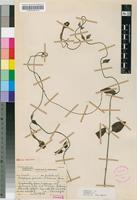
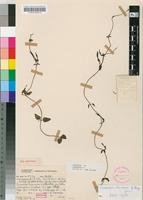
Holotype of Ceropegia fortuita R.A.Dyer [family APOCYNACEAE]
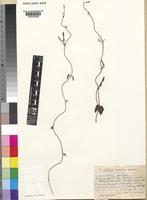
Type of Ceropegia fortuita R.A.Dyer [family ASCLEPIADACEAE]
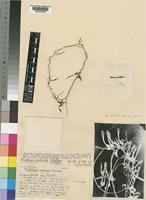
Ceropegia fortuita R.A.Dyer
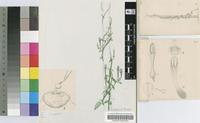
Type of Ceropegia fortuita R.A.Dyer [family APOCYNACEAE]
Previous
Next

Name

Identification
Ceropegia fortuita R.A.Dyer [family APOCYNACEAE ]
Related name
  • Ceropegia fortuita

Flora

Entry for Ceropegia fortuita [family ASCLEPIADACEAE]
Herbarium
South African National Biodiversity Institute, Compton Herbarium, Cape Town (SAM)
Collection
Flora of Southern Africa
Resource Type
Reference Sources
Entry From
Flora of South Africa, (2003) Author: Dr J.P. Roux
Names
Ceropegia fortuita [family ASCLEPIADACEAE]
Common names
C. africana R. Br. subsp. fortuita (R. A. Dyer) Huber in Mems Soc. broteriana 12: 114 (1958).
Information
Rootstock producing a tuber. Tuber ±50 mm diam., slightly depressed, ±30 mm high, sometimes developing secondary tubers, pro­ducing annual stem. Stem branched above ground, dwarf or climbing and twining up to about 1 m tall. Leaves shortly petioled; petiole 2-3 mm long; blade ovate to ovate-lanceolate, ±25 mm long, 12-15 mm broad, apiculate, slightly fleshy, somewhat deflexed, with few hairs on upper surface along mar­gins and on midrib below. Peduncles lateral at nodes, 3-4 mm long, usually 2-flowered, developing successively; pedicels ±3 mm long. Sepals subulate to linear-lanceolate, 3-4 mm long. Corolla in bud with beak narrower than tube, ±30 mm long; tube 18-20 mm long, with basal inflation ±4 mm diam., contracted to ±1,5 mm and then expanded to 2,5 mm at throat but sinuses not promi­nent, almost entirely purple within base and purple-striped above, with long soft, slightly deflexed white hairs within narrow portion; lobes linear-lanceolate, 10-12 mm long, united at tips to form a narrow cage, minutely ciliate on margins towards base, with longer dark purple hairs from inner keel and with margin slightly revolute in lower part. Corona forming outer cup or basin 1 mm deep with slightly incurved margin, emargi-nate opposite pockets; inner lobes arising from within base of outer cup, linear, ±2,5 mm long, incumbent-erect, white. Fig. 16: 4.
Habitat
In the original account the author stated that one of the closest affinities of this species was with C. africana R. Br. and, possibly for this reason, Huber (1958) reduced it to the status of subspecies. In point of fact, the shapes of the corolla and of the corona are very different and the species are only remotely related. In a dwarf form of C. fortuita, represented by Wells 1365 and 1542 from the Camper-down area, and Bennett 25376 and 25377, there is a strong likeness to C. conrathii in habit. Wells collected his specimens in winter when, as sometimes happens in the early spring-growth of certain species such as C. conrathii, flowers were produced before the first leaves. By midsummer, which is the more usual time of flowering for the genus Ceropegia as a whole, the growth-form might well have altered, even to clim­bing. The affinity with C. linearis is close but the deep corona-bowl, from the inside of which arise the linear inner lobes, is distinctive; the corolla-lobes taper to the apex as do the buds and there is no protrusion of the sinu
Use
45. Ceropegia fortuita R. A. Dyer in Flower. PI. S. Afr. t.925 (1944). Type: Natal, Valley of a Thousand Hills, Carnegie in PRE 27134 (holo.!).
Range
Associated with scrub in hot river valleys of Natal as far north as Zululand; rare.

Related Materials

  • Terms and Conditions
  • Privacy Policy
  • Cookie Policy
  • Cookie Settings
  • Accessibility
  • Help
  • Contact Us
  • Facebook
  • Twitter
ITHAKA

JSTOR is part of ITHAKA, a not-for-profit organization helping the academic community use digital technologies to preserve the scholarly record and to advance research and teaching in sustainable ways.

©2000-2026 ITHAKA. All Rights Reserved. JSTOR®, the JSTOR logo, JPASS®, Aluka®, and ITHAKA® are registered trademarks of ITHAKA.

╳