JSTOR Global Plants Home
  • Home
  • Browse
  • About
  • Access
  • Account
    • Saved Items
    • Profile
  • Log in

Global Plants

Skip to Main Content
  • JSTOR Global Plants Home
  • Global Plants

    • Browse
    • About
    • Access
    • Account
      • Saved Items
      • Profile
Log in
  • Browse
  • About
  • Access
  • Account
    • Saved Items
    • Profile
Advanced Search

Compilation
Cerastium variabile

13 Images see all

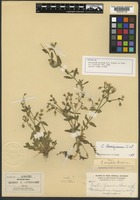
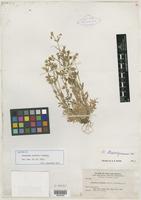
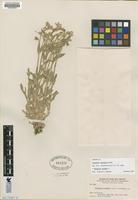
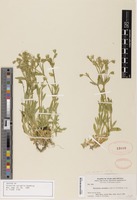
Isotype of Cerastium pilosum Greene ex Rydb. [family CARYOPHYLLACEAE]
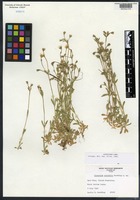
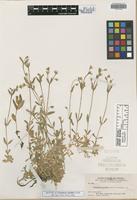
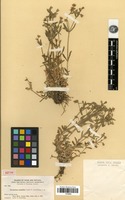
Isotype of Cerastium variabile Goodding [family CARYOPHYLLACEAE]
Filed as Cerastium variabile Goodding, L.N. 1904 [family CARYOPHYLLACEAE]
Type of Cerastium beeringianum subsp. beeringianum [family CARYOPHYLLACEAE]
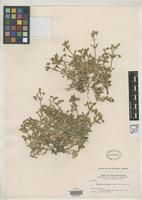
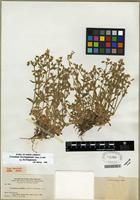
Holotype of Cerastium variabile Goodding [family CARYOPHYLLACEAE]
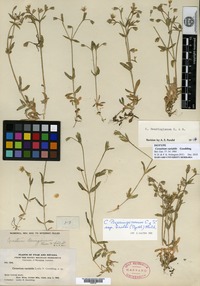
Isotype of Cerastium variabile Goodd. [family CARYOPHYLLACEAE]
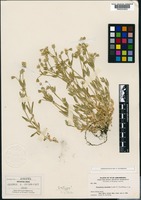
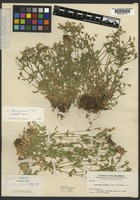
Isotype of Cerastium variabile Goodding [family CARYOPHYLLACEAE]
Isotype of Cerastium variabile Goodd. [family CARYOPHYLLACEAE]
Filed as Cerastium beeringianum Chamisso & Schlechtendal [family CARYOPHYLLACEAE]
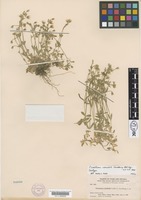
Isotype of Cerastium variabile Goodd. [family CARYOPHYLLACEAE]
Isotype of Cerastium variabile Goodding [family CARYOPHYLLACEAE]
Previous
Next

Name

Identification
Isotype of Cerastium variabile Goodd. [family CARYOPHYLLACEAE ] (stored under name); Verified by Not on sheet,
Related name
  • Cerastium variabile
  • Cerastium beeringianum
Common name
  • Bering mouse-ear chickweed, Flora of North America Vol. 5
  • céraiste du détroit de Bering, Flora of North America Vol. 5

Flora

Entry for Cerastium beeringianum Chamisso & Schlechtendal [family CARYOPHYLLACEAE]
Herbarium
Flora of North America (FNA)
Collection
Flora of North America
Resource Type
Reference Sources
Entry From
Flora of North America, Vol 5,
Names
Cerastium beeringianum Chamisso & Schlechtendal [family CARYOPHYLLACEAE], Linnaea, 1: 62. 1826
Cerastium alpinum Linnaeus var. beeringianum Regel [family CARYOPHYLLACEAE]
Cerastium alpinum var. capillare (Fernald & Wiegand) B. Boivin [family CARYOPHYLLACEAE]
Cerastium beeringianum var. capillare Fernald & Wiegand [family CARYOPHYLLACEAE]
Cerastium beeringianum var. glabratum Hultén [family CARYOPHYLLACEAE]
Cerastium beeringianum var. grandiflorum Hultén [family CARYOPHYLLACEAE]
Cerastium buffumiae A. Nelson [family CARYOPHYLLACEAE]
Cerastium earlei Rydberg [family CARYOPHYLLACEAE]
Cerastium fischerianum Seringe ex de Candolle var. beeringianum (Chamisso & Schlechtendal) Hultén [family CARYOPHYLLACEAE]
Cerastium pilosum Greene [family CARYOPHYLLACEAE]
Cerastium pulchellum Rydberg [family CARYOPHYLLACEAE]
Cerastium scammamiae Polunin [family CARYOPHYLLACEAE]
Cerastium variabile Goodding [family CARYOPHYLLACEAE]
Cerastium vulgatum Linnaeus var. beeringianum (Chamisso & Schlechtendal) Fenzl [family CARYOPHYLLACEAE]
Treatment Author(s)
John K. Morton
Information
Plants perennial, forming loose to dense mats or clumps, taprooted, with short, prostrate sterile shoots, rarely rhizomatous. Stems: flowering stems usually erect, 10–25 cm, glabrous to sparsely pubescent proximally, more densely so in mid and distal stem, hairs patent to slightly deflexed, multicellular, glandular and eglandular; internodes usually equaling or exceeding leaves; nonflowering shoots present; small axillary tufts of leaves absent. Leaves: sessile (flowering shoots) or petiolate (proximal stems and nonflowering shoots); flowering shoots with blade lanceolate, 5–20 × 2–5 mm, not succulent, apex ± acute, pubescent; proximal stem and nonflowering shoots with blade oblanceolate often spatulate, not succulent, apex obtuse, ± pubescent on both surfaces (rarely subglabrous), with straight, strigose hairs or cilia, hairs pale, fuscous, mostly eglandular. Inflorescences open, dichotomous, (1–)3–10-flowered cymes; bracts lanceolate, distal with scarious margins, proximal herbaceous and foliaceous, pubescence glandular and eglandular. Pedicels erect, angled at base of calyx in fruit, 8–55 mm, 1–5 times as long as capsule, densely pubescent with patent glandular and eglandular hairs. Flowers: sepals lanceolate to lance-elliptic, 3–7 mm, margins broad, apex ± acute, densely glandular-pubescent; petals broadly oblanceolate, 6–12 mm, ± equaling (rarely to 2 times as long as) sepals, apex deeply 2-fid; stamens 10; styles 5. Capsules cylindric, curved, 8–12 mm, ca. 2 times sepals, rarely shorter; teeth 10, erect, margins convolute. Seeds pale to dark brown, 0.7–1.1 mm, tuberculate; testa not inflated, tightly enclosing seed. 2n = 72.
Phenology
mar-may (spring), early summer
Altitude range
0–4000 m;
Distribution
USA AlaskaUSA Ariz.USA Calif.USA Colo.USA IdahoUSA Mont.USA Nev.USA N.Mex.USA Oreg.USA UtahUSA Wyo.Canada Alta.Canada B.C.Canada Man.Canada Nfld. and Labr.Canada N.W.T.Canada NunavutCanada Ont.Canada Que.Canada Sask.Canada Yukon
Discussion
Cerastium beeringianum is distinguished from C. alpinum by the absence of the long, silvery, flexuous, translucent, glistening hairs of that species. Cerastium beeringianum’s pubescence consists of straight, strigose, multicellular, somewhat fuscous hairs of several lengths, many of those in the mid and distal stem and inflorescence being glandular and viscid. The nodes and the leaves, at least in the mid and distal stem, typically have long, strigose, eglandular, fuscous hairs; those on the adaxial surface of the leaf being appressed, and those on the nodes retrorse. However, plants from the many small, isolated populations on the mountains of western North America show a great deal of variation. Some of these populations tend to be subglabrous, lacking most of the long hairs normally found on this species. Others are small, delicate plants with slender divaricate pedicels and smaller capsules and seeds. Though names have been given to several of these variants, they frequently intergrade, and much of the variation is greatly influenced by the environment.
Cerastium beeringianum is self-compatible and often self-pollinates, but the flowers are also freely visited by insects, particularly Diptera and smaller Hymenoptera, resulting in varying degrees of outbreeding.
Cerastium beeringianum intergrades with C. fischerianum, and it may be appropriate to treat them as subspecies of a single species. Unfortunately, the name C. fischerianum has priority.

Related Materials

  • Terms and Conditions
  • Privacy Policy
  • Cookie Policy
  • Cookie Settings
  • Accessibility
  • Help
  • Contact Us
  • Facebook
  • Twitter
ITHAKA

JSTOR is part of ITHAKA, a not-for-profit organization helping the academic community use digital technologies to preserve the scholarly record and to advance research and teaching in sustainable ways.

©2000-2026 ITHAKA. All Rights Reserved. JSTOR®, the JSTOR logo, JPASS®, Aluka®, and ITHAKA® are registered trademarks of ITHAKA.

╳