JSTOR Global Plants Home
  • Home
  • Browse
  • About
  • Access
  • Account
    • Saved Items
    • Profile
  • Log in

Global Plants

Skip to Main Content
  • JSTOR Global Plants Home
  • Global Plants

    • Browse
    • About
    • Access
    • Account
      • Saved Items
      • Profile
Log in
  • Browse
  • About
  • Access
  • Account
    • Saved Items
    • Profile
Advanced Search

Compilation
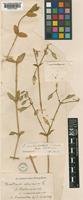
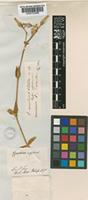
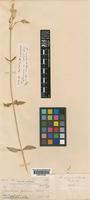
Cerastium unalaschkense

3 Images see all

Type of Cerastium unalaschkense H.Takeda [family CARYOPHYLLACEAE]
Previous
Next

Name

Identification
Cerastium unalaschkense H.Takeda [family CARYOPHYLLACEAE ] (stored under name); Verified by Takeda, H., Cerastium vulgatum L. [family CARYOPHYLLACEAE ] Verified by Takeda, H., Cerastium pilosum Ledeb. [family CARYOPHYLLACEAE ]
Related name
  • Cerastium vulgatum
  • Cerastium macrocarpum
  • Cerastium alpinum
  • Cerastium pilosum
  • Cerastium rigidum
  • Cerastium unalaschkense
Common name
  • Fischer’s mouse-ear chickweed, Flora of North America Vol. 5

Flora

Entry for Cerastium fischerianum Seringe [family CARYOPHYLLACEAE]
Herbarium
Flora of North America (FNA)
Collection
Flora of North America
Resource Type
Reference Sources
Entry From
Flora of North America, Vol 5,
Names
Cerastium fischerianum Seringe [family CARYOPHYLLACEAE], in A. P. de Candolle and A. L. P. P. de Candolle, Prodr., 1: 419. 1824
Cerastium alpinum Linnaeus var. fischerianum (Seringe) Torrey & A. Gray [family CARYOPHYLLACEAE]
Cerastium unalaschkense Takeda [family CARYOPHYLLACEAE]
Treatment Author(s)
John K. Morton
Information
Plants perennial, coarse, forming loose mats or clumps, ± rhizoma-tous. Stems erect to straggling, decumbent at base, sturdy, 10–50 cm, usually densely pubescent with hairs patent, yellowish, multicellular, glandular and eglandular, often subglabrous near base; nodes bearded with long, yellowish hairs; small axillary tufts of leaves usually absent. Leaves sessile, not marcescent; blade lanceolate, 7–50 × 3–15 mm, largest on mid and distal stem, apex usually acute, densely ciliate, hairs yellowish, multicellular, eglandular, of various lengths; proximal leaves with blade lanceolate to elliptic, oblanceolate, or oblong. Inflorescences lax, 2–10-flowered cymes, compact when young, branches elongating at maturity; proximal bracts foliaceous, herbaceous, pubescence as in leaves; distal bracts lanceolate, 5–10 mm, often with scarious tip, ciliate with long, fuscous hairs. Pedicels erect or becoming deflexed at base and curved at apex, 5–30(–60) mm, elongating in fruit, ca. 6 times as long as sepals, densely fuscous-pubescent with glandular and eglandular, patent hairs. Flowers: sepals narrowly lanceolate with round base, 6–10 mm, margins narrow, apex acute, strigose-ciliate, hairs long, fuscous; petals conspicuous, 10–14 mm, 1.5–2 times as long as sepals, apex deeply 2-fid; stamens 10; styles 5. Capsules slightly conic or cylindric, straight, 10–22 mm, ca. 2 times as long as sepals; teeth 10, erect, margins convolute. Seeds reddish brown, 1–1.5 mm diam., strongly papillate; testa not inflated, tightly enclosing seed. 2n = 66, 72.
Phenology
jun-aug (summer)
Altitude range
0–200 m;
Distribution
Asia.USA AlaskaCanada B.C.
Discussion
Cerastium fischerianum is a distinctive species resembling a large and robust form of C. fontanum. The bush of yellow hairs underneath each node, together with the large flowers, sepals, and capsule, distinguish this species. It intergrades with C. beeringianum, and the intermediate plants often have exceptionally large petals; these have been named C. beeringianum var. grandiflorum Hultén.

Related Materials

  • Terms and Conditions
  • Privacy Policy
  • Cookie Policy
  • Cookie Settings
  • Accessibility
  • Help
  • Contact Us
  • Facebook
  • Twitter
ITHAKA

JSTOR is part of ITHAKA, a not-for-profit organization helping the academic community use digital technologies to preserve the scholarly record and to advance research and teaching in sustainable ways.

©2000-2026 ITHAKA. All Rights Reserved. JSTOR®, the JSTOR logo, JPASS®, Aluka®, and ITHAKA® are registered trademarks of ITHAKA.

╳