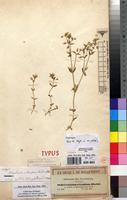
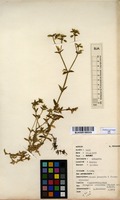
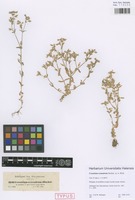
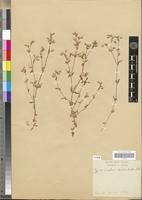
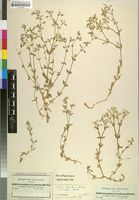
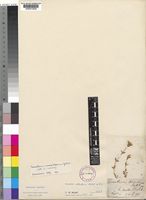
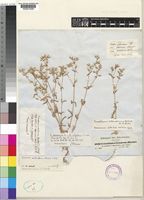
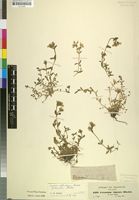
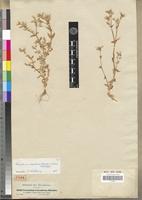
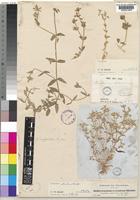
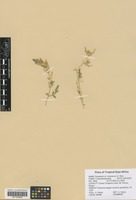
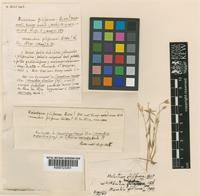
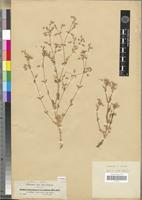
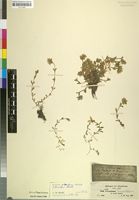
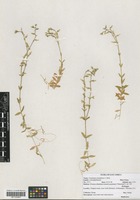
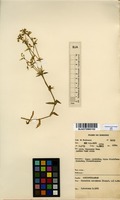
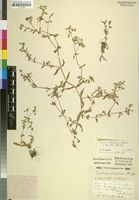
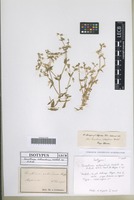
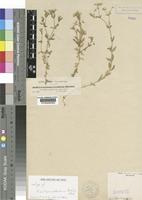
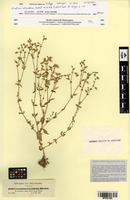
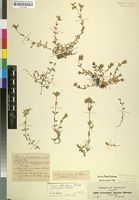
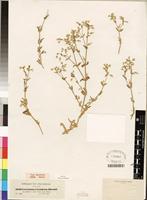
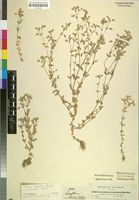
Entry for Cerastium octandrum [Hochst. ex] A. Rich. [family CARYOPHYLLACEAE]
Entry From
Flora of Tropical East Africa, page 1, (1956) Author: W. B. TURRILL
Names
Cerastium octandrum [Hochst. ex] A. Rich. [family CARYOPHYLLACEAE], Tent. Fl. Abyss. 1: 45 (1847); Möschl in Mem. Soc. Brot. 7: 24 (1951); F.W.T.A., ed. 2, 1: 129 (1954). Type: Ethiopia, Tigré, near Adowa, Schimper 1841 (K, iso.!)
Distribution
KENYA Nakuru District near Molo, 24 July 1951, Bogdan 3176!KENYA Mt. Kenya, 19 March 1922, Fries 1326 (apetalous)!TANGANYIKA Moshi District Kilimanjaro, Shiva Plateau, Feb. 1928, A. E. Haarer 1104!UGANDA Mbale District Bugishu, Bulago, 27 Aug. 1932, A. S. Thomas 306!
Notes
VARIATION. There is no doubt, that this species is extremely plastic and habit especially varies greatly with the habitat. Möschl (l.c.) has two varieties var. humile (Braun) Möschl and var. adnivale (Chiovenda) Möschl. The former should be known as var. octandrum according to the present International Rules of Nomenclature. The latter is a reduction to varietal status of C. adnivale Chiovenda in Bull. Soc. Bot. Ital. 1917, 21. Type: Uganda, Ruwenzori, Valley of the Lakes, 4500 m., June 1906, Luigi di Savoia. The differences between the two varieties concern the degree of development and arrangement of the indumentum. While specimens fitting well the descriptions given by Möschl have been examined, others are found to be intermediate. The extreme differences are: var. octandrum (var. humile): peduncles and stems pilose over the whole surface; the outermost sepal with eglandular and glandular hairs on the abaxial surface; leaves pilose var. adnivale: peduncles and stems with single lines of hairs or glabrescent; sepals and leaves glabrous or with few hairs Extreme plants named var. adnivale are from Uganda and the following is quoted as an example: Kigezi District: Mt. Muhavura, in crater, June 1939, Purseglove 753! From the material examined, C. keniense T. C. E. Fries & Weimarck in Bot. Not. 1929, 290 (Type: Mt. Kenya, W. side, 2–5 Feb. 1922, Fries 1377) appears to be C. octandrum var. adnivale and not a variety of C. afromontanum as it is made by Möschl. Only Fries 1377a, in Herb. Kew., has been seen of the material quoted for C. keniense.