JSTOR Global Plants Home
  • Home
  • Browse
  • About
  • Access
  • Account
    • Saved Items
    • Profile
  • Log in

Global Plants

Skip to Main Content
  • JSTOR Global Plants Home
  • Global Plants

    • Browse
    • About
    • Access
    • Account
      • Saved Items
      • Profile
Log in
  • Browse
  • About
  • Access
  • Account
    • Saved Items
    • Profile
Advanced Search

Compilation
Cerastium glutinosum

9 Images see all

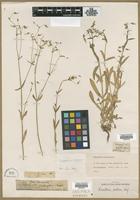
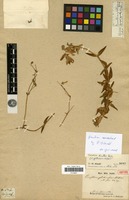
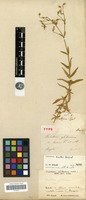
Type? of Cerastium glutinosum Nutt. [family CARYOPHYLLACEAE]
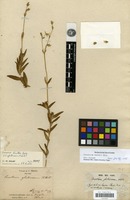
Type of Cerastium glutinosum Kunth var. laxum Triana & Planch. [family CARYOPHYLLACEAE]
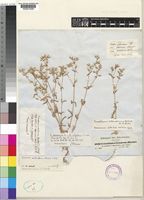
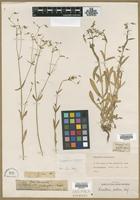
Cerastium octandrum Hochst. ex A.Rich. [family CARYOPHYLLACEAE]
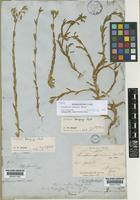
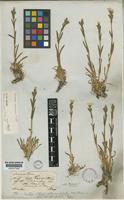
Type of Cerastium danguyi J.F.Macbr. [family CARYOPHYLLACEAE]
Type? of Cerastium glutinosum Nutt. [family CARYOPHYLLACEAE]
Type of Cerastium glutinosum Kunth var. glabratum F.N.Williams [family CARYOPHYLLACEAE]
Type? of Cerastium glutinosum Kunth var. laxum Triana & Planch. [family CARYOPHYLLACEAE]
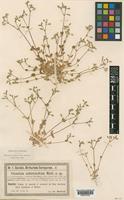
Cerastium diffusum Pers. subsp. subtetrandrum (Lange) P.D. Sell & Whitehead [family CARYOPHYLLACEAE]
Holotype of Cerastium glutinosum Kunth [family CARYOPHYLLACEAE]
Previous
Next

Name

Identification
Cerastium glutinosum Fries. [family CARYOPHYLLACEAE ] Cerastium octandrum Hochst. ex A.Rich. [family CARYOPHYLLACEAE ] Cerastium octandrum Hochst. ex A.Rich. [family CARYOPHYLLACEAE ] (stored under name); Verified by Möschl., Cerastium octandrum Hochst. ex A.Rich. [family CARYOPHYLLACEAE ]
Related name
  • Cerastium subtetrandrum
  • Cerastium diffusum
  • Cerastium octandrum
  • Cerastium danguyi
  • Cerastium nutans
  • Cerastium tetrandrum
  • Cerastium meridense
  • Cerastium trianae
  • Cerastium kunthii
  • Cerastium glutinosum
Common name
  • Sticky mouse-ear chickweed, Flora of North America Vol. 5

Flora

Entry for Cerastium pumilum Curtis [family CARYOPHYLLACEAE]
Herbarium
Flora of North America (FNA)
Collection
Flora of North America
Resource Type
Reference Sources
Entry From
Flora of North America, Vol 5,
Names
Cerastium pumilum Curtis [family CARYOPHYLLACEAE], Fl. Londin., 2(6,69): plate 30. 1794
Cerastium glutinosum Fries [family CARYOPHYLLACEAE]
Cerastium pumilum subsp. glutinosum (Fries) Jalas [family CARYOPHYLLACEAE]
Treatment Author(s)
John K. Morton
Information
Plants annual, with slender taproot. Stems erect or ascending, branching near base, 2–12 cm, covered with glandular and eglandular hairs; small axillary tufts of leaves usually absent. Leaves not marcescent, sessile; blade 5–15 × 3–6 mm, hairy; basal with blades oblanceolate, spatulate, petiolelike, apex obtuse; cauline with blades lanceolate, elliptic, or ovate, apex acute to obtuse. Inflorescences lax, 3–15-flowered (rarely more) cymes; bracts lanceolate: proximal usually foliaceous, distal smaller, usually with narrow, scarious margins and apex, glandular-pubescent. Pedicels erect, curved distally, 3–8(–10) mm, longer than capsule, glandular-pubescent. Flowers: sepals green, sometimes red tipped, oblong-lanceolate, 4–5 mm, margins narrow, apex acute, pubescent, hairs short, stiff, glandular, not projecting beyond scarious, glabrous apex; petals white or purple-tinged, with branching veins, oblanceolate, ca. 5 mm, ± equaling sepals, apex 2-fid for ca. 1/4 length; stamens 5; styles 5. Capsules narrowly cylindric, slightly curved upward, 6–9 mm, ca. 2 times as long as sepals; teeth 10, erect, margins convolute. Seeds dark brown, deltoid, 0.6–0.7 mm, tuberculate; testa not inflated. 2n = 72.
Phenology
mar-may (spring)
Altitude range
0–900 m;
Distribution
Eurasia.USA Ala.USA Ark.USA Ga.USA Ill.USA Ind.USA Kans.USA Ky.USA MaineUSA Md.USA Mich.USA Miss.USA Mo.USA Nebr.USA N.J.USA N.C.USA OhioUSA Okla.USA Oreg.USA Pa.USA S.C.USA Tenn.USA Tex.USA Va.USA Wash.USA W.Va.Canada B.C.Canada N.B.Canada N.S.Canada Ont.
Discussion
North American material referred to here as Cerastium pumilum is very variable. At one extreme are plants resembling small annual forms of C. fontanum, with relatively short, broad capsules, petals slightly longer than the sepals, and sepals that are usually red at the tips. At the other extreme are plants with relatively long, narrow capsules resembling impoverished diffuse-inflorescenced C. glomeratum, with short petals and no red pigment. The latter are probably referable to C. pumilum subsp. glutinosum. B. Jonsell and T. Karlsson (2001+, vol. 2) treated C. glutinosum as a distinct species in Scandinavia, but the correlation of characters that they gave to distinguish C. glutinosum from C. pumilum does not occur in most North American material that I have examined. Hence, the recognition of a single species, possibly with two subspecies, as in Flora Europaea (T. G. Tutin et al. 1964–1980, vol. 1), appears to be more appropriate. The problem may arise from North American material having been introduced from several sources, whereas Scandinavian material may consist of two native genotypes that do not show the complete range of variation in the species.
Cerastium pumilum can look like a small annual form of C. fontanum but differs in its smaller capsules and the characteristic rather short, glandular hairs on the sepals, bracts, and inflorescence. It can be separated from C. semidecandrum by the much narrower scarious margins of the sepals and bracts and by the branching veins in the petals, which tend to be slightly longer and more conspicuous than in C. semidecandrum. Some forms of C. glomeratum have a very open inflorescence and may be confused with C. pumilum, but C. glomeratum has ten stamens, a narrower capsule, all the bracts herbaceous, and long, eglandular hairs (often mixed with glandular ones) on the bracts and sepals.
Native/Introduced
introduced;

Related Materials

  • Terms and Conditions
  • Privacy Policy
  • Cookie Policy
  • Cookie Settings
  • Accessibility
  • Help
  • Contact Us
  • Facebook
  • Twitter
ITHAKA

JSTOR is part of ITHAKA, a not-for-profit organization helping the academic community use digital technologies to preserve the scholarly record and to advance research and teaching in sustainable ways.

©2000-2026 ITHAKA. All Rights Reserved. JSTOR®, the JSTOR logo, JPASS®, Aluka®, and ITHAKA® are registered trademarks of ITHAKA.

╳