JSTOR Global Plants Home
  • Home
  • Browse
  • About
  • Access
  • Account
    • Saved Items
    • Profile
  • Log in

Global Plants

Skip to Main Content
  • JSTOR Global Plants Home
  • Global Plants

    • Browse
    • About
    • Access
    • Account
      • Saved Items
      • Profile
Log in
  • Browse
  • About
  • Access
  • Account
    • Saved Items
    • Profile
Advanced Search

Compilation
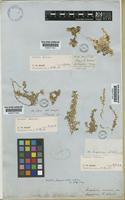
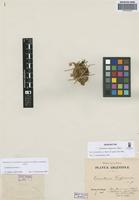
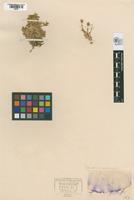
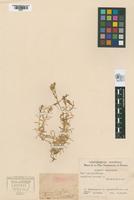
Cerastium fuegianum

10 Images see all

Cerastium arvense L. [family CARYOPHYLLACEAE]
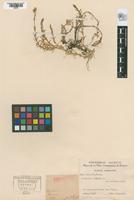
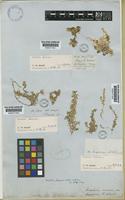
Isosyntype of Cerastium fuegianum Albov [family CARYOPHYLLACEAE]
Syntype of Cerastium fuegianum Albov, 1896 [family CARYOPHYLLACEAE]
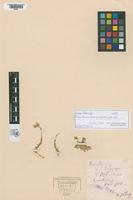
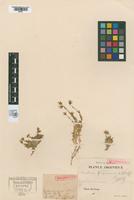
Type? of Cerastium fuegianum Albov, 1896 [family CARYOPHYLLACEAE]
Syntype of Cerastium fuegianum Albov, 1896 [family CARYOPHYLLACEAE]
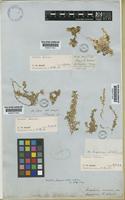
Cerastium arvense L. [family CARYOPHYLLACEAE]
Syntype of Cerastium fuegianum Albov, 1896 [family CARYOPHYLLACEAE]
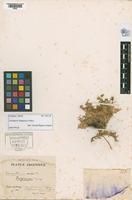
Cerastium arvense L. [family CARYOPHYLLACEAE]
Type? of Cerastium fuegianum Albov, 1896 [family CARYOPHYLLACEAE]
Previous
Next

Name

Identification
Cerastium fuegianum Albov [family CARYOPHYLLACEAE ] (stored under name); Verified by Not on Sheet,
Related name
  • Cerastium fuegianum
  • Cerastium arvense
Common name
  • Céraiste dressé, Flora of North America Vol. 5

Flora

Entry for Cerastium arvense Linnaeus subsp. strictum Gaudin [family CARYOPHYLLACEAE]
Herbarium
Flora of North America (FNA)
Collection
Flora of North America
Resource Type
Reference Sources
Entry From
Flora of North America, Vol 5,
Names
Cerastium arvense Linnaeus subsp. strictum Gaudin [family CARYOPHYLLACEAE], Fl. Helv., 3: 245. 1828
Cerastium alsophilum Greene [family CARYOPHYLLACEAE]
Cerastium angustatum Greene [family CARYOPHYLLACEAE]
Cerastium arvense var. angustifolium Fenzl [family CARYOPHYLLACEAE]
Cerastium arvense var. fuegianum Hooker f. [family CARYOPHYLLACEAE]
Cerastium arvense var. latifolium Fenzl [family CARYOPHYLLACEAE]
Cerastium arvense var. ophiticola Raymond [family CARYOPHYLLACEAE]
Cerastium arvense var. purpurascens B. Boivin [family CARYOPHYLLACEAE]
Cerastium arvense var. sonnei (Greene) Smiley [family CARYOPHYLLACEAE]
Cerastium arvense var. strictum (Gaudin) W. D. J. Koch [family CARYOPHYLLACEAE]
Cerastium arvense var. viscidulum Gremli [family CARYOPHYLLACEAE]
Cerastium campestre Greene [family CARYOPHYLLACEAE]
Cerastium confertum Greene [family CARYOPHYLLACEAE]
Cerastium effusum Greene [family CARYOPHYLLACEAE]
Cerastium elongatum Pursh [family CARYOPHYLLACEAE]
Cerastium fuegianum (Hooker f.) A. Nelson [family CARYOPHYLLACEAE]
Cerastium graminifolium Rydberg [family CARYOPHYLLACEAE]
Cerastium leibergii Rydberg [family CARYOPHYLLACEAE]
Cerastium nitidum Greene [family CARYOPHYLLACEAE]
Cerastium occidentale Greene [family CARYOPHYLLACEAE]
Cerastium oreophilum Greene [family CARYOPHYLLACEAE]
Cerastium patulum Greene [family CARYOPHYLLACEAE]
Cerastium pensylvanicum Hooker [family CARYOPHYLLACEAE]
Cerastium pubescens Goldie [family CARYOPHYLLACEAE]
Cerastium scopulorum Greene [family CARYOPHYLLACEAE]
Cerastium sonnei Greene [family CARYOPHYLLACEAE]
Cerastium subulatum Greene [family CARYOPHYLLACEAE]
Cerastium tenuifolium Pursh [family CARYOPHYLLACEAE]
Cerastium thermale Rydberg [family CARYOPHYLLACEAE]
Cerastium vestitum Greene [family CARYOPHYLLACEAE]
Treatment Author(s)
John K. Morton
Information
Plants forming clumps or mats, rhizomatous, or tufted, taprooted; straggling, creeping shoots usually not well developed. Stems: flowering stems decumbent at base, usually green or straw colored, occasionally purple tinged (in some populations growing on serpentine rocks), 5–20(–30) cm, pubescent and often glandular distally, hairs patent or deflexed; nonflowering winter shoots, when present, elongating, with narrow, oblanceolate leaves; small axillary tufts of leaves always present. Leaves usually not strongly dimorphic; blade lanceolate or oblanceolate to linear, 2–25 × 1–5 mm. Flowers: sepals 3.5–6(–7) mm, midrib visible; petals 7.5–9 mm (–12 mm in western plants), usually remaining ± white when dried; anthers 0.8–0.9 mm. Capsules 7.5–11 × 2.5–4 mm, usually less than 1.5 times as long as sepals, rarely longer. Seeds 0.6–1.1 mm. 2n = 36.
Phenology
mar-may (spring)
Altitude range
0–3800 m;
Distribution
GreenlandSt. Pierre and MiquelonEurope (Alps)South America (s to Tierra del Fuego).USA AlaskaUSA Ariz.USA Calif.USA Colo.USA Conn.USA IdahoUSA Ind.USA IowaUSA MaineUSA Md.USA Mass.USA Mich.USA Minn.USA Mo.USA Mont.USA Nebr.USA Nev.USA N.H.USA N.J.USA N.M.USA N.Y.USA N.Dak.USA OhioUSA Oreg.USA Pa.USA S.Dak.USA UtahUSA Vt.USA Va.USA Wash.USA W.Va.USA Wis.USA Wyo.Canada Alta.Canada B.C.Canada Man.Canada N.B.Canada Nfld. and Labr.Canada N.W.T.Canada N.S.Canada NunavutCanada Ont.Canada P.E.I.Canada Que.Canada Sask.Canada Yukon
Discussion
Subspecies strictum is widely distributed and grows in a great diversity of habitats, making it difficult to circumscribe and distinguish, both from subsp. arvense and from forms of Cerastium beeringianum, C. velutinum, and C. viride. Forms of subsp. strictum growing at high elevations or latitudes often develop broader leaves and may be confused with C. beeringianum (S. J. Wagstaff and R. J. Taylor 1988). However, C. arvense always has small axillary tufts of leaves. In northern parts of the Ungava region of Labrador, subsp. strictum appears on occasion to intergrade with C. alpinum. The status of these plants is uncertain.
Subspecies strictum is a remarkably variable taxon. Plants from the western side of the continent often have larger petals and a ranker growth. Completely glabrous plants (var. ophiticola) occur on serpentine in southern Quebec. Plants with broader ovate-elliptic leaves and tomentose pubescence (similar to Cerastium velutinum var. villosissimum but smaller) occur in the same area. Populations on the limestone plains near Belleville, southern Ontario, are more robust, with broader, strongly marcescent leaves at the base and a woolly pubescence. Plants from river valleys in Idaho tend to be much larger, with long, very narrow leaves; these are the basis for the name C. graminifolium. However, all of these plants are completely interfertile and show no reduction in fertility when crossed. Most of this variation is under genic control but also is affected by environmental factors.
Subspecies strictum is not interfertile with subsp. arvense or with other similar taxa such as Cerastium beeringianum, C. velutinum, and C. viride. Differences in chromosome numbers present an effective barrier to interfertility. However, several sterile hybrids involving subsp. strictum and those species have been synthesized. Many workers, most recently R. E. Ugborogho (1977), have included C. velutinum and C. viride in C. arvense as varieties or subspecies. However specific status is more appropriate because of the strong sterility barriers between them and the presence of morphological characters that enable them to be distinguished, albeit with difficulty in some herbarium material. This difficulty arises from the remarkable degree of variation displayed by subsp. strictum.

Related Materials

  • Terms and Conditions
  • Privacy Policy
  • Cookie Policy
  • Cookie Settings
  • Accessibility
  • Help
  • Contact Us
  • Facebook
  • Twitter
ITHAKA

JSTOR is part of ITHAKA, a not-for-profit organization helping the academic community use digital technologies to preserve the scholarly record and to advance research and teaching in sustainable ways.

©2000-2026 ITHAKA. All Rights Reserved. JSTOR®, the JSTOR logo, JPASS®, Aluka®, and ITHAKA® are registered trademarks of ITHAKA.

╳