JSTOR Global Plants Home
  • Home
  • Browse
  • About
  • Access
  • Account
    • Saved Items
    • Profile
  • Log in

Global Plants

Skip to Main Content
  • JSTOR Global Plants Home
  • Global Plants

    • Browse
    • About
    • Access
    • Account
      • Saved Items
      • Profile
Log in
  • Browse
  • About
  • Access
  • Account
    • Saved Items
    • Profile
Advanced Search

Compilation
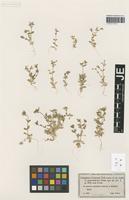
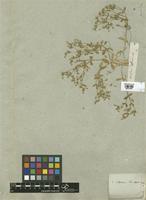
Cerastium diffusum

4 Images see all

Filed as Cerastium diffusum Pers. [family CARYOPHYLLACEAE]
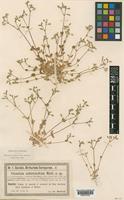
Cerastium diffusum Pers. subsp. subtetrandrum (Lange) P.D. Sell & Whitehead [family CARYOPHYLLACEAE]
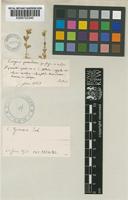
Type? of Cerastium diffusum Pers. species gussonei (Tod. ex Lojac.) P. D. Sell & Whitehead [family CARYOPHYLLACEAE]
Cerastium diffusum Pers. subsp. gussonei Tod. ex Lojac.) P.D. Sell & Whitehead [family CARYOPHYLLACEAE]
Previous
Next

Name

Identification
Cerastium diffusum Pers. [family CARYOPHYLLACEAE ] (stored under name); Verified by Data not digitized, null Verified by Data not digitized,
Related name
  • Cerastium subtetrandrum
  • Cerastium pentandrum
  • Cerastium diffusum
  • Cerastium tetrandrum
  • `
  • Cerastium gussonei
  • Cerastium glutinosum
Common name
  • Dark-green mouse-ear chickweed, Flora of North America Vol. 5

Flora

Entry for Cerastium diffusum Persoon [family CARYOPHYLLACEAE]
Herbarium
Flora of North America (FNA)
Collection
Flora of North America
Resource Type
Reference Sources
Entry From
Flora of North America, Vol 5,
Names
Cerastium diffusum Persoon [family CARYOPHYLLACEAE], Syn. Pl., 1: 520. 1805
Cerastium atrovirens Babington [family CARYOPHYLLACEAE]
Cerastium tetrandrum Curtis [family CARYOPHYLLACEAE]
Treatment Author(s)
John K. Morton
Information
Plants annual, with slender taproot. Stems decumbent or ascending, diffusely branched, 7.5–30 cm, densely covered and viscid with short, glandular hairs; small axillary tufts of leaves ab-sent. Leaves not marcescent, ses-sile distally, spatulate to pseudopetiolate proximally; blade 5–10 × 2–4 mm, covered with short, glandular and eglandular hairs; proximal blades oblanceolate, apex obtuse; cauline blades ovate or oblong-ovate, apex acute. Inflorescences lax, 3–30-flowered cymes; bracts lanceolate to ovate, herbaceous, glandular-pubescent. Pedicels straight, ultimately erect in fruit, slender, 2–15 mm, much longer than capsule, glandular. Flowers 4(–5)-merous; sepals lanceolate, 4–7 mm, margins narrow distally, apex acute or acuminate, glandular-pubescent, hairs usually not projecting beyond apex; petals ca. 3 mm, ca. 0.75 times as long as sepals, apex 2-fid; stamens 4(–5); styles 4(–5). Capsules narrowly cylindric, nearly straight, 5–7.5 mm, 1–1.5 times as long as sepals; teeth 8 or 10, erect, margins convolute. Seeds reddish brown, 0.5–0.7 mm, bluntly tuberculate; testa not inflated. 2n = 72.
Phenology
mar-may (spring)
Altitude range
0–300 m;
Distribution
Europe.USA Calif.USA Ill.
Discussion
This species was abundant on the sandy shore at Fort Bragg, Mendocino County, California, in 1985 and should be looked for elsewhere. The entirely herbaceous bracts, short capsule, and the floral parts usually in fours identify this small weedy species.
Previous reports of this species (as Cerastium tetrandrum) by J. A. Steyermark (1963) from Missouri and M. L. Fernald (1950) from Virginia are referable to C. pumilum and C. brachypetalum, respectively.
Native/Introduced
introduced;

Related Materials

  • Terms and Conditions
  • Privacy Policy
  • Cookie Policy
  • Cookie Settings
  • Accessibility
  • Help
  • Contact Us
  • Facebook
  • Twitter
ITHAKA

JSTOR is part of ITHAKA, a not-for-profit organization helping the academic community use digital technologies to preserve the scholarly record and to advance research and teaching in sustainable ways.

©2000-2026 ITHAKA. All Rights Reserved. JSTOR®, the JSTOR logo, JPASS®, Aluka®, and ITHAKA® are registered trademarks of ITHAKA.

╳